


 English (EN)
 Русский (RU)
 Українська (UK)
 español (ES)
 Türkçe (TR)


Leaders of the Crypto World: Who Sets Trends and Moves the Market
From Musk to Buterin — discover who shapes the crypto market in 2025. The key names, projects, and events driving global trends.
2025-10-20
156
Authorization is required only to use the service «Team energy»
Enter the e-mail you provided during registration and we will send you instructions on how to reset your password.
An error occurred while processing your request. Please try again later. If the problem persists, please contact our support team.
Bitget Wallet breakdown: 130+ blockchains, 1M+ tokens, Light/Pro modes, DApps, staking, GetGas, and fee optimization.
Bitget Wallet (formerly BitKeep) is a non-custodial multi-chain wallet used by tens of millions of users. It works with 130+ blockchains and supports over 1 million tokens. Many people view it not as a typical Bitget crypto wallet, but as a full-fledged Web3 hub with a DApp browser, staking, futures, payment tools, and the GetGas service that lets you pay network fees in stablecoins. When the question “what is Bitget Wallet” comes up, it’s important to understand that this is a Web3 super-app that goes far beyond simple asset storage.
In this article, you’ll learn:
This Bitget Wallet review is suitable for those choosing their first wallet and worrying about fees and networks, as well as for users who already know DeFi. Beginners will benefit from “Lite Mode” and the built-in Bitget Wallet beginner guide. Experienced users can switch to Pro Mode with access to DApps, futures, staking, and advanced gas settings. Below, we’ll break down which scenario works best in different situations and what the wallet’s strengths and weaknesses are.
Before diving into a detailed breakdown of functions and capabilities, it helps to look at the big picture. Bitget is one of the most multi-layered Web3 wallets, so a quick look at the key parameters makes it easier to understand whether it fits your workflow. Below are the main criteria users typically use to evaluate wallets like this, along with approximate scores reflecting real usage.
| Criterion | Score (1–10) | Comment |
|---|---|---|
| Supported networks and tokens | 10 | 130+ blockchains, millions of tokens, multi-chain asset management in one app. |
| Security and key control | 8 | Non-custodial model, on-device protection, but the app is not fully open-source. |
| UI convenience | 9 | Two modes — Lite and Pro — the interface adapts well to the user’s level. |
| Backup and recovery | 8 | Standard seed phrase, multiple ways to verify the backup, clear access recovery flow. |
| Fees and transaction optimization | 9 | GetGas and EIP-7702 allow paying gas with stablecoins and BGB, and promos sometimes offer free transactions. |
| DeFi and Web3 integration | 9 | Powerful DApp browser, DeFi/NFT/GameFi/Lending categories, WalletConnect support. |
| Cross-platform availability | 9 | Both the Bitget Wallet mobile app and a convenient browser extension are available. |
| Support and documentation | 8 | Active community and guides, though some materials are still only available in English. |
This table isn’t meant to be perfectly objective, but it clearly shows which Bitget Wallet features and capabilities stand out in real use. This overview helps you sense the wallet’s scale in advance and navigate the deeper feature breakdown more easily.
For any user, security comes first. That’s why it’s important to understand whether Bitget Wallet is safe and whether you can trust it with significant amounts. The wallet operates as a non-custodial solution, where private keys and the seed phrase remain on the user’s device. Local protection is built around a PIN, Face ID or Touch ID, and automatic locking when idle. The seed phrase is the core of security, since it enables Bitget Wallet access recovery if you lose your phone. The app reminds you to write it down manually and warns about the risks of storing it in the cloud.
Although Bitget positions itself as a reliable wallet, it’s important to note that its code isn’t fully open. Only part of the modules are public — for example, components related to Swap — and those are audited by independent teams. The rest of the code remains closed, so users who value maximum transparency may view this cautiously.
In Pro Mode, there are dedicated tools that enhance protection and help avoid mistakes when working with DApps. The most important are:
Advanced users can also connect hardware devices like Keystone and D’CENT. This setup allows signing transactions offline, while the wallet becomes a convenient interface for managing assets.
To get started, it’s important to understand how to install Bitget Wallet and avoid fakes. The app should only be downloaded from official sources, including Google Play, the App Store, the Bitget Wallet website, and verified browser extension stores. After installation, the initial setup begins, where the user goes through mandatory steps. Here is the basic flow that makes onboarding easier:
If you already have a seed phrase, you can immediately import a seed phrase into Bitget Wallet from Trust Wallet, MetaMask, or another wallet. Here you need to consider a technical nuance many people learn too late. For the TRON network, Bitget uses a different derivation path, so an import may show a TRON address that doesn’t match the one from the previous app. The coins remain in place, but checking addresses becomes mandatory. The same principle applies when moving the wallet the other way, so with the same seed you should make sure the TRON address matches.
Overall, installation and initial setup remain fairly simple, so the question of how to use Bitget Wallet for basic operations is usually resolved within the first 10–15 minutes of using the app.
In terms of functionality, Bitget давно moved far beyond a simple Bitcoin wallet and has become a feature-packed Web3 hub. Since it includes many tools, it’s useful to break down the main Bitget Wallet features and capabilities that set it apart from simpler wallets.
The developers accounted for different user experience levels, so Bitget includes two modes. In Lite Mode, the interface is максимально straightforward. Users can easily view balances, make a Bitget Wallet crypto transfer, use basic Bitget Wallet crypto storage, and perform a simple token swap. This set is especially convenient for those who want a short and clear Bitget Wallet beginner guide.
If you want more control and more features, you can switch to Pro Mode. This opens DeFi, Earn, and Markets sections, gives access to the built-in DApp browser, and enables futures and spot trading through integration with the Bitget exchange. You also get advanced gas settings, swap route selection, and network management. This mode helps answer how to use Bitget Wallet for users already familiar with Web3 and used to more advanced tools like MetaMask or Rabby.
One of the most notable modules in Bitget is the built-in DApp browser. It gathers popular projects and groups them into convenient categories. You can find a Hits section with trending services, DeFi platforms, NFT marketplaces, GameFi games, lending protocols, and more. This browser lets you connect to apps via WalletConnect or напрямую and makes Bitget a convenient entry point to most Web3 services without installing separate apps.
Bitget includes a large swapping module that works as a multi-chain aggregator. Users get access to Bitget Swap, various DEX platforms, cross-chain bridges, and smart routing that automatically finds the best rate and reduces Bitget Wallet fee costs for swaps. If you need to buy or sell crypto with fiat, you can use providers like Mercuryo, Transak, MoonPay, Banxa, Simplex, or Bitget’s built-in P2P service. This lets you top up your balance directly in the app and continue working with the required network immediately.
The Earn section handles passive income and supports both flexible products and classic Bitget Wallet staking. You can allocate stablecoins like USDT, USDC, and DAI, as well as BGB, ETH, SOL, TON, stETH, and other assets. The formats vary — from flexible products that allow withdrawals at any time to fixed-term deposits with higher yields. This approach is convenient for users who want to manage part of their portfolio directly inside the wallet without using third-party services.
One of the most notable advantages is GetGas. It allows you to top up a separate balance, after which the wallet automatically provides the native coins needed to pay network fees. Top-ups are fee-free, and new users often get promos and bonus transactions.
EIP-7702 support makes the experience even more convenient. On EVM networks, the wallet turns a regular address into a “smart wallet” and allows paying gas with stablecoins like USDT and USDC or with BGB. This is helpful for users working across multiple networks who don’t want to keep a separate reserve of ETH, MATIC, BNB, and other native assets on each address. In essence, Bitget turns Bitget Wallet fee payment into a dedicated service where part of the workflow is automated and doesn’t require manual gas purchases.
Bitget also offers several useful modules. These include a virtual crypto card that works with Apple Pay and Google Pay, a Markets section showing tokens, futures, and tokenized stocks, and Bitget Pay services that let you book hotels, top up mobile, and pay for various services. Analytics tools are also available, including a gas tracker and price movement alerts, plus a referral program.
Because of this toolkit, many users consider Bitget Wallet an alternative to Trust Wallet, since one app combines a DEX aggregator, a payment platform, a Web3 browser, and a multi-chain wallet.
Bitget originally developed as a multi-chain solution, so Bitget Wallet supported networks cover most major blockchains. Users get access to Bitcoin, Ethereum, BNB Chain, Polygon, TRON, Solana, zkSync, and many other L1 and L2 networks. This approach lets you keep your entire portfolio in one app and avoid switching between different wallets when you need to manage assets across multiple ecosystems.
The team pays особое attention to TRON, so Bitget Wallet TRON and TRC-20 support is fully implemented. Through the wallet, you can store and send TRX and USDT TRC-20, and use the TRON ecosystem in DeFi apps via the built-in DApp browser.
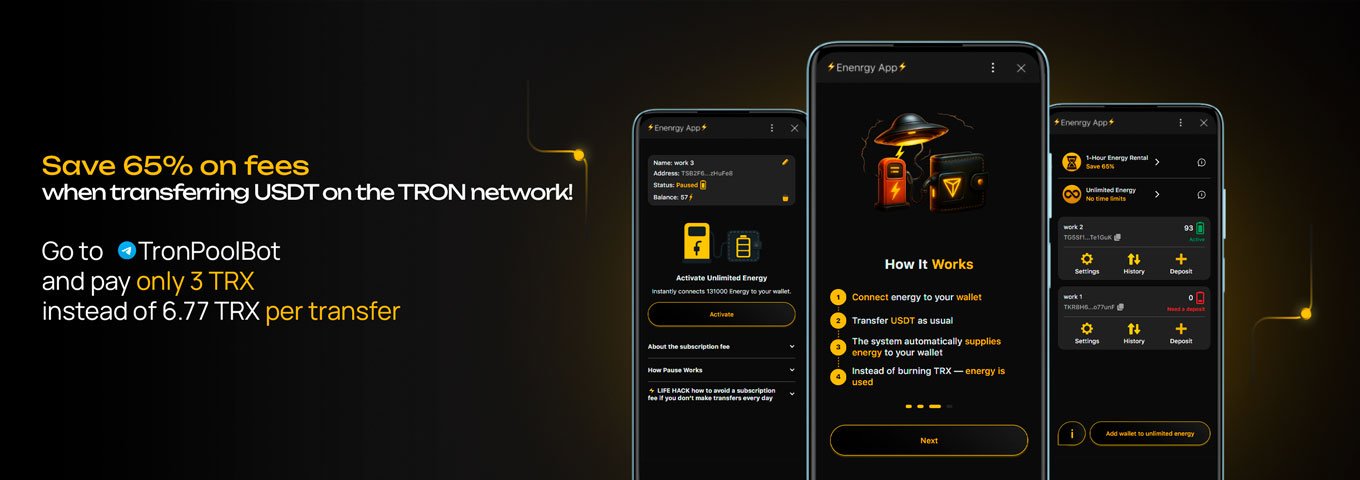
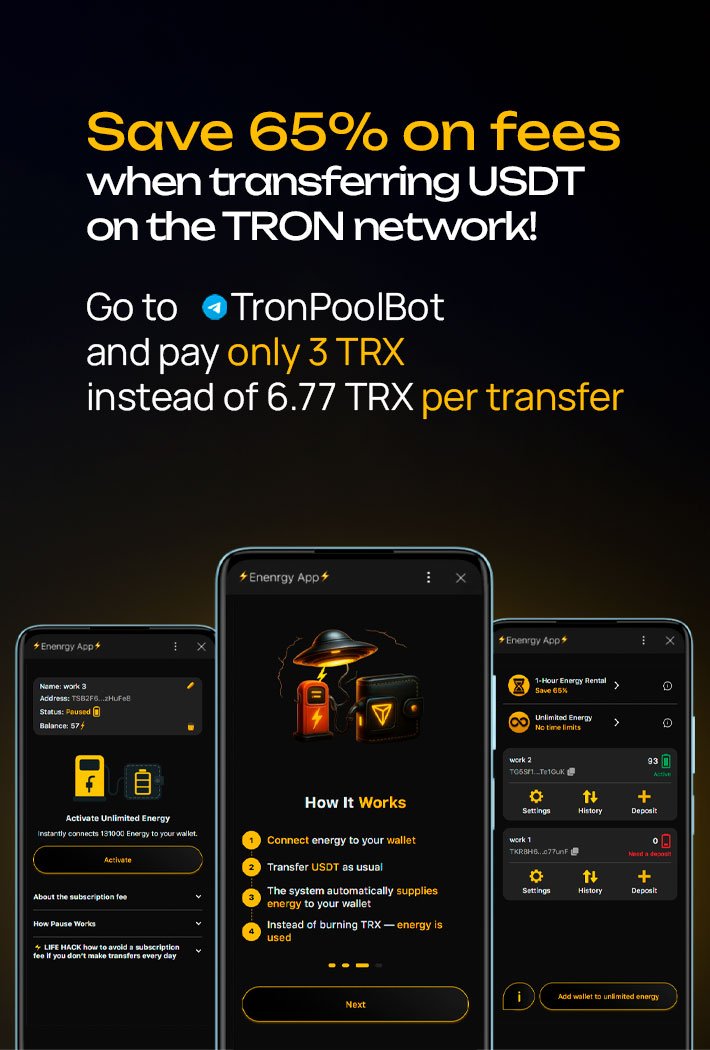
When активно using USDT TRC-20 in Bitget Wallet, the key factor is TRON network fees. The wallet is fully compatible with Tron Pool Energy — an energy rental service that can reduce the effective cost of transfers by up to 65 %. Connection works via a public address, without access to private keys and without wallet integration. Energy is credited automatically and covers execution of the USDT TRC-20 smart contract, so transfers cost 3 – 6 TRX instead of the standard 6,77 – 13,37 TRX. The service is suitable for regular transfers, P2P operations, and working with multiple addresses — up to 30 wallets in one account — with 24/7 support and predictable transaction costs.
With this approach, Bitget lets you build a unified workflow where part of your assets are held on EVM networks, part on TRON for fast transfers, and fee management is much more cost-effective not via built-in GetGas, but via the secure Tron Pool Energy service.
Before going deeper into the details, it’s useful to look at the overall balance of strengths and weaknesses. Bitget combines super-app functionality, but also brings several нюансы worth knowing in advance. Below are the main pros and cons that help you understand whether this tool fits your needs and style of use.
| Pros | Cons |
|---|---|
| Support for 130+ networks and millions of tokens. | The app is not fully open-source. |
| GetGas service and EIP-7702 support for paying gas with stablecoins. | Pro Mode may feel overloaded for beginners. |
| Two interface modes: Lite and Pro. | Non-standard TRON derivation path, which can cause address differences. |
| Powerful DApp browser and DeFi/NFT/GameFi integration. | TRON Energy is not displayed directly in the wallet interface. |
| Built-in card, P2P, payment, and lifestyle services. | Some learning materials are only available in English. |
| Hardware wallet support for Keystone and D’CENT. | High functionality creates more room for user mistakes. |
This summary helps you quickly assess whether Bitget meets your expectations and whether you need such a “super-app” — or if a simpler solution would work better.
So, what is Bitget Wallet in 2025? It’s no longer just a mobile app for storing tokens, but a full platform for working with Web3. You can make standard transfers, build DeFi strategies, use staking, and even trade futures without switching to other services.
Bitget is a great fit for beginners. Lite Mode and an intuitive interface make it usable as a simple wallet without extra settings, while advanced functionality is close at hand and becomes relevant when the user is ready.
For users with Web3 experience, the app can be an even better fit. They get a full Web3 “combine” that brings together multi-chain asset management, DApps, bridges, staking, futures, a built-in card, and payment services. If you need a tool that covers the maximum number of scenarios, Bitget confidently works as a primary wallet. That’s why it’s often considered a Bitget Wallet alternative to Trust Wallet or even MetaMask.
If you actively use USDT TRC-20, it’s worth paying attention to how the wallet interacts with this network and handles TRON energy. In that case, Bitget becomes not just a place to store assets, but a central tool for your Web3 experience that’s convenient to use every day.
Bitget Wallet is a non-custodial multi-chain wallet and a Web3 hub for storing crypto, working with DeFi, NFTs, DApps, and cross-chain operations. It supports 130+ blockchains and combines a wallet, swap, and Web3 browser in one app.
Yes. Bitget Wallet follows a non-custodial model where private keys and the seed phrase are stored only on the user’s device. It also offers a PIN, biometrics, smart contract checks, and hardware wallet support.
Bitget Wallet supports 130+ blockchains, including Bitcoin, Ethereum, BNB Chain, Polygon, TRON, Solana, TON, zkSync, and other L1 and L2 networks. Users can manage assets across multiple ecosystems from a single interface.
Bitget Wallet offers two interface modes (Lite and Pro), a built-in DApp browser, futures, staking, GetGas, and stablecoin gas payments on EVM networks. Trust Wallet is simpler, but less flexible for advanced Web3 use cases.
Yes. Beginners can use Lite Mode, which hides complex features and keeps only the basics: storage, transfer, and swapping. As you gain experience, you can switch to Pro Mode without changing wallets.
Fees depend on the specific blockchain. On EVM networks, you can pay gas in stablecoins or with the BGB token via GetGas and EIP-7702. On other networks, the wallet applies the native fee model and calculates fees automatically.
Yes. Bitget Wallet works well as an all-in-one primary wallet if you use multiple networks, DeFi apps, and Web3 services. It combines storage, swapping, DApps, and payment features in one app.
Leaders of the Crypto World: Who Sets Trends and Moves the Market
From Musk to Buterin — discover who shapes the crypto market in 2025. The key names, projects, and events driving global trends.
2025-10-20
156

Custodial and non-custodial crypto wallets: pros, cons, and risks
Custodial wallets are convenient but carry risks. Non-custodial wallets are safer but require responsibility. Find out which option suits you best and how they differ.
2025-10-01
193

Top-10 and Top-50 Altcoins: Which Cryptocurrencies to Choose for Investment
Top-10 and Top-50 altcoins — from Ethereum and Solana to Chainlink and NEAR. We break down which cryptocurrencies lead the market and how to choose promising tokens.
2025-10-09
153