


 English (EN)
 Русский (RU)
 Українська (UK)
 español (ES)
 Türkçe (TR)


Best Trust Wallet Alternatives: Top 8 Wallets for USDT TRC-20
8 reliable alternatives to Trust Wallet for USDT TRC-20: full TRON support, seed phrase import, energy management and minimal fees for USDT transfers.
2025-12-02
129
Authorization is required only to use the service «Team energy»
Enter the e-mail you provided during registration and we will send you instructions on how to reset your password.
An error occurred while processing your request. Please try again later. If the problem persists, please contact our support team.
Complete guide to using USDT TRC-20 in CoinEx Wallet: adding the token, TRON address, transfers, and Energy management.
CoinEx Wallet operates as a multi-chain wallet supporting more than 60 networks, but its TRON functionality is especially important for those who frequently send USDT TRC-20. On this network, fees depend not only on having TRX on balance, but also on Energy and Bandwidth resources. The transfer mechanism is the same across the entire network; however, in practice users most often ask two questions: how to correctly send USDT TRC-20 and how to avoid overpaying in fees.
In this guide, we will cover three key topics:
This guide remains practical and focused exclusively on working with USDT TRC-20. For general information about security, backups, and the full feature set, it makes sense to rely on the review article about CoinEx Wallet. Here, we will go through the entire process from receiving to sending transfers and optimizing TRON fees.
First, you need to make sure that the USDT TRC-20 token is visible in the interface and correctly identified as a TRON network token. This is an important step, because this is where network selection mistakes most often occur.
After logging into the application, the user lands on the Assets screen. In most cases, TRX and USDT TRC-20 are already displayed by default. If USDT is not in the list, it can be added manually.
The process is as follows:
After this, the token will appear in the general list and become available for receiving and sending.
Under the USDT ticker, there may be several versions, such as ERC-20 on the Ethereum network or BEP-20 on BNB Chain. In CoinEx Wallet, the network is always indicated under the token name, so before taking any action you should verify the TRC-20 label.
An additional check is the address format. On the TRON network, all account addresses for TRX and TRC-20 tokens start with the letter T. In CoinEx Wallet, the same TRON address is used for both TRX and USDT TRC-20. If the address looks different or another network is indicated, the wrong token has been selected.
To start working with USDT TRC-20, you first need to receive a transfer to your TRON address. It is important to copy the address correctly and ensure that the sender uses the correct network.
To receive USDT TRC-20, open CoinEx Wallet and follow these steps:
This address starts with the letter T and works for TRX as well as all TRC-20 tokens. You can copy it to the clipboard or send it to the sender in a convenient format.
The most common mistake in USDT transfers is selecting the wrong network. If the sender chooses USDT in ERC-20 format and sends it to a TRON address, the funds will almost certainly be lost.
Therefore, before confirming the transfer, make sure that the TRON network and the USDT TRC-20 token are selected in all fields. It is useful to double-check the first letter of the address and confirm the TRC-20 label in the interface.
After the transfer is sent, the funds appear on the TRON network and then in the wallet. The incoming transfer is displayed on the main screen in the asset list and in the History tab.
If additional verification is required, you can open the transaction card, copy the hash, and view it in the Tronscan explorer. There you can see the status, confirmation time, and all technical details of the operation.
Once USDT is on your balance, you can proceed with outgoing transfers. Here it is important not only to specify the correct address, but also to carefully review the fee requested by the TRON network.
To send USDT TRC-20 from CoinEx Wallet, follow these simple steps:
Until you press the final confirmation button, the transaction is not broadcast to the network, so you still have time to review all details.
The confirmation screen in CoinEx Wallet shows not only the transfer amount but also how the network calculates the fee.
The user sees:
If there is no Energy available, the wallet shows how much TRX will need to be burned to complete the transaction. This allows you to evaluate the cost in advance and, if desired, reduce the fee by connecting TRON Energy.
Sending USDT TRC-20 in CoinEx Wallet on the TRON network looks like a simple token transfer, but internally it is always a smart contract call. That is why not only TRX but also system resources matter.
USDT TRC-20 exists within a smart contract. Any transfer calls a function of this contract and requires resources.
Two types of resources affect the operation:
Part of the Bandwidth restores automatically, but Energy is consumed and must be covered. If there is no Energy at all, the network charges the fee in TRX, which the wallet simply burns.
The network evaluates a transfer differently depending on whether the recipient address has already used the token.
If the address does not have USDT TRC-20, creating the first balance requires additional Energy. As a result, the fee will be higher.
An important advantage of CoinEx Wallet is that it displays TRON network resources. In the staking section, you can open TRX and view the current Energy and Bandwidth available for your address.
When a user understands how many resources are available, it becomes easier to estimate future fees and decide whether an additional Energy source is needed or if the current balance is sufficient.
Any activity on TRON ultimately requires at least a small amount of TRX. These coins are needed when Energy is insufficient but the transfer must still be completed.
CoinEx Wallet does not support built-in crypto purchases via bank card, so TRX must be deposited from an external source. Most commonly, this is done through an exchange or a P2P service.
The general process is:
The address for TRX and USDT TRC-20 is the same, so you only need to copy it once in the Receive tab.
If no additional steps are taken, every transaction executed without Energy will simply burn TRX. Over time, this becomes inconvenient and expensive, especially with frequent transfers.
There are two approaches. You can try to cover Energy needs through TRX staking. Or you can choose a simpler path and rent Energy via a specialized service such as Tron Pool Energy.
CoinEx Wallet allows you to freeze TRX through built-in staking and receive Energy in return. On paper, it looks convenient: select the coin, specify the amount, confirm the operation, and receive network resources.
In practice, this approach does not suit everyone. To significantly reduce fees, you need to freeze fairly large amounts, often measured in several thousand TRX. These coins are removed from free circulation, and the user must manage frozen assets.
Technically, the steps are:
This approach may be suitable for those who actively use TRON and are willing to keep a large TRX reserve locked, but for many USDT TRC-20 holders it turns out to be overly complex.
For most users, the Energy rental option is more logical and cost-effective. In this case, you do not need to freeze your TRX or understand staking details. It is enough to pay once for an Energy package and use it for the required number of transfers.
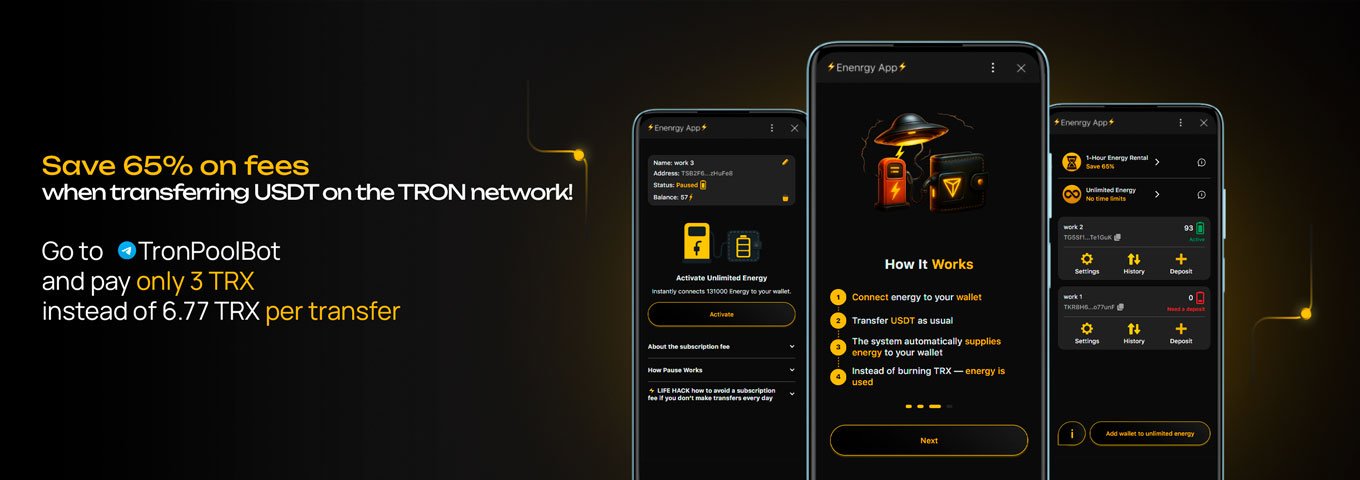
The Tron Pool Energy service specializes in renting TRON network resources. It connects Energy to your TRON address for a limited period and allows you to execute USDT TRC-20 transfers with minimal TRX fees.
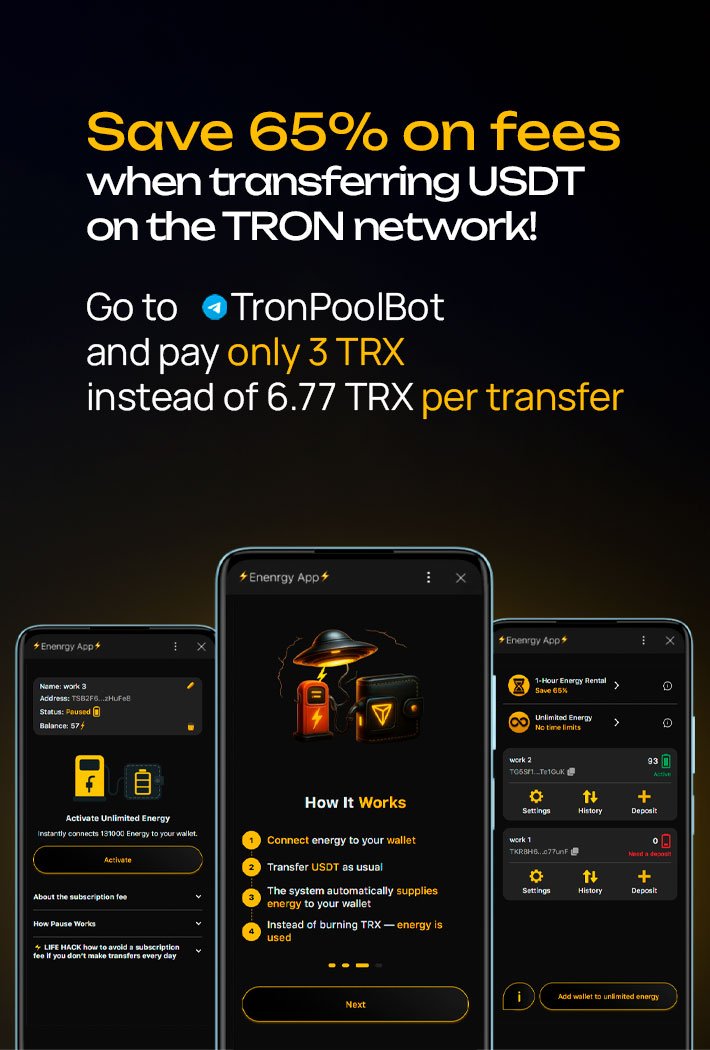
The main advantage of rental compared to standard TRX burning is cost savings. In practice, expenses can be reduced to 3–6 TRX instead of 6,77–13,37 TRX for a comparable transfer volume. At the same time, your own coins do not need to be frozen, and all operations are performed through the familiar CoinEx Wallet interface.
When combined with this wallet, Tron Pool Energy becomes a simple tool. The user receives Energy on the same address where USDT TRC-20 is stored and can then execute CoinEx Wallet crypto transfers without additional TRX management.
CoinEx Wallet combines USDT TRC-20 support with clear visibility of TRON network resources. The wallet shows available Energy and Bandwidth, provides a transparent confirmation screen, and does not hide the fee structure.
At the same time, the user always has a strategy choice. You can follow the more complex path of TRX staking and freeze significant amounts to accumulate Energy. Or you can take a simpler route and rent Energy via a service such as Tron Pool Energy to avoid burning TRX and locking your coins.
If you regularly send USDT TRC-20 and want to keep fees under control, the combination of CoinEx Wallet and Energy rental through Tron Pool Energy is a practical solution. It preserves the familiar wallet interface, reduces expenses, and avoids unnecessary technical complexity.
Yes, CoinEx Wallet supports TRC-20 standard tokens on the TRON network, including USDT. For correct operation, select the USDT version labeled TRC-20. After activation, the token is available for receiving and sending.
USDT TRC-20 is displayed in the Assets tab. If the token is not listed, you can add it manually via the plus button and search for USDT. Make sure to select the TRON network.
You can view your TRON address via the Receive button by selecting USDT TRC-20 or TRX. The address always starts with the letter T and is used for all TRON network tokens.
Yes. On the TRON network, the same address works for TRX and all TRC-20 standard tokens. This simplifies receiving and sending assets within the network.
The fee depends on the availability of Energy and the state of the recipient’s address. If the recipient already has USDT, less Energy is required. If the address is new, resource consumption and TRX cost will be higher.
No. On the TRON network, the fee does not depend on the transfer amount. Whether you send 10 or 10,000 USDT, the Energy consumption is the same.
Yes. If you do not have Energy, the network will burn TRX to pay the fee. Therefore, it is advisable to keep a small TRX balance. An alternative is staking or Energy rental.
You can reduce costs in two ways: freeze TRX through built-in staking or rent Energy via the Tron Pool Energy service. Rental allows you to use the resource without locking your own TRX and lower transfer expenses.
Best Trust Wallet Alternatives: Top 8 Wallets for USDT TRC-20
8 reliable alternatives to Trust Wallet for USDT TRC-20: full TRON support, seed phrase import, energy management and minimal fees for USDT transfers.
2025-12-02
129

Web3 wallet security: how anti-phishing extensions protect you
We explain how Wallet Guard, ScamSniffer and built-in filters protect wallets from phishing, malicious websites and dangerous signatures.
2025-11-20
148

What Is USDT Freezing and How to Avoid It
A USDT freeze is not a network error but a control mechanism. Learn how Tether locks wallets, how to check your address, and what steps help you avoid problems.
2025-10-14
162