CMC and CoinGecko help you read market dynamics. Learn how to read metrics, compare coins, and find liquid assets.
Content
A coin’s price alone doesn’t show the real picture. One token can cost dollars, another just a few cents, yet their market value can be the same. To understand how strong and resilient a project is, you need to know how to read crypto market capitalization, track trading volumes, and monitor liquidity levels. That’s when the data starts telling the project’s real story.
The main points of this article:
how to use CoinMarketCap and CoinGecko and get reliable data
how to compare coins on CoinMarketCap and choose promising assets
how to analyze cryptocurrencies and understand market dynamics
You can draw these conclusions by relying on data from cryptocurrency aggregators. Such services help you look at the crypto market not as a set of prices, but as a living system with capital flows and participant interest.
What crypto aggregators are and why they are needed
Crypto aggregators collect all the scattered market information in one place. They combine information from different exchanges and networks, showing price, trading volumes, liquidity, and crypto market capitalization data. Thanks to this, an investor can see not only the numbers on a chart but also understand how capital moves within the market.
With such services, it’s easy to compare assets and track how interest in them changes. You can see where a token trades more actively, how much turnover it has, and how liquid it is. This makes analysis more accurate and helps you make decisions based on facts rather than guesses.
The market is easiest to understand via CoinMarketCap and CoinGecko. They are similar in functionality, but each has its own features. The difference between CoinMarketCap and CoinGecko lies in how information is presented and what each platform emphasizes. CMC is better suited for assessing rankings and volumes. CG offers more analytics and details. Together, they form the foundation for any serious analysis and help you see the market as a whole.
CoinMarketCap: how to read the key metrics
CoinMarketCap, or CMC, is considered one of the oldest and most recognizable websites in the crypto world. Its design is clear even to those just starting to study the market. The platform has long been a standard for analysis and is part of every investor’s basic toolkit. Many start by looking up the CoinMarketCap cryptocurrency ranking to understand which projects hold leading positions and where capital is moving.
Using the site is simple. If you want to figure out how to use CoinMarketCap, start with any coin’s page. It displays all the key metrics that help you understand the token’s real condition.
Price shows the token’s average price across major trading pairs
Market Cap reflects market capitalization and shows how much the entire project is worth
Fully Diluted Market Cap calculates the value as if all tokens were already in circulation
Volume 24h shows market activity and trading volumes over the last 24 hours
Circulating Supply shows how many coins are actually in circulation on the market
Max Supply shows the maximum number of tokens that can exist
Rank shows the coin’s position in the overall ranking
Contract or Explorer provides access to the blockchain, where you can verify a token on CoinMarketCap via links to TronScan, Etherscan, and other networks
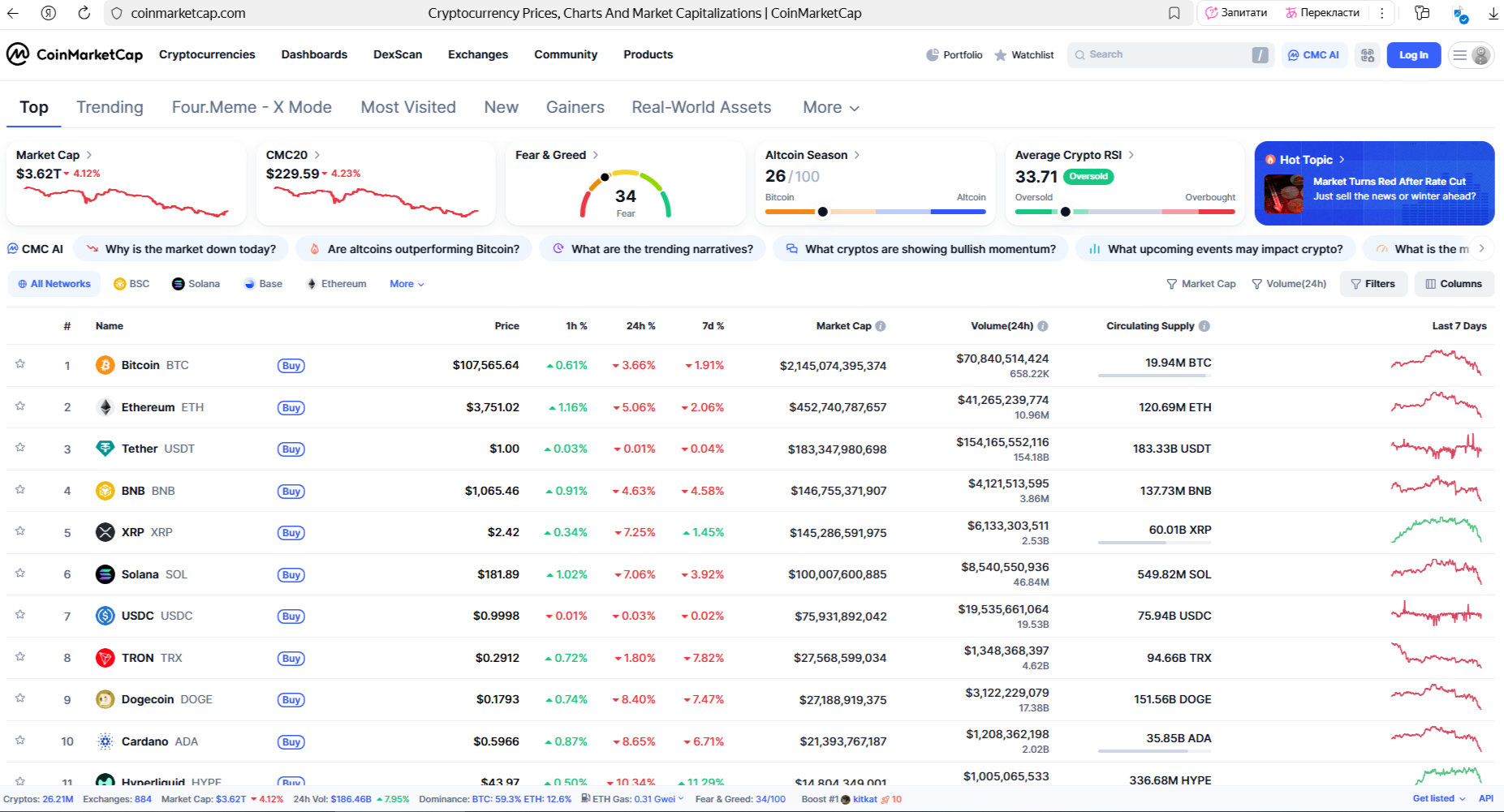
CoinMarketCap homepage with a ranking of cryptocurrencies by market capitalization.
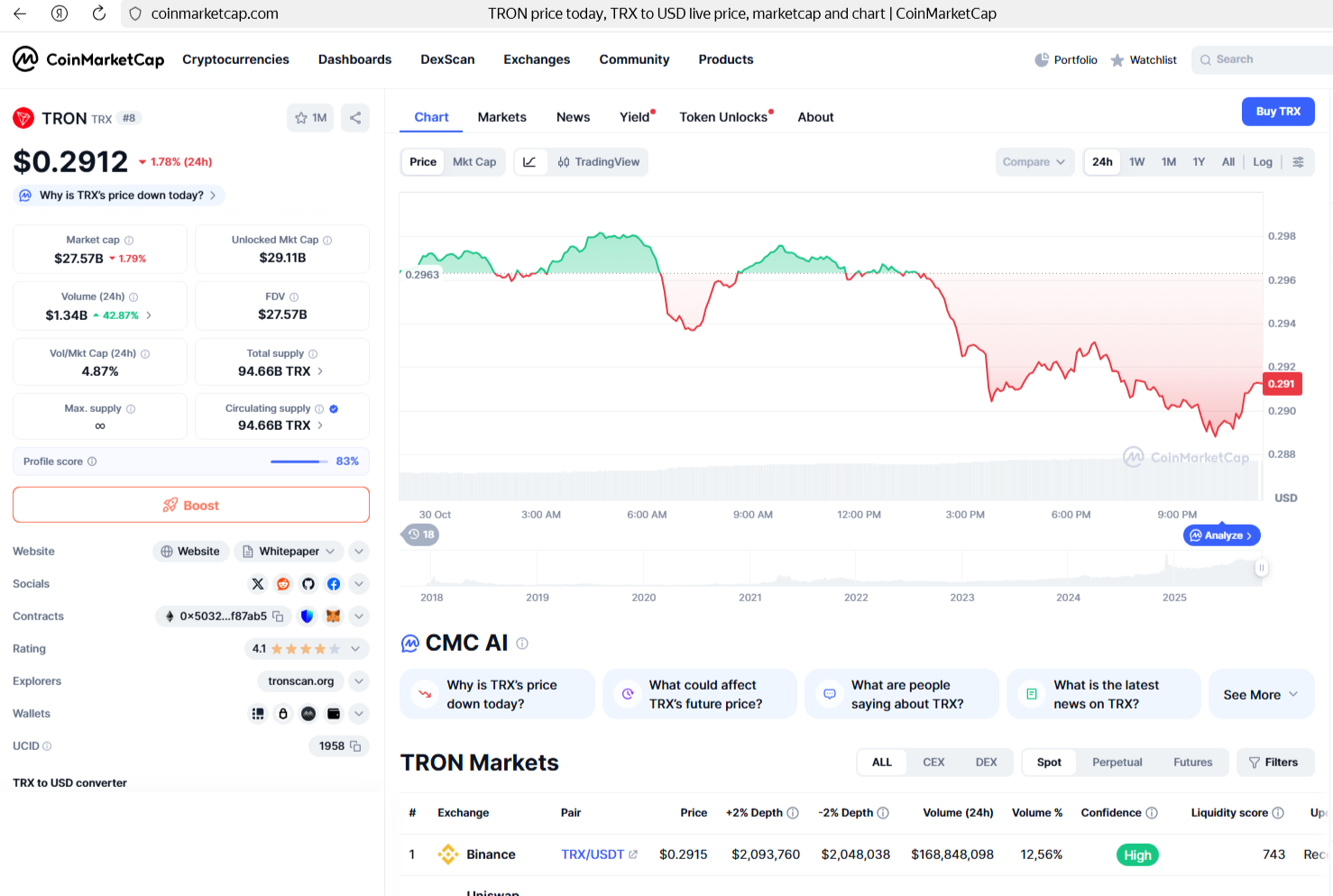
On CoinMarketCap you can quickly check popular networks. For example, coinmarketcap tron helps assess token dynamics in the TRON ecosystem and compare them with other assets. If you use stablecoins, it’s convenient to view USDT TRC20 CoinMarketCap to see volumes on the TRON network and verify the contract address.
Screenshot of the TRON (TRX) cryptocurrency page on the CoinMarketCap portal.
This approach lets you analyze the market systematically. CoinMarketCap helps you see where capital is concentrated, which assets are growing, and how liquid they are. The platform suits those who want to quickly assess a project’s scale and understand how stable it is in the rankings.
CoinGecko: features and additional metrics
CoinGecko, or CG, is considered an independent and analytical tool that helps you study the market more deeply. It has become especially popular among investors who value data quality and source transparency. The service is appreciated for showing a project’s true dynamics, not just its price.
If you’re using the site for the first time, a simple CoinGecko guide will come in handy. Everything starts with the search bar, where you can quickly figure out how to find a token in CoinGecko. After that, the coin page opens with key metrics and analytics.
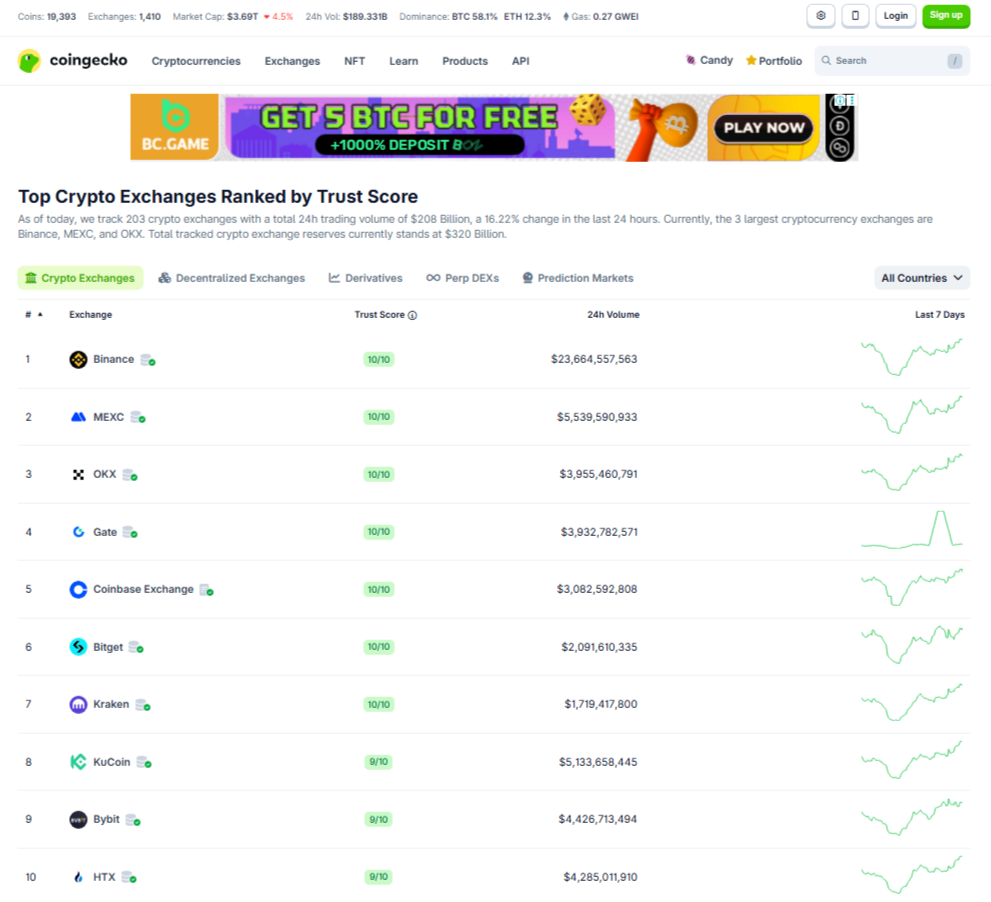
CoinGecko’s main feature is the trust score coin gecko system, which evaluates the reliability of exchanges and trading pairs. On exchange pages this metric is shown openly, and when viewing specific pairs a color liquidity scale is used. The higher the score, the more confidence that trading volumes are real and the platform isn’t inflating numbers.
Ranking of crypto exchanges by “Trust Score” on the CoinGecko portal.
CoinGecko also lets you view additional data:
Developer Activity shows developer activity on GitHub
Community Score reflects audience interest on social media
Liquidity Volume Ratio helps assess the ratio of liquidity to trading volumes
Historical Data stores price history and records ATH and ATL levels
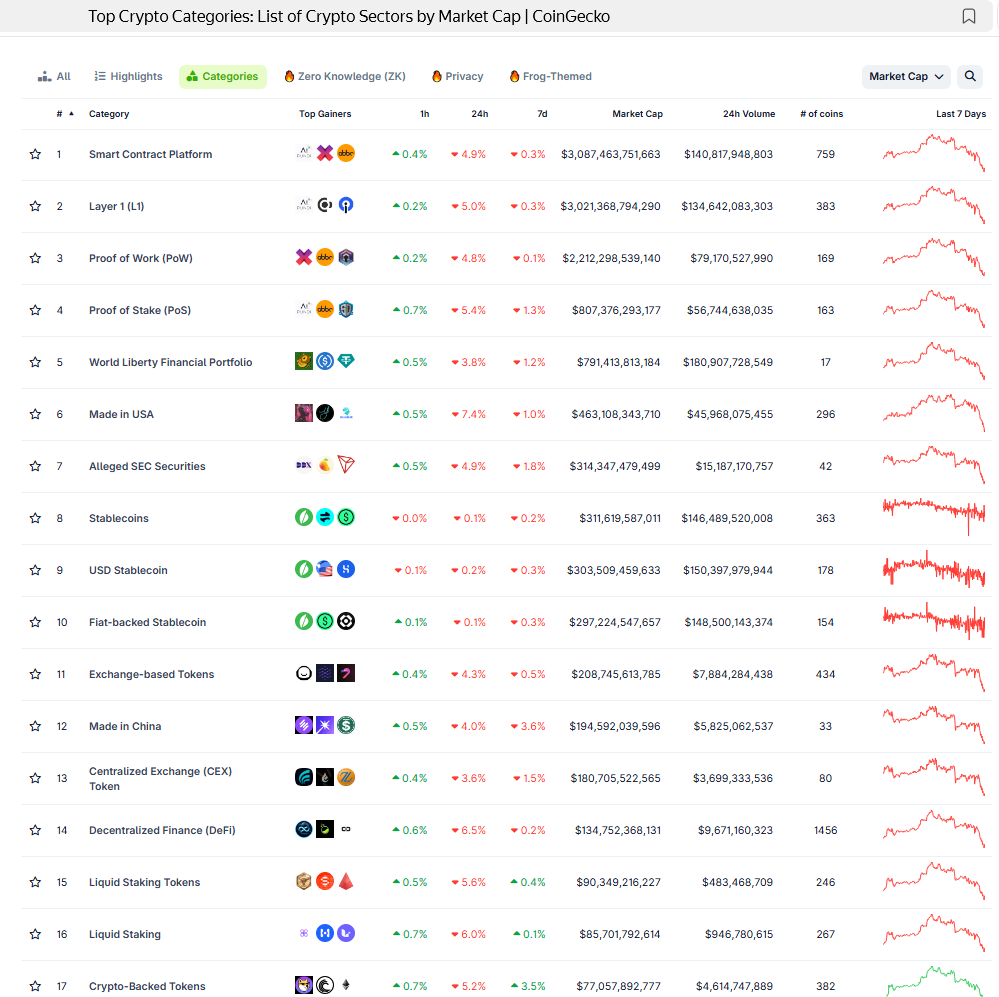
Pay attention to the Categories section. Here, tokens are grouped by themes, which helps quickly find projects across areas like DeFi, AI, GameFi, Meme, or by ecosystems like TRON. This is convenient for those who seek trends and want to see how entire market sectors are developing.
[Ranking of cryptocurrency categories (sectors) by market capitalization on the CoinGecko portal.
CoinGecko delights with update speed and data accuracy. The data is almost always up to date and refreshed in real time. The service remains independent and is not tied to exchanges, which makes it a valuable source of objective analytics. For those looking for a reliable and clear platform, CoinGecko becomes one of the best tools for fundamental analysis.
Comparing CoinMarketCap and CoinGecko
Investors often use both services, as together they provide more information. CoinMarketCap and CoinGecko are considered among the best sites for crypto analysis. They let you quickly check metrics, dynamics, and market structure. The difference between them isn’t data quality, but how information is presented and how detailed it is. It’s important to understand exactly what the coinmarketcap coin gecko difference is to choose the right tool for your task.
If you need to quickly check a token on CoinMarketCap, you get all the main information on one page. CoinGecko, meanwhile, shows more fundamentals and internal project activity.
Criterion
CoinMarketCap
CoinGecko
Owners
Binance
Independent project from Malaysia
Number of coins
More than 12 thousand
More than 14 thousand
Data sources
Centralized and decentralized exchanges
The same plus DeFi pools
Interface
Classic and strict
More flexible and analytical
Trust Score
No
Yes, for exchanges and pairs
Data updates
Every couple of minutes
Almost in real time
Integrations
With Binance
Broader across ecosystems
After such a comparison, it becomes clear that each platform has its own emphasis. CoinMarketCap is more suitable for those who seek simplicity and speed. It’s great for showing rankings, volumes, and capitalization. CoinGecko is chosen by those who want to delve deeper into metrics and analyze project activity.
Both services can be considered pillars of analytics. Together, they help you see the balance between a token’s popularity and its real liquidity. If you want to understand the market more broadly, it’s worth using both tools. They remain the main reference points for those who study the market systematically and want to make decisions based on data rather than intuition.
How to use the data to analyze cryptocurrencies
Crypto analysis doesn’t start with price, but with understanding the metrics behind it. A price can look attractive, but without the context of volumes and market cap it means little. To figure out how demanded and resilient an asset is, you need to understand the meaning of the basic indicators.
The most common question among beginner investors is fully diluted market cap—what it is and why it’s needed. This metric shows how much the project would be worth if all tokens were already in circulation. It helps you see how unlocks or new token issuance can affect price and assess whether there’s a risk of overvaluation.
No less important is the volume market cap ratio. It shows the ratio of trading volume to market cap and helps you understand how “alive” the market is. If volumes are high relative to market cap, the token is actively traded and there is interest in it. If the opposite, the asset may be illiquid even if its price is rising.
Many ask what circulating supply means and why it matters. This metric reflects how many tokens are actually circulating on the market. It’s tied to tokenomics and shows what portion of the supply is already available to users. The more tokens already in circulation, the lower the risk that new issuances will crash the price.
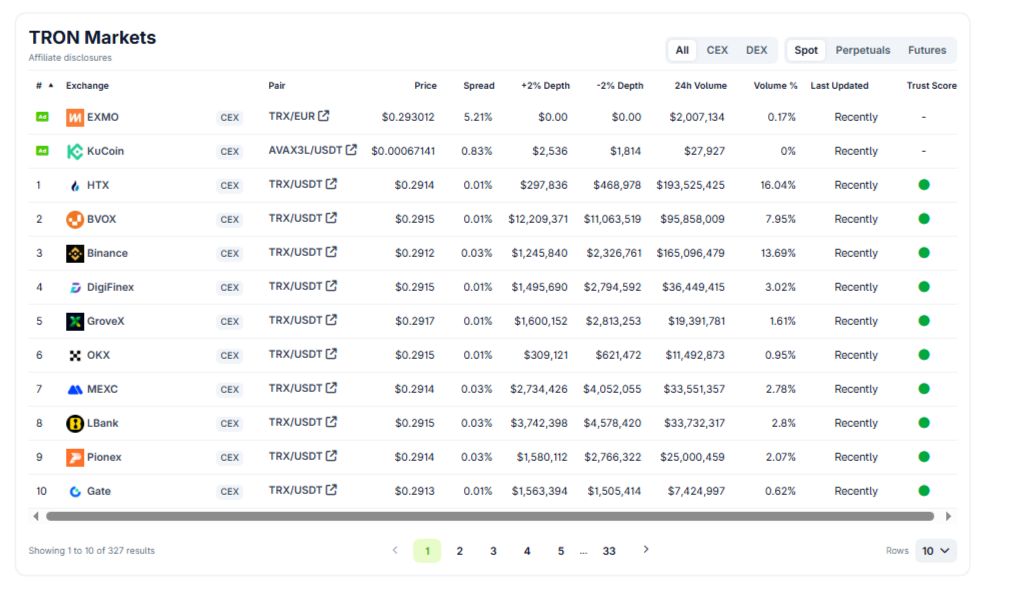
In addition to these indicators, check the Markets section. There you can see where a token trades most often and which exchanges provide the most liquidity. It’s also useful to apply network filters to compare assets across ecosystems like TRON, Ethereum, Solana, and other blockchains.
List of markets (exchanges and trading pairs) for the TRON (TRX) cryptocurrency.
If you consider all the indicators together, it becomes clear how a project is structured. Such metrics help you see not just the price, but the movement of interest and real activity. The deeper you understand the structure of market cap and volumes, the more accurate your analysis and the higher your chance of making the right decision.
How aggregators help analyze stablecoins
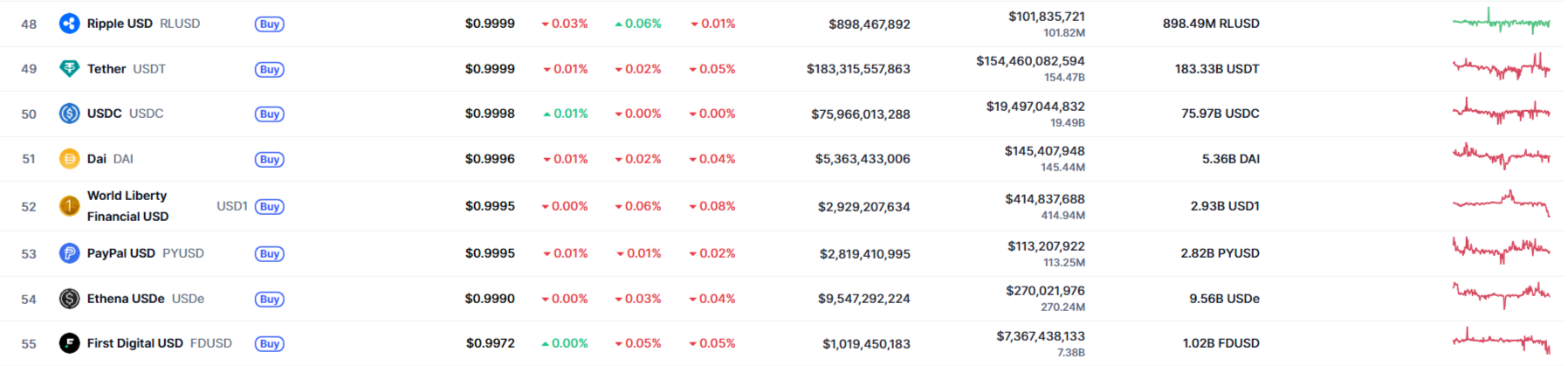
Stablecoins occupy a special place in the market. They aren’t subject to strong volatility and serve as the backbone for trading and transfers. The most well-known are USDT, USDC, DAI, and TUSD. With them, investors lock in profits, store capital, and move funds between exchanges.
Ranking of stablecoins (Tether, USDC, Dai) by market metrics on CoinMarketCap (CMC).
Aggregators help you see the real picture for each stablecoin. Through CoinMarketCap or CoinGecko you can compare metrics and understand which tokens enjoy the most trust and where they circulate more actively.
It’s useful to pay attention to the following parameters:
the volume of tokens in circulation
each coin’s share across different networks, e.g., TRON or Ethereum
dominance percentage within the total stablecoin market cap
From these numbers, it’s easy to understand where interest is growing and where an asset is already losing the market’s attention. It’s important to check the Contracts tab, which shows token addresses across different networks. Through it, you can easily see where an asset is used most often.
According to CoinMarketCap, more than 70 percent of USDT circulates on the TRON network. This is due to low fees and fast transaction confirmations. Such dynamics confirm that the TRON network has become one of the key infrastructures for stablecoins. Its advantages become especially clear when using services like Tron Pool Energy, which reduce transaction costs through smart utilization of blockchain resources.
Cut your USDT TRC-20 costs with Tron Pool Energy. Safe, transparent and optimized for every transaction.
This information shows not only volumes but also the movement of liquidity in the market. It reveals how the stablecoin market is developing, where major flows go, and which networks are becoming centers of capital movement. The better you understand this structure, the more accurately you can assess the stability and real role of tokens in the ecosystem.
Conclusions
CoinMarketCap and CoinGecko remain the main sources of data on the crypto market. CoinMarketCap is convenient for rankings and market cap. CoinGecko is useful for analyzing activity and data trustworthiness.
Both tools help build a fundamental understanding of the market and make decisions based on facts. If you want to analyze projects more deeply, start with them.
In the next article of the series, we will break down where to look for liquidity in DeFi via DefiLlama and how to track token movements on blockchains and the unlock calendar on TokenUnlocks.
Share
Link
Did you like the article?
FAQ
What does CoinMarketCap show
CoinMarketCap aggregates market data on cryptocurrencies and shows price, market cap, trading volumes, and project rankings. It’s the primary source of basic analytics for investors.
How is CoinGecko different from CoinMarketCap
CoinGecko provides more analytics and independence, while CoinMarketCap focuses on rankings and statistics. The difference lies in the depth of data and update speed.
How to read a cryptocurrency’s market cap
Market cap shows the total value of all coins in circulation. It’s calculated as the token’s price multiplied by its circulating supply.
What does Fully Diluted Market Cap mean
This metric shows market cap as if all tokens were already in circulation. It helps assess the potential impact of unlocks on price.
What is the Volume Market Cap ratio
This metric compares trading volume and market cap. The higher the value, the greater the interest in the token and the higher its liquidity.
How to find where a token is traded
Open the coin’s page on CoinMarketCap or CoinGecko and go to the Markets tab. It lists the exchanges and trading pairs where the token is available.
How to verify a token contract
On the coin’s page there is a Contracts section with token addresses across different networks. The links lead to blockchain explorers like TronScan or Etherscan.
Where to view real data on USDT TRC-20 stablecoins
It’s most convenient to check up-to-date information on TronScan or the official Tether website. On CoinMarketCap you can verify the contract address and view general market metrics.
TRX calculator
Find out how much you spend on commissions!
Enter your crypto wallet address and we'll calculate how much TRX you've spent on fees over the last 30 days.
Learn how Arkham Intelligence deanonymizes crypto wallets, what it means for your privacy on the TRON network, and how to protect yourself using Tron Pool Energy. In-depth review and guide.
Learn how to use Tronscan to check TRON wallets: balance, transaction history, resource usage, USDT TRC-20 statuses, and how to save on fees with Tron Energy.



 English (EN)
 Русский (RU)
 Українська (UK)
 español (ES)
 Türkçe (TR)