


 English (EN)
 Русский (RU)
 Українська (UK)
 español (ES)
 Türkçe (TR)


Best Trust Wallet Alternatives: Top 8 Wallets for USDT TRC-20
8 reliable alternatives to Trust Wallet for USDT TRC-20: full TRON support, seed phrase import, energy management and minimal fees for USDT transfers.
2025-12-02
129
Authorization is required only to use the service «Team energy»
Enter the e-mail you provided during registration and we will send you instructions on how to reset your password.
An error occurred while processing your request. Please try again later. If the problem persists, please contact our support team.
Breaking down Ctrl Wallet: how Gas Tank works, how safe Social Login is, why the code remains closed, and whether managing assets in a multichain portfolio is convenient.
The Ctrl Wallet wallet appeared after the rebranding of XDEFI Wallet, which has been operating since 2020. Today it is a non-custodial multichain wallet that supports more than 2,500 assets: Bitcoin, Ethereum, Solana, Cosmos, Tron, and many others. If you want to explain what ctrl wallet is, the easiest way is to think of it as a tool that aims to solve the main pain point of on-chain users.
We’re talking about the constant need to keep “native” coins like ETH, BNB, TRX, or MATIC on your balances solely to pay fees. To solve this problem, the team introduced Gas Tank. It is a unified balance that allows you to pay gas in any supported networks via USDC or the $CTRL token.
In this article you will learn:
As a result, the ctrl wallet crypto wallet forces the user to make a decision about priorities. Some choose convenience and simplicity, while others expect full transparency, especially when it comes to security.
Gas Tank and Social Login really do simplify entry into Web3, but the closed-source code and the specifics of the social backup mechanics make part of the audience treat the app with caution. This ctrl wallet review will show exactly where the line lies between comfort and potential risks.
To quickly understand what Ctrl Wallet can do, it’s easiest to look at its key parameters in one place. The table below shows what the wallet is praised for, which points raise questions, and how all of this affects real-world usage.
| Criterion | Score (1–10) | Comment |
|---|---|---|
| Supported networks and tokens | 9/10 | Multichain, support for dozens of networks and around 2,300–2,500+ tokens and coins, including Bitcoin, Ethereum, Solana, Cosmos, Tron, Cardano, and popular EVM assets |
| Security and key control | 5/10 | Non-custodial wallet, has passed an FYEO audit and has been running for several years without serious incidents, but the extension’s code remains closed and is promised to be opened in 2025 |
| Interface convenience | 7/10 | Modern interface, unified portfolio across all networks, and quick access via social login, but the launch is heavy and the built-in swap sometimes lags according to user reviews |
| Backups | 9/10 | Classic 12- or 24-word seed phrase and login via Google, Apple, or X, which gives both convenience and a familiar recovery model |
| Fees and optimization | 10/10 | Gas Tank allows you to pay gas in all supported networks, including Tron, from a single USDC or $CTRL balance, so ctrl wallet fees look as user-friendly as possible |
| DeFi and Web3 integration | 7/10 | Support for thousands of dApps via WalletConnect and swap routing via THORChain, Maya, and 1inch, but the mobile version still lacks a full-fledged DApp browser |
| Cross-platform availability | 10/10 | Extension for Chrome, Brave, and Edge, and the ctrl wallet mobile app for iOS and Android |
| Support and documentation | 9/10 | Detailed materials, active Discord, and a built-in chat that helps resolve issues without long waiting times |
| Perks and extras | 9/10 | Gas Tank, Social Login, a Campaigns section with airdrops and mints, an NFT gallery, and Ledger and Trezor support in the extension |
In this form the table provides a vivid and honest picture of all the features and capabilities of ctrl wallet. It’s immediately clear that the emphasis is on convenience and multichain support, while most questions concern code openness and some technical details.
Security in Ctrl Wallet is a combination of convenience and a set of tools that only work if you handle your seed phrase correctly. The wallet remains fully non-custodial, so private keys and the seed phrase itself are stored only on the user’s device. The team emphasizes that it has no access to them, and the owner is solely responsible for storing cryptocurrencies and backup data in ctrl wallet.
When creating or migrating a wallet, two recovery options are available, each designed for its own type of user. The system offers to save a 12- or 24-word seed phrase, and this remains the most transparent way of working. This option supports importing seed phrases from MetaMask, Phantom, Keplr, and some centralized apps. After import, assets appear automatically, which eliminates the need for manual configuration.
The second option is Social Login via Google, Apple, or X. Here the phrase is not shown, although it is still created under the hood—otherwise transaction signing would be impossible. The principles of its encryption and recovery are not disclosed, so beginners find this path convenient, while more advanced users treat it with caution.
Within this section it’s important to highlight the key differences between the two methods:
Ctrl Wallet lets you protect access to the app with a password, PIN code, and biometrics. In addition, you can connect hardware wallets such as Ledger and Trezor, which makes usage safer for larger balances. This set of tools partially compensates for the main limitation: the extension is built on closed-source code. The team promises to open it in 2025, but for now users cannot independently verify the build and make sure there are no vulnerabilities.
At the same time, it’s important to take into account one more fact:
As a result, the question of whether ctrl wallet is safe cannot be answered unambiguously. The decision always depends on how important code openness is to you. The optimal approach remains the same: store the seed phrase manually, connect a Ledger or Trezor if necessary, and avoid keeping excessively large sums inside the wallet.
You can treat this section as a brief ctrl wallet guide for beginners, because it helps you quickly understand where to download the app and how to take the first steps. The wallet is available from several official sources, so it’s safer to use them rather than third-party sites. You can download it in three ways:
After installation, the wallet creation process begins. Installing and setting up Ctrl wallet is designed so that the user can choose a convenient option right from the start. The first path is based on a 12- or 24-word seed phrase. The app suggests writing it down, confirming it, and setting a password, which is best suited for those who prefer to control backups manually.
The second option is focused on speed and comfort: login via Google, Apple, X, or e-mail. In this scenario, the seed phrase is hidden and recovery is tied to the selected account, so the process takes literally a few seconds. If you already have a wallet, you can import the seed phrase.
User reviews of ctrl wallet show that the app is quite heavy. The installation size ranges from 90 to 140 MB, so the first launch can feel long. This is especially noticeable when you have many networks and addresses in your portfolio. In return, the user gets a unified interface that brings together all assets, wallets, and networks in one place, and this combination of convenience and versatility is what attracts most beginners.
Below begins the most practical part of the review. Here you’ll find the key tools the wallet offers, and they are what shape the overall impression of how ctrl wallet works and how to use it for daily tasks. Each subsection describes one of the core features, so it’s easier to read them in sequence.
Gas Tank has become the central element of working with fees because it eliminates the need to hold “native” coins everywhere. The user tops up a separate USDC or $CTRL balance and uses it to pay gas across dozens of networks.
Key points:
This approach helps both beginners and advanced users get rid of numerous small leftovers of ETH, BNB, TRX, or MATIC. It’s convenient, but the transfer cost remains the same. If you want to save up to 65% on fees in the Tron network, the best solution is to use the Tron Pool Energy service.
Inside the wallet there is a swap aggregator that combines its own Junction routing engine with external liquidity sources such as THORChain, Maya Protocol, and 1inch. This opens up several possibilities at once:
However, this is the area where complaints most often arise. According to user reviews of ctrl wallet, swaps periodically freeze, routes are sometimes chosen suboptimally, and the interface occasionally behaves unstably. This doesn’t make the wallet unusable, but it does reduce comfort if you want to use it as your main swap aggregator.
Ctrl works with payment services like MoonPay and Revolut, which makes it easy to deposit or withdraw funds. The user can:
Thanks to these features, the ctrl wallet wallet resembles familiar fintech apps and frees beginners from the feeling that they are dealing with a technically complex tool.
Ctrl neatly collects NFTs from different networks and forms a unified gallery where Ethereum, Solana, Bitcoin-NFT, and Cardano collections can appear side by side. This makes the NFT section clear and visually convenient.
Connecting to dApps works differently depending on the platform:
The process remains functional, although mobile users need a few more steps.
The Campaigns section is a set of activities where you can complete tasks, participate in airdrops, mint NFTs, or receive bonuses. This is convenient for those who like to explore different ecosystems and “farm” valuable events without leaving the app.
A separate area of the project is the Cardano Card, a bank card linked to the Cardano ecosystem. It integrates with the wallet and allows you to spend assets in a familiar way. For some, this is a convenient add-on; for others, it’s a sign that the product is moving toward classic fintech, where partnerships and UX play a key role.
Let’s look at how convenient it is to manage a portfolio inside Ctrl and how interaction with networks is organized. This section is important because this is where the practical side of ctrl wallet in a multichain environment is revealed.
Ctrl wallet supported networks are considered one of the main reasons for its popularity. According to the developers, the wallet works with many networks and testnets, including Bitcoin, Ethereum, Solana, Cosmos, Cardano, THORChain, Tron, major EVM blockchains, and a variety of less-known chains. This coverage gives the user several convenient opportunities:
Inside the portfolio everything looks as clear as possible. The aggregated balance lets you quickly assess the overall state of your assets and easily switch to the desired network when needed, so the multichain mode feels natural and doesn’t require extra steps.
Tron has long been one of the main networks for stablecoin transfers, so it’s no surprise that Ctrl is listed among the recommended wallets on the official Tron website. In practice, support works as follows:
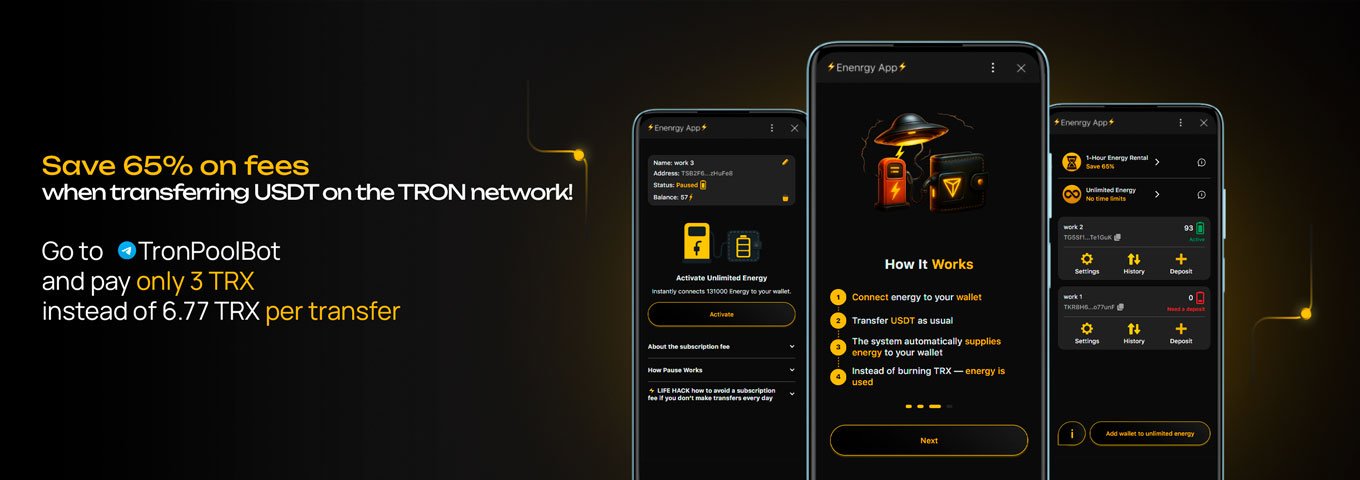
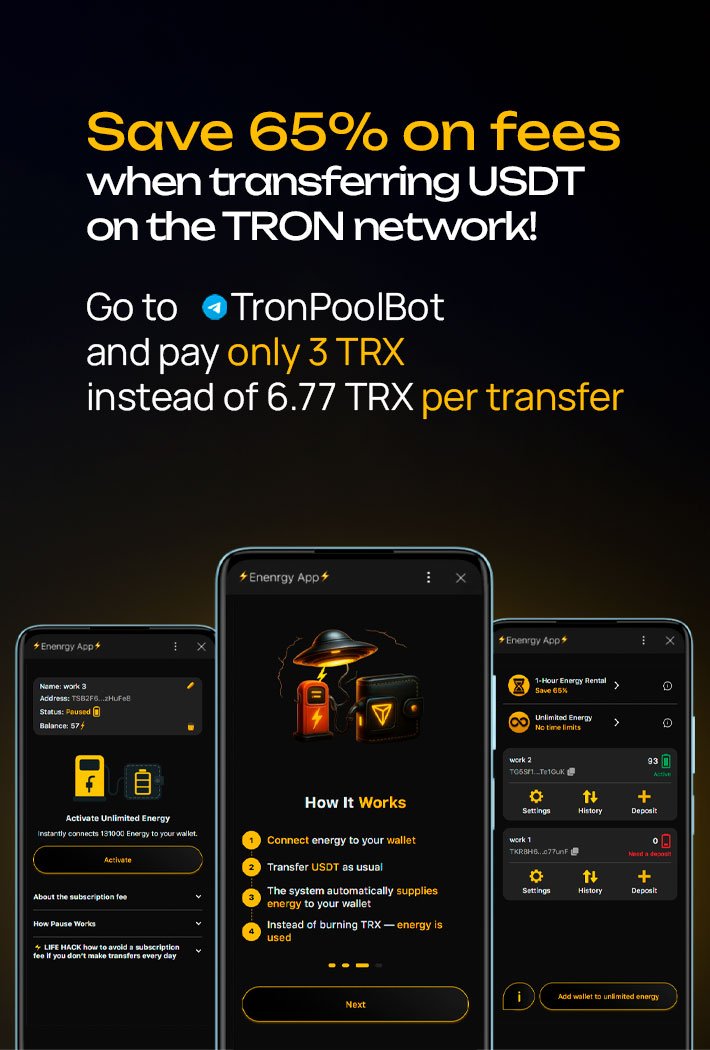
At the same time, Gas Tank provides easier transfers for the user but does not affect the fee amount. If you want to save on transfers, we recommend using the TRX energy purchase service Tron Pool Energy. This way, you can choose flexible Tron energy connection options for both one-time transfers and unlimited connection and pay only 3 TRX per transfer instead of 6,77 TRX.
From a usability standpoint, ctrl wallet crypto storage is built in a fairly intuitive way:
This approach significantly simplifies getting started with Web3. A beginner does not have to switch between several apps, and an advanced user sees their entire multichain portfolio in one place without unnecessary effort.
The table will help you quickly evaluate the wallet’s strengths and weaknesses. This format is convenient to use before making a choice because it focuses only on the most important advantages and limitations without unnecessary detail.
| Pros | Cons |
|---|---|
| Gas Tank, which solves the fee problem and eliminates the need to keep small leftovers of native coins in different networks | Closed-source extension code, which is not officially open-source, even though the team plans to open it in 2025 |
| Social Login via Google, Apple, or X without manual seed phrase management, which lowers the entry barrier for beginners | Slow loading and a rather heavy app, especially if your portfolio includes many networks |
| Multichain support with thousands of networks and assets and a unified portfolio across all accounts | Unstable performance of the built-in swap, which users regularly mention |
| Cross-platform availability: browser extension and full-featured mobile app | No built-in DApp browser in the mobile version, with connections only possible via WalletConnect |
| Support for Ledger and Trezor in the extension, which strengthens the security model | Social Login remains a potential risk due to the non-transparent recovery mechanics |
| Campaigns section with activities, airdrops, and mints that you can complete directly in the wallet |
This combination of pros and cons shows that Ctrl Wallet focuses on convenience and broad capabilities, but it cannot be called a universal solution for all types of users. Beginners appreciate its simplicity, while more advanced users tend to focus on the closed code and the specifics of how individual features work.
Ctrl Wallet looks like a practical working tool rather than yet another “raw theoretical” project. Put simply, the ctrl wallet crypto wallet feels most at home in the hands of two groups of users:
For people who prioritize open-source code and strict security control, this format is less suitable. In that case, it makes more sense to combine a hardware wallet for long-term storage with Ctrl as a convenient interface for everyday operations. In this setup, the wallet’s strengths are fully utilized, and the main drawback of closed-source code becomes much less noticeable.
If you actively use USDT TRC-20, it’s worth looking at how the wallet interacts with this network and works with TRON energy.
Ctrl Wallet is a multichain Web3 wallet that supports more than 2,500 assets and dozens of popular networks. It allows you to store cryptocurrency, connect to dApps, make transfers, and use a unified portfolio for all networks.
The wallet is non-custodial: the seed phrase is stored only on the user’s device. At the same time, the code remains closed, so security is partly based on trust in the developers and the FYEO audit.
The wallet automatically creates addresses in most supported networks and aggregates assets in a single portfolio. Connections to protocols are made via WalletConnect or built-in providers.
Yes, the browser extension supports Ledger and Trezor. This allows you to sign transactions on a physical device for additional protection.
Gas Tank allows you to pay fees in USDC or $CTRL, but the cost remains standard and depends on the network. Renting energy via Tron Pool Energy not only allows you to make USDT transfers without TRX thanks to the network’s official internal resources, but also to save up to 65% on fees.
Best Trust Wallet Alternatives: Top 8 Wallets for USDT TRC-20
8 reliable alternatives to Trust Wallet for USDT TRC-20: full TRON support, seed phrase import, energy management and minimal fees for USDT transfers.
2025-12-02
129

Sign, Confirm and Approve: safe usage in Web3
How Sign, Confirm and Approve differ, how to read Web3 signature windows and avoid hidden permissions that grant access to your tokens
2025-11-24
185
CoinMarketCap and CoinGecko: how to read crypto metrics
CMC and CoinGecko help you read market dynamics. Learn how to read metrics, compare coins, and find liquid assets.
2025-11-17
165