Exploring Gate Web3 Wallet: storage and transfers, DeFi and NFT tools, TRON and USDT TRC-20 support, BountyDrop rewards, and the Gate.io referral program.
Content
Gate Web3 Wallet is embedded into the Gate.io ecosystem and works as a non-custodial multichain wallet that combines CEX and Web3 capabilities in a single interface. Essentially, it is a gate wallet web3 crypto wallet available as a mobile app and a browser extension. Through it, you can manage assets across hundreds of networks, connect to DeFi services, work with NFT and use DApp platforms without leaving the Gate.io ecosystem.
In this article, you will figure out:
what gate web3 is, how reliable it is compared to open-source wallets and who gets control over private keys;
how gate web3 Tron and TRC-20 support works and how interaction with other networks is handled;
which additional features like BountyDrop, the referral program and trading bots make this wallet stand out from competitors and whether it can really be considered a full-fledged gate web3 alternative to Trust Wallet.
Every year, major exchanges are increasingly developing their own Web3 solutions, so it is important for them to keep the user within a single ecosystem. Against this backdrop, the question arises of how convenient and secure the gate web3 wallet is as a tool that connects the Gate.io spot account with the DeFi world, and whether it can be considered a full-fledged working tool rather than just an add-on for existing exchange users.
Key characteristics of Gate Web3 Wallet: supported networks, security and bonuses
The indicators below allow you to quickly assess the strengths of the wallet and understand how suitable it is for daily Web3 workflows.
Parameter
Rating
Comment
Supported networks and tokens
10/10
Support for 100–160+ networks, including Bitcoin, Ethereum, Solana, TRON and GateChain. This coverage makes the wallet universal, and gate web3 supported networks cover most popular ecosystems.
Security and key control
6/10
The wallet is non-custodial, the seed phrase is stored by the user. The main downside is the closed-source code, which cannot be audited as thoroughly as open-source solutions.
Interface convenience
7/10
The interface is rich and functional. This is convenient for experienced users, but newcomers may find it overloaded due to tight integration with exchange sections.
Backups
9/10
Manual seed-phrase storage and encrypted cloud backup are available. The cloud option is more convenient but depends on the security of the owner’s account.
Fees and optimization
8/10
Fees match the selected network. In TRON the wallet correctly works with Bandwidth and Energy, which helps save on sending USDT TRC-20. The final gate web3 fee is affected by blockchain congestion.
DeFi and Web3 integration
9/10
There are swaps, cross-chain exchanges, NFT support and access to Web3 via the gate web3 dapp browser, which makes the wallet a full-fledged tool for onchain work.
Cross-platform support
8/10
A gate web3 mobile app and gate web3 browser wallet are available; they synchronize via cloud backup and let you work from any device.
Perks and bonuses
10/10
BountyDrop, the referral program, memecoins and trading bots provide extra earning opportunities and interaction within the Gate.io ecosystem.
The metrics show a strong focus on multichain, TRON, DApps and additional ecosystem tools. Closed-source code and a heavy interface remain key trade-offs, but with active use of Gate.io, the wallet’s potential is maximized.
Gate Web3 security: non-custodial model, closed-source code and private key control
Gate Web3 Wallet’s security is built around a non-custodial model, so the user is solely responsible for their private keys and access to assets. Private keys and the seed phrase are generated and stored on the owner’s device, not on Gate.io servers, so asset management happens directly on-chain. This approach differs from an exchange account where the user interacts only with internal records in the system.
In the context of gate web3 crypto storage, this means that as long as the seed phrase is under the owner’s control, access to funds does not depend on the exchange’s status. At the same time, with this freedom comes responsibility, because losing the seed phrase or it being leaked makes the assets permanently inaccessible.
Additional questions arise regarding the application’s architecture, since Gate Web3 Wallet uses closed-source code. The source code is not published as open source, and the community cannot verify exactly how security mechanisms are implemented. This creates a number of nuances:
it is impossible to conduct an independent audit for vulnerabilities or potential “backdoors”;
the user fully relies on internal audits and the reputation of Gate.io;
compared to solutions where part of the code is open, the wallet looks less transparent.
Therefore, the answer to the question of whether gate web3 is secure depends on the user’s perspective. The technical model is structured correctly, but for those who choose only open-source solutions, closed-source code will be a significant downside.
For backups, Gate Web3 Wallet offers two approaches:
a classic method where the seed phrase is written down manually and stored offline;
a cloud backup, where data is encrypted and stored in the linked account.
Cloud recovery is convenient, especially when you need to quickly move the wallet to a new device; however, it introduces extra risk in case the account is compromised. If a user is switching from another application, they can import a seed phrase and transfer their familiar portfolio without creating new addresses.
Local protection in the wallet is based on basic mechanisms familiar to any smartphone owner. It uses a wallet password, a PIN code and biometrics via Face ID or Touch ID. These tools protect against accidental access on the device, but they don’t protect against malware or phishing. If a transaction is confirmed on an infected device, local security methods no longer work, so it is crucial for the user to follow basic digital hygiene.
How to install Gate Web3 Wallet: step-by-step guide
Installing Gate Web3 Wallet is fairly simple, so the gate web3 guide for beginners comes down to a few clear steps. The wallet is built into the main Gate.io app, and the user does not need to look for separate software. To understand how to install gate web3, it is enough to complete a few actions.
Where to download Gate Web3 Wallet: Gate.io app and browser extension
First, you need to open the App Store or Google Play and download the Gate.io app. After installation, you just need to log in to your account or create a new one. A toggle between two modes appears in the menu, namely the exchange part and Web3. Simply select Web3 and the app will take the user to the built-in wallet.
If you prefer to work from a computer, there is a gate web3 browser wallet in the form of a Chrome extension. It is installed through the official store, after which the extension connects to the same account as the mobile version.
Creating a new Gate Web3 wallet: seed phrase generation and password setup
When the user opens the Web3 section for the first time, the system offers to create a new wallet. To do this, you need to click the create wallet button, come up with a password that protects access and confirms transactions, write down the seed phrase and pass the check that it has indeed been saved correctly.
After that, the main screen appears with basic networks and the ability to start working with assets right away. It is important for beginners to understand that the seed phrase is the only key, and no one will be able to restore access if it is lost.
Importing a wallet: how to transfer a seed phrase from other Web3 applications
If the user is already working with another Web3 app, they can simply gate web3 import a seed phrase and move their entire portfolio. To do this, select “I already have a wallet”, enter the seed phrase, mark the required networks and set a password for local encryption. After import, the app will automatically pull in addresses and tokens, allowing you to continue working without changing familiar addresses.
Gate Web3 Wallet features: how to use the wallet for DeFi, NFT and Web3 activities
Gate Web3 Wallet’s functionality covers a wide range of scenarios, so it is more convenient to break them down by key areas. The wallet is designed for those who want to manage assets, interact with DeFi and NFT, work with multiple networks and not waste time on manual configuration.
Built-in Swap in Gate Web3: how to swap tokens in different networks through a single interface
The built-in swap helps you quickly exchange one token for another. The user selects the required network, such as Ethereum, BSC or TRON, the token they want to give, the token they want to receive, and the amount and the source balance.
Gate Web3 Wallet acts as an aggregator and uses different DEXes depending on the selected network. In TRON, major local DEXes are used, while in EVM networks, liquidity aggregators tied to the Gate ecosystem are involved. As a result, there is no need to search for a working DEX, add RPCs or manually change network parameters, because everything is available in a single window.
Buying and selling crypto for fiat in Gate Web3 Wallet
It is worth separately mentioning buying crypto for fiat. The wallet supports payment services like Banxa, Mercuryo and Simplex, so the user does not need to go to the exchange if they just want to quickly buy a desired token.
Usually, it looks like this: a person buys USDT or another popular token with a bank card, the assets are immediately credited to a Web3 address, then they can be sent to TRON, used in DeFi or leveraged for airdrop activities. Thus, the wallet acts as a reliable bridge between the banking system and Web3, which is especially convenient for beginners.
Gate Web3 DApp browser and access to Web3
Inside the wallet there is a full-fledged gate web3 dapp browser that provides access to numerous applications:
DEX services, lending and farming platforms;
NFT marketplaces and gaming projects;
new trending services, including memecoin platforms.
The built-in search makes it possible to find apps by name or address, and connection to the DApp takes place automatically, without manual configuration.
Examples of use:
working with PancakeSwap and other popular DEXes in EVM networks;
participation in meme projects like Pump.fun in supported ecosystems;
interaction with staking and farming protocols.
The key advantage of this approach is that the wallet synchronizes the selected network with the DApp itself, so the user does not need to change it manually or configure RPC.
NFT gallery
Gate Web3 Wallet has a separate tab for NFT. It shows collections across different networks such as Ethereum, BSC, Arbitrum and others, image previews and metadata, and functions for sending and receiving NFT directly to the wallet address.
The result is a convenient gallery where digital items are presented in a visual format. This expands gate web3 crypto storage by adding support for collectible assets and digital tickets.
BountyDrop, trading bots and referrals: unique Gate Web3 wallet features
Gate Web3 Wallet stands out against classic wallets thanks to services and tools built around the Gate.io ecosystem:
BountyDrop or Gateway offers tasks and airdrop activities where the user completes small tasks and receives rewards;
Refer2Earn allows you to get up to 30% of the fees paid by referred users;
the memecoin and “bot accounts” section is aimed at advanced trading, including strategy automation and copy trading.
Together, these capabilities turn the wallet into not just a tool for storing and sending assets, but also a full-fledged platform for earning, discovering new projects and engaging with the Gate.io ecosystem on a deeper level.
Asset management in Gate Web3: multichain portfolio across hundreds of networks
Let’s take a closer look at how the wallet behaves in different networks and how convenient it is to interact with TRON and USDT TRC-20. Gate Web3 Wallet was created as a universal tool, so the emphasis is on multichain capabilities and proper handling of TRON network resources, including Bandwidth and Energy.
Gate Web3 multichain capabilities: supported networks, L2 and GateChain in a single wallet
The wallet supports more than 100 blockchains and L2 solutions, so the user gets access to a wide range of ecosystems. It supports major EVM networks, TRON and TRC-20 tokens, alternative ecosystems and its own GateChain.
This eliminates the need to maintain a separate app for each network. It is especially convenient for those who are already working through the Gate.io infrastructure and want to manage assets from a single interface.
Gate Web3 and TRON: USDT TRC-20 transfers and working with Bandwidth and Energy resources
One of the most in-demand scenarios is a gate web3 crypto transfer in the TRON network, particularly USDT TRC-20. The wallet correctly displays the balance of TRX and TRC-20 tokens, the current Bandwidth and Energy levels and the estimated transaction cost even before sending it.
It is important to understand the basic mechanics of TRON. Bandwidth is responsible for data transmission, Energy is spent when interacting with smart contracts, and a sufficient Energy reserve allows you to pay significantly less for transfers or sometimes avoid extra TRX spending altogether.
Thanks to this, gate web3 TRON support feels simple and predictable. Addresses start with T, USDT TRC-20 can be sent to any external wallets and exchanges, and transactions themselves are cheaper than in congested EVM networks — especially if you have Energy available.
Where the inconvenience appears: staking TRX via Gate.io exchange
There is one nuance worth considering. To receive Energy and Bandwidth resources via Gate.io, the user has to operate through an exchange account. This setup is logical if you treat staking as an investment tool, but it complicates workflows for those who just want to send USDT TRC-20 without bouncing between the wallet and the exchange.
A more convenient solution for transfers — Tron Pool Energy
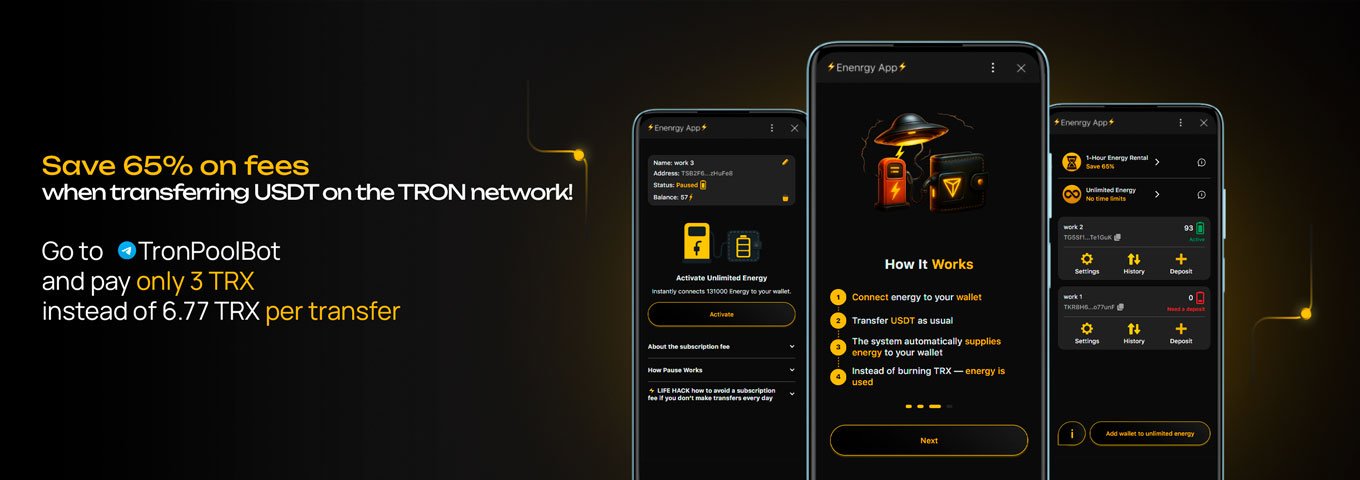
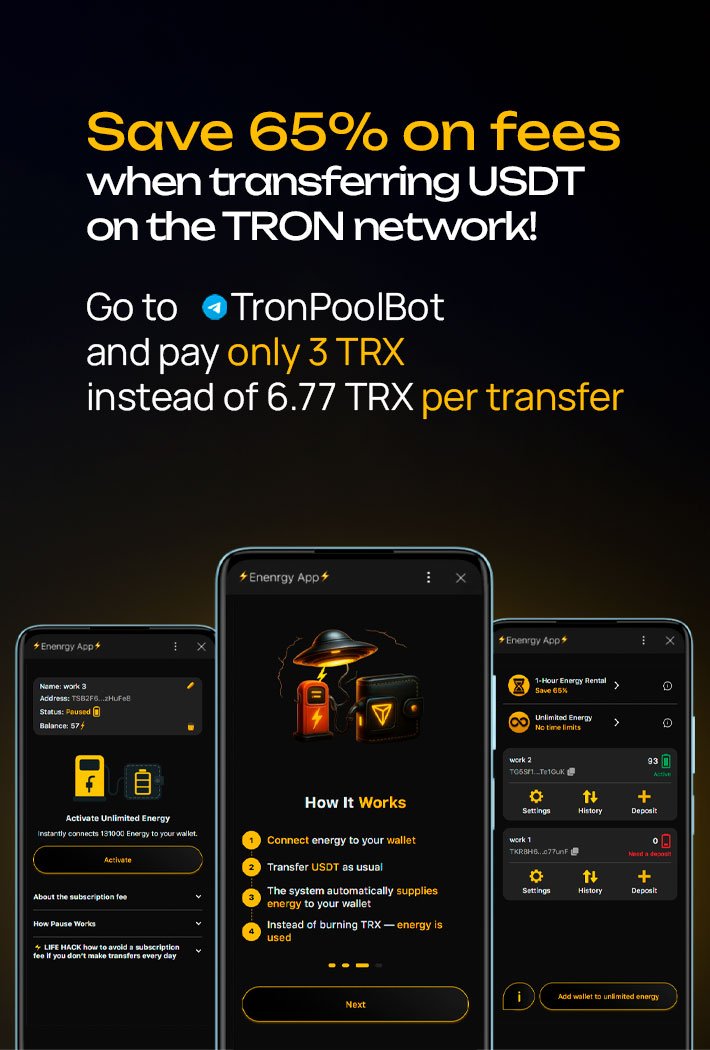
In such scenarios, users typically choose an alternative — Tron Pool Energy, which connects directly to the Gate Web3 wallet and provides:
reduced USDT TRC-20 transfer costs: only 3–6 TRX instead of 6,77–13,37 TRX,
full compatibility with Gate Web3, Trust Wallet, TokenPocket, OneKey and other wallets,
quick and secure connection — only the public address is used,
instant Energy allocation without tying to an exchange and without lengthy procedures,
24/7 support and flexible pricing plans for regular USDT transfers.
Save up to 65% on USDT TRC-20 transfers with Tron Pool Energy
As a result, Gate Web3 remains a convenient interface, while Tron Pool Energy makes working in TRON cheaper, more stable and much more comfortable — especially for those who send USDT TRC-20 on a daily basis.
Pros and cons of Gate Web3 Wallet
Before choosing a Web3 wallet, it is important to understand what advantages it offers and in which situations it may be inconvenient. Gate Web3 Wallet combines exchange capabilities and onchain functionality, and that is why its strengths and weaknesses are so pronounced.
Pros
Cons
Integration with the Gate.io exchange, which allows you to use spot, derivatives, the Web3 wallet, DApp browser and NFT in one place. This approach simplifies switching between products and makes working within the ecosystem seamless.
Closed-source code that cannot be independently reviewed. Advanced users lack transparency and therefore cannot be fully sure that the security implementation has no vulnerabilities.
Support for 100+ networks, which helps you use a single wallet for BTC transfers, working with EVM networks, interacting with alternative ecosystems and managing assets in L2.
The interface may seem complex due to the combination of exchange and Web3 features. A newcomer has to constantly switch between sections, which can sometimes overload the process.
Correct handling of Energy in TRON, which allows you to reduce costs for USDT TRC-20 and other TRC-20 tokens. The wallet shows Bandwidth, Energy and a fee estimate before sending a transaction.
Energy can only be obtained via TRX staking in the CEX section, not in the Web3 wallet. This adds an extra step for those who want a fully onchain approach.
Unique features like BountyDrop, trading bots and the referral program. These tools turn the wallet into a full-fledged working hub and help users find airdrops or earning opportunities.
—
Cloud backup, which helps safely move the wallet to a new device and reduces the risk of losing access if the seed phrase is lost and the user does not store it offline.
—
The table shows that Gate Web3 Wallet is suitable for users who are already inside the Gate.io ecosystem and want to combine exchange trading and Web3 features in a single app.
Conclusion
Gate Web3 Wallet is not just a multichain wallet, but a key tool of the Gate.io ecosystem. It combines non-custodial asset management, support for a large number of networks and tokens, a built-in gate web3 dapp browser and features for participating in airdrops, referral programs and algorithmic trading.
This format is especially convenient for those who already actively use Gate.io and want to work with both exchange and onchain assets through a single interface. It will suit users who value multichain, fast access to DeFi and a wide feature set within one app.
At the same time, this option may not appeal to those who choose exclusively open-source solutions or are looking for the simplest possible Web3 wallet without exchange ties and extra features. In the end, the gate web3 wallet can be viewed as a multifunctional tool created for those who are deeply involved in the Gate.io ecosystem and actively use Web3.
Its main trade-off is closed-source code and a more complex structure, but for many users these specifics are justified by the wallet’s high level of integration and capabilities. If you actively use USDT TRC-20, it is worth seeing how the wallet interacts with this network and works with TRON Energy.
Share
Link
Did you like the article?
FAQ
Are Gate Web3 wallet and the Gate.io exchange the same thing?
No, they are different. Gate.io is a centralized exchange where assets are stored custodially, while Gate Web3 Wallet is a non-custodial interface through which you manage your keys directly on-chain. They are linked by an account, but architecturally they are two separate products.
Is Gate Web3 secure for storing cryptocurrencies?
Yes, since the wallet runs on a non-custodial model, the seed phrase is stored only by the user. The main trade-off is the closed-source code, which prevents the community from independently reviewing the internal security architecture.
Can Gate Web3 be used as an alternative to Trust Wallet?
Yes, Gate Web3 offers a multichain portfolio, a DApp browser, an NFT gallery and earning features through BountyDrop and referrals. However, Trust Wallet is fully open-source, while Gate Web3 is not, which can be an important factor for some users.
Is it possible to save on TRON fees when using Gate Web3?
Yes, if the user has enough Tron Energy — the internal resource of the blockchain — some operations, including USDT TRC-20 transfers, can be performed with almost no TRX being charged. For consistent savings, renting Energy via Tron Pool Energy is a good option, as its fees are fixed and predictable.
Does Gate Web3 support buying crypto with a bank card?
Yes, through integrated services like Banxa and Simplex, you can buy USDT and other assets for fiat. Tokens are immediately credited to the wallet’s Web3 address, which is convenient for beginners.
What additional features does Gate Web3 Wallet offer?
The wallet provides a DApp browser, an NFT section, built-in swaps, cross-chain exchanges, BountyDrop and trading bots. Thanks to this, it works not only as asset storage but also as a full-fledged platform for onchain activities and earning.
TRX calculator
Find out how much you spend on commissions!
Enter your crypto wallet address and we'll calculate how much TRX you've spent on fees over the last 30 days.
Learn how Arkham Intelligence deanonymizes crypto wallets, what it means for your privacy on the TRON network, and how to protect yourself using Tron Pool Energy. In-depth review and guide.




 English (EN)
 Русский (RU)
 Українська (UK)
 español (ES)
 Türkçe (TR)