


 English (EN)
 Русский (RU)
 Українська (UK)
 español (ES)
 Türkçe (TR)


How to Send USDT TRC-20 Without TRX: 3 Proven Methods
Got USDT on the TRON network but no TRX to send it? Discover three proven ways to avoid buying TRX — from Tron Gas Free to TRON Energy rental.
2025-07-30
132
Authorization is required only to use the service «Team energy»
Enter the e-mail you provided during registration and we will send you instructions on how to reset your password.
An error occurred while processing your request. Please try again later. If the problem persists, please contact our support team.
imToken Review: A mobile multichain wallet with a DApp browser, support for 50+ networks, the imToken Card with a Swiss IBAN, and full TRON integration.
The imtoken wallet has been a notable player on the market for many years, because its first version was released even before DeFi became popular, and the current 2.x line has been consistently updated since 2018. In essence, this is not just an imtoken crypto wallet, but a full-fledged mobile hub for working with Web3. A single app combines multi-chain asset storage, access to DeFi and NFT, a convenient DApp browser, and the ability to issue your own crypto card, imToken Card.
The imtoken mobile app is available on iOS and Android and is suitable for those who are used to managing assets directly from their phone and do not want to be limited to a single network. That’s why many people logically ask what is imtoken and how well it can fit their personal needs.
In this article we will cover:
The following sections will help you go from basic steps to more advanced actions. This approach makes the review useful both for those who are just choosing an im token beginner wallet and for those who are comparing it with other multi-chain solutions.
Before diving into a detailed breakdown of features, it’s helpful to look at the big picture. Below is a consolidated assessment of key characteristics by which the imtoken wallet is most often compared with other multi-chain solutions. The table helps you quickly understand the strengths and weaknesses of the app and gives a general idea of how well it fits different usage scenarios.
| Criterion | Score (1–10) | Comment |
|---|---|---|
| Supported networks and tokens | 9/10 | 50+ blockchains and 100,000+ tokens (ERC20, TRC20, ERC721, etc.), solid coverage. |
| Security and key control | 6/10 | Non-custodial, but the apps are not fully open-source, which reduces trust. |
| Interface convenience | 8/10 | Simple and intuitive interface without overloaded settings, decent localization. |
| Backup and recovery | 10/10 | Reliable scheme based on a 12/24-word seed phrase, an industry standard. |
| Fees and transaction optimization | 5/10 | High minimum thresholds for swaps and purchases, which makes small operations unprofitable. |
| DeFi and Web3 integration | 9/10 | Powerful DApp browser with a catalog of 600+ projects and WalletConnect support. |
| Cross-platform support | 5/10 | The app is fully mobile, there is no desktop or full web version. |
| Support and documentation | 8/10 | Extensive knowledge base, detailed guides, and regular updates. |
| Perks and bonuses (imToken Card) | 9/10 | Multi-currency Mastercard with a Swiss IBAN, subject to a complex acquisition procedure. |
This summary shows that imtoken supported networks cover the needs of most users, but those who value code openness and the ability to work from a computer may be discouraged by the mobile-only focus.
The question is imtoken safe or not most often becomes key when choosing a wallet. It’s important to understand how protection is structured, which security layers imToken uses, and which limitations you need to keep in mind. The foundation is a non-custodial model: the seed phrase and private keys are generated on the owner’s device and are not transmitted to the company’s servers. This ensures control over funds but requires careful handling of the mnemonic.
The core security logic is built on the fact that the user personally controls access to funds. Key points are as follows:
After creating the first Identity, the wallet displays a reminder about the need to write down the seed phrase and immediately offers to perform a backup.
In day-to-day use, basic protection tools are used:
For maximum security, you can connect the imKey hardware wallet. Important details:
This option is especially convenient for those who prefer to store keys on a separate physical device.
The transparency question deserves special attention. imToken is not a fully open-source solution: only the libraries and the TokenCore core are open, while the mobile clients remain closed. This means:
When working with Web3 apps, built-in privacy tools in the wallet are useful. They help reduce your digital footprint and quickly terminate active connections. The following features are available:
All these mechanisms create a robust protection system for most users. The only significant limitation is that the app is not fully open-source, which may be critical for those who choose solutions with maximum transparency.
This section helps you get through the first steps and serves as an imtoken guide for beginners. It also gradually answers core queries like how to use, installation, login, and imtoken setup. To avoid mistakes, it is important to start correctly—by choosing the official installation source and properly creating the first Identity.
The easiest way is to open the official website token.im, where you’ll find direct links to the iOS and Android versions. Users can go to Google Play or the App Store, and there they should definitely check the developer—the app must be published by IMTOKEN PTE. LTD., which eliminates the risk of a fake. It’s better not to use third-party APKs, and if this option is unavoidable, it is recommended to verify the file hash before installation.
After installation, the app will prompt you to create the first Identity. Later, you can add additional wallets to it via the Add another wallet menu. Several options are available:
During wallet creation, the app displays a reminder about the need to make a backup, emphasizing that without the seed phrase it is impossible to restore access.
After successfully creating an Identity, you can move on to profile setup. To do this, open the My Profile section and go to Use settings. Here you choose the interface language, including Russian via the Multilingual option, and set the display currency—USD, EUR, RUB and others. In the same section, you’ll find security and app lock parameters. This set of settings completely covers the imtoken login and setup question: you only need to configure everything once to make the app convenient for daily use.
The next step is connecting the required networks. In imToken it’s important to distinguish between the primary Identity and individual blockchain accounts. In the Add Accounts to wallet section, the app offers a list of networks divided into categories:
This grouping saves you from having to manually search for RPC URLs or configure parameters. The user simply selects the desired network
This section helps you understand imtoken wallet features and shows that it is not just a coin storage, but a full-fledged platform for working with Web3.
The main “Wallet” screen is designed so that key actions are always at hand. The user sees:
Navigation is split into two levels. The bottom menu opens the main sections:
Under the balance, there is a horizontal panel that you can swipe. It contains buttons for Transfer, Receive, Activity, Rent Energy, Trade, Bridge, DApp, Resource, Buy, and other functions. Tapping any token, for example TRX or ETH, opens a separate card with its history and quick access to Earn, Trade, Stake, and Bridge actions. This design makes storing crypto in imtoken convenient and allows you to quickly perform the necessary operations.
The “Browser” section turns imToken into a full-fledged Web3 work tool. Through it you can:
Many popular services are already added to the catalog. These include Uniswap, PancakeSwap, OpenSea, Compound, and other well-known projects. The built-in browser makes it convenient to perform advanced actions such as staking rare tokens, participating in liquidity pools, working with lending protocols, or interacting with NFT collections.
The “Market” section displays:
Swaps are implemented in the Trade section. On this screen, the swap feature uses Tokenlon technology. Essentially, this is a liquidity aggregator that connects to DEXs and selects the best rate. At the same time, it is important to keep a few points in mind:
If you need to exchange a small amount, it’s usually more cost-effective to open a third-party DEX via the DApp browser and manually choose the best route.
Through the Buy button, you can use MoonPay and OpenC fiat gateways. They are suitable if you want to:
Each service has its own specifics:
If you frequently buy cryptocurrency in small amounts of around $20–30, it is worth taking these limitations into account in advance.
The multi-currency imToken Card deserves special attention. It is issued in partnership with the Swiss fintech bank Fiat24 and works as a debit Mastercard tied to a Swiss IBAN. Its key advantages are:
To get the card, you need to go through several steps:
After these steps, the user gets an account with a Swiss IBAN and a virtual card. In some countries, a physical card is also available. This combination makes the imToken + imToken Card bundle a convenient bridge between Web3 and traditional financial instruments.
The wallet also shows that it is ready to work with digital assets in a broad sense. imToken can:
At the same time, built-in staking in the app is limited. Some assets can be delegated directly, but most opportunities, including working with TRX, are implemented through third-party services. The user opens the required protocol, such as TronScan or a staking platform, and performs operations through the built-in browser.
The multi-chain approach in imToken makes asset management convenient and flexible, and in many ways this is why users often consider imtoken as a trust wallet alternative. This is especially noticeable when working with TRON, where full tron and trc-20 in imtoken support is implemented, allowing you to manage TRX and USDT TRC-20 without limitations. The logic here is structured so that even a beginner can quickly figure things out, while an advanced user can optimize commission costs.
Everything starts with the Blockchain Networks section, where imToken offers flexible blockchain management. After TRON is activated, the wallet automatically adds the corresponding account and enables the display of the required resources. This makes it possible to immediately work with TRX and TRC-20 tokens without manually configuring RPC.
It’s particularly convenient that in this section the user can:
Thanks to this approach, the imtoken wallet becomes a full-fledged multi-chain control center. The wallet correctly shows Energy and Bandwidth, which is crucial for working with TRON, since most operations in this network rely on the resource system.
When sending transactions on TRON, imToken gives the user as much information as possible. This prevents fee-related surprises and makes USDT TRC-20 transfers much more transparent. The send screen displays all data that affects the cost of the operation.
Key interface elements look like this:
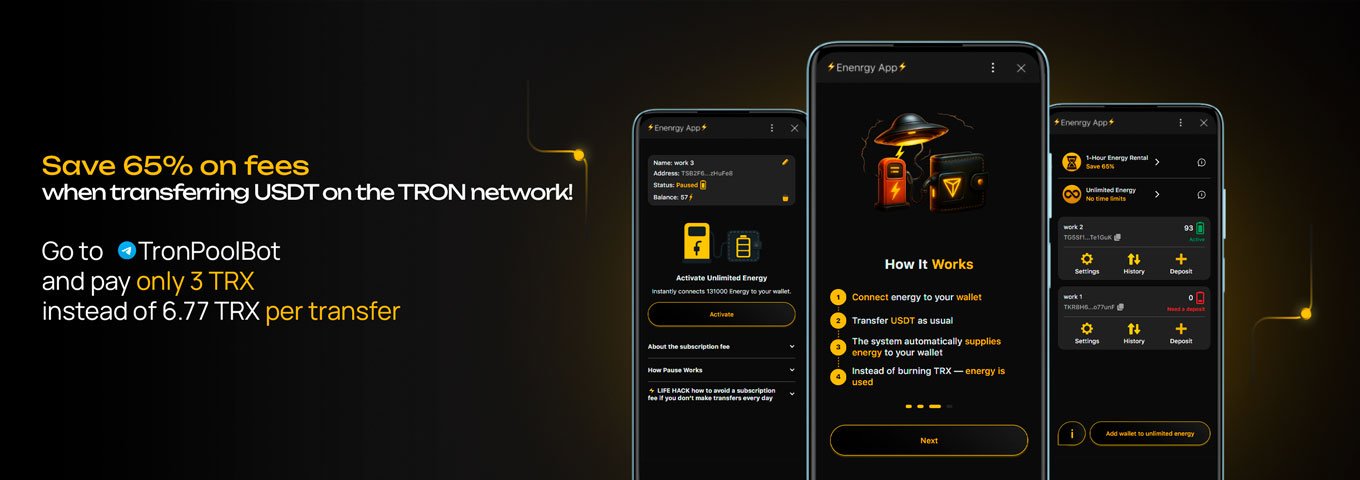
If Tron energy on the balance is not enough, the user can choose to pay the fee in TRX or use the Tron Pool Energy service, which allows you to reduce network fee costs by up to 65%. For example, a standard fee in the wallet is about 6,77–13,37 TRX, while with Tron Pool Energy it’s only 3–6 TRX. In addition, the service offers 24/7 support for users on any questions.
The wallet doesn’t just show balances—it actually helps you manage TRON’s specifics, making work with Energy and Bandwidth understandable even for those who have never dealt with this network’s resource model before.
How to use USDT TRC-20 in imToken profitably: a separate guide on TRON fees and energy
When a user is choosing a new wallet, they always want to quickly understand its strengths and where limitations may arise. Below are the main pros and cons of the imtoken wallet to give you an at-a-glance picture and help you assess how well it fits your needs.
| Pros of imToken | Cons of imToken |
|---|---|
| Support for 50+ networks and hundreds of thousands of tokens | The app works only on mobile devices and has no desktop version |
| Convenient DApp browser with access to hundreds of DeFi and NFT projects | The mobile clients’ source code remains closed |
| imToken Card with a Swiss IBAN and the ability to top up with crypto | High minimum amounts for swaps (around $15) and purchases (from $20) |
| Interface is understandable even for beginners | To get the card, you need KYC, a small amount of ETH on Arbitrum, and NFT minting |
| Convenient work with the TRON network and Energy resources | For some advanced staking operations, you need to switch to external DApps |
| Integration with the imKey hardware wallet | No mature desktop ecosystem like some competitors have |
If you compare imToken and Trust Wallet, the former beats its competitor in TRON support, the ability to issue a card with an IBAN, and deeper integration with the imKey hardware wallet. Trust Wallet is more often chosen by those who prioritize fully open-source code and broader cross-platform support.
imToken proves itself to be a convenient multi-chain tool that combines asset storage, support for dozens of networks, a built-in DApp browser, and the ability to issue a crypto card with an IBAN. The interface remains understandable even for those who are just starting to explore Web3. Looking at imtoken user reviews, people most often note the stable DApp browser, convenient TRON and USDT TRC-20 usage, and the practicality of the imToken Card + IBAN combo.
Criticism most often touches on the closed-source code, the lack of a desktop version, and high minimum limits for swaps and purchases. Therefore, imToken is best suited for those who actively use DeFi and Web3, are building a multi-chain portfolio, and see the card as a real tool. It will be less convenient for those who expect fully open-source code, work primarily from a computer, or frequently make small $5–10 transactions.
Overall, it is a solid choice among mobile wallets and a notable imtoken trust wallet alternative, especially if you care about TRON support and a real crypto card. This has been a general im token review. And if you use USDT TRC-20, check out our next guide on how this wallet works with the TRON network and energy.
Yes, fully. The wallet correctly displays USDT TRC-20, Energy, and Bandwidth, allowing you to send transfers without limitations. The interface shows whether you have enough resources for a transaction. And if not, it is fully compatible with TRON energy purchase services such as Tron Pool Energy.
It is a non-custodial wallet where the keys are stored on the device. However, the mobile clients are not fully open-source, so for maximum transparency it’s better to use the imKey hardware wallet.
Only from the official website token.im or from Google Play / App Store, published by IMTOKEN PTE. LTD. Third-party APKs increase the risk of phishing.
TRON appears automatically when an Identity is created—just open Add Accounts and select the network. The wallet immediately connects a TRX account and enables Energy/Bandwidth display.
You need a 12/24-word seed phrase. Just install the app on a new device and import the phrase via Import existing wallets.
Yes, you can create multiple accounts, add networks, and connect a hardware imKey. This is convenient for separating personal, work, or DeFi addresses.
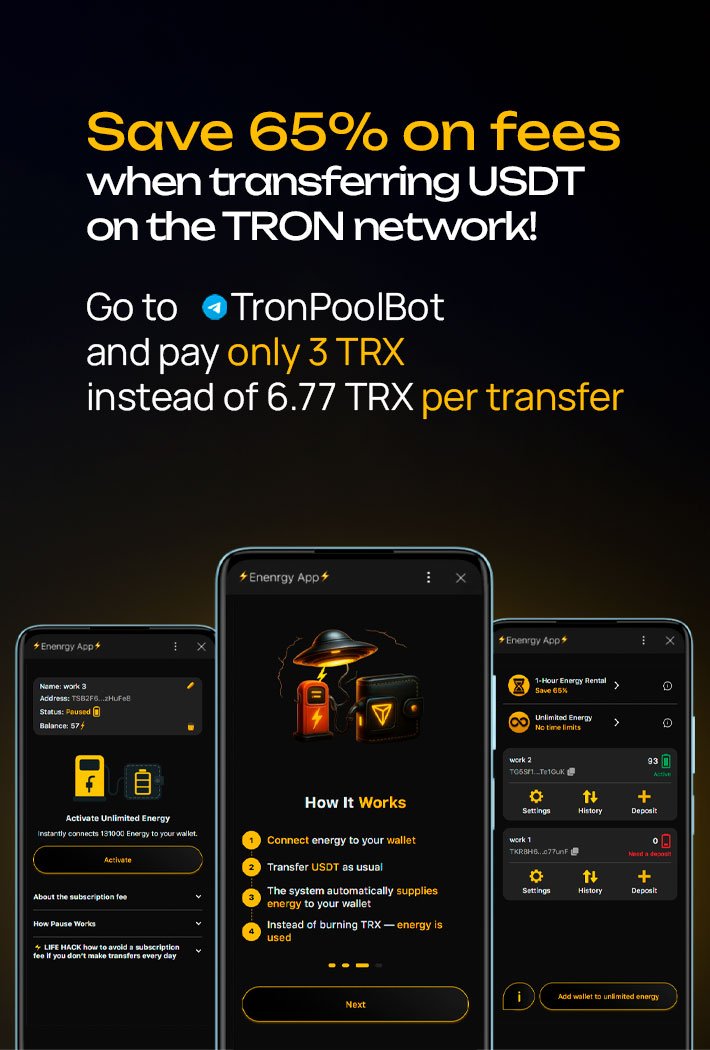
How to Send USDT TRC-20 Without TRX: 3 Proven Methods
Got USDT on the TRON network but no TRX to send it? Discover three proven ways to avoid buying TRX — from Tron Gas Free to TRON Energy rental.
2025-07-30
132

Leaders of the Crypto World: Who Sets Trends and Moves the Market
From Musk to Buterin — discover who shapes the crypto market in 2025. The key names, projects, and events driving global trends.
2025-10-20
169

Exchange account freeze: causes and solutions
We explain why crypto exchanges block accounts, what AML triggers fire, common user mistakes, and how to communicate with support to restore access.
2025-11-26
144