


 English (EN)
 Русский (RU)
 Українська (UK)
 español (ES)
 Türkçe (TR)


Best Trust Wallet Alternatives: Top 8 Wallets for USDT TRC-20
8 reliable alternatives to Trust Wallet for USDT TRC-20: full TRON support, seed phrase import, energy management and minimal fees for USDT transfers.
2025-12-02
129
Authorization is required only to use the service «Team energy»
Enter the e-mail you provided during registration and we will send you instructions on how to reset your password.
An error occurred while processing your request. Please try again later. If the problem persists, please contact our support team.
OneKey is a universal Web3 hub: hardware wallets, mobile and desktop apps, a DApp browser, staking, bridges, swaps, and support for dozens of networks.
OneKey is seen not just as a wallet but as a full-fledged ecosystem developed by ONEKEY LIMITED. It includes hardware devices on the level of Ledger and Trezor and a powerful onekey crypto wallet that works on mobile platforms, in desktop format, and as a browser extension. The project is growing as a non-custodial HD wallet with open-source code and support for multiple networks. It combines working with Bitcoin, Lightning, TRON, Solana, Aptos and many EVM networks while providing access to advanced Web3 features.
In this article we will cover:
Today, there is a growing demand for a single crypto asset management hub that combines the reliability of an onekey hardware wallet and the convenience of a hot solution like the onekey mobile app. Users are tired of switching between MetaMask, exchange apps, and separate programs for Ledger, so OneKey aims to replace all of this with a single tool that combines the capabilities of several services at once.
Before moving on to a detailed breakdown of the OneKey ecosystem, it’s convenient to look at the key metrics. This format helps quickly assess the strengths of the onekey wallet and understand how universal it is.
| Criterion | Score (1–10) | Comment |
|---|---|---|
| Supported networks and tokens | 10 | The wallet works with a wide range of networks. It supports Bitcoin, Lightning, Ethereum, TRON, Solana, Aptos, Near, DOGE, LTC, and many EVM networks such as BSC, Arbitrum, Avalanche, and Polygon. |
| Security and key control | 10 | The project uses open-source code and a non-custodial model. There is tight integration with hardware onekey hardware wallet and protection of the DApp browser via GoPlus, BlockAid, and ScamSniffer. |
| Interface convenience | 8 | The interface is fast and looks neat. However, the large number of features can confuse a beginner who is just starting to explore the crypto space. |
| Backups | 9 | A standard seed phrase and built-in backup reminders are used. Automatic backups are available in the Prime subscription. |
| Fees and optimization | 8 | The app is free. The user only pays network gas. Swap and limit orders incur a 0.3% fee. You can manually configure gas and choose routes for different networks. |
| Integration with DeFi and Web3 | 10 | The wallet supports working with a DApp browser, WalletConnect, staking, and bridges. There is access to DEXs such as OKX, 1inch, 0x and the ability to trade Hyperliquid futures. |
| Cross-platform support | 10 | The app is available on iOS, Android, as a web version, on Windows, Mac, and Linux. There is also an extension for Chrome and Brave. |
| Support and documentation | 9 | The project has a developed Help Center, an active community, and regular updates, so the required information is found quickly. |
| Unique features | 9 | OneKey offers Hyperliquid futures trading, a Prime subscription, a referral program, and features to improve privacy in Bitcoin. |
After this table, it becomes clear that OneKey combines convenience, security, and broad Web3 capabilities in a single tool. This balance makes it an attractive choice for users who need a universal crypto wallet with a large number of features.
Security in the OneKey ecosystem is built around a simple logic. The user remains the only owner of their keys, so the onekey wallet works as a fully non-custodial solution. A seed phrase of 12 or 24 words is created directly on the device and is stored only by the owner.
The app regularly reminds you to create a backup, but it cannot restore it for you. If the phrase is lost, access to assets disappears with no way to recover it, which is why the topic of onekey seed recovery is highlighted in the interface and described in detail in the help section.
The answer to the question of whether onekey is safe becomes clear when you look at the approach to code openness. The repositories are available on GitHub, and any specialist can verify how correctly the software part and the firmware of the hardware devices work. This approach helps the user feel confident, since the technology undergoes external reviews and is supported by an active community.
There are no hidden mechanisms in the open-source code, and auditors confirm the absence of critical vulnerabilities. Reviews also include references to independent checks such as SlowMist and mention that the manufacturer has no history of losing funds through its own fault.
The use of OneKey hardware devices plays a special role. The user gets flexibility: the mobile app is suitable for daily work, while the hardware onekey hardware wallet takes on the role of a secure vault. The Classic, Touch, and Pro family devices are protected by certified chips, connect via Bluetooth or USB-C, and allow you to sign important transactions without risking exposure of private keys.
This approach often encourages users to consider OneKey as a convenient alternative to ledger, because the quality of protection remains at a serious level, while interaction with the app becomes smoother.
Local protection on the devices is also well thought out and includes several mechanisms:
Even if a smartphone accidentally ends up in someone else’s hands, an attacker will not be able to sign transactions without authorization, and the seed phrase will remain safe where only the owner wrote it down.
The OneKey team pays a lot of attention to Web3 security. The built-in DApp browser and extension do not simply open any links; they check them through GoPlus, BlockAid, and ScamSniffer. These services analyze potentially dangerous websites, assess smart contracts, and detect spam tokens.
The user receives tips and warnings in a convenient form and can understand in advance what they are about to interact with. This approach is expressed in several useful tools:
All of this creates a noticeably safer environment for working with Web3 and reduces the likelihood that the user will encounter phishing or malicious contracts.
This section works well as an onekey guide for beginners and at the same time shows how flexibly the app can be configured for your needs.
OneKey can be installed via the App Store, Google Play, Microsoft Store, and also downloaded as a desktop version or a browser extension. It is best to download the onekey mobile app only from links on the official website onekey.so or through trusted app stores.
At first launch, you can choose between creating a new wallet and importing an existing one:
when importing, you can use several options:
This approach allows you to move your assets to OneKey without changing familiar addresses and without unnecessary steps.
The app pays a lot of attention to security and regularly reminds you to create a backup. It displays warning screens, asks you to make sure the seed phrase is written down, and does not allow full operation until a backup has been created.
For experienced users, the Prime subscription provides access to automatic encrypted backups. At this stage, it becomes easier to understand what onekey is from a security perspective. The seed is stored only by the owner, and responsibility for access to funds lies entirely with them.
Once the basic part is complete, OneKey offers advanced parameters that help you configure the wallet more deeply:
After that, all that remains is to move on to the question of how to use onekey in everyday scenarios, add the required networks, import tokens, and connect to Web3 apps.
OneKey genuinely aims to be a universal tool that replaces several apps at once. In a single interface, the user gets wallet functionality, an exchange, a DApp browser, a staking platform, and even a futures trading terminal. All of this creates the feeling of a single workspace where it is easy to switch between tasks.
Buying cryptocurrency is done via a built-in aggregator that includes dozens of fiat services. With its help, you can purchase BTC, ETH, stablecoins, and USDT in the desired network starting from about 5 dollars. Popular providers such as MoonPay, Transak, and Revolut are supported, so the process looks familiar and does not cause difficulties.
Selling assets into fiat is somewhat more modest. Separate services like MoonPay and Unlimit are used here, and the minimum threshold usually starts at 25 dollars. This set of features helps you quickly withdraw funds, although there is no full-fledged P2P yet, as some competitors offer.
OneKey aggregates liquidity from several sources at once, including:
The user receives several tools:
Each of these operations adds a 0.3 percent fee. It is added on top of network fees, so when discussing what fees the user will face, it is important to consider both factors.
This feature sets OneKey apart from most wallets. The app allows you to trade futures directly from the interface, using the onchain Hyperliquid exchange.
The user gets:
This capability is suitable for those who work with high volatility and want to use onekey features and capabilities not only as storage but also as a full-fledged trading tool.
The Earn section offers several ways to work with assets:
These tools turn onekey cryptocurrency storage into a more functional process. The user can not only hold assets, but also earn yield directly in the wallet.
The OneKey referral program incentivizes bringing in new users:
The Prime subscription, which costs about 239 dollars a year, suits those who actively interact with the wallet. It includes:
All these capabilities help you use OneKey not only as a wallet but also as a flexible workspace for daily crypto activity. This set of features shows that the app truly aims to replace several services at once and become one of the most convenient hubs for working with Web3.
OneKey does not limit itself to a single blockchain and does not try to present itself as an “EVM wallet” or a “Solana wallet”. The app is built as a unified asset management hub that suits users who work with several ecosystems at once and do not want to keep a separate app for each one. This approach makes the onekey wallet a convenient choice for users with a diverse portfolio who need a single interface for dozens of networks.
The list of onekey supported networks includes:
This set makes it easier to manage a large and diverse portfolio of assets, because the user can keep BTC, SOL, EVM tokens, and USDT in different networks all in one app.
It is worth looking separately at working with TRON, because this network remains one of the most popular for USDT settlements. OneKey fully supports TRX and TRC-20 tokens, correctly displays Energy and Bandwidth resources, and allows you to stake coins via Tronscan. But most users do not always want to keep frozen TRX or manually manage resources—especially if transfers are needed regularly.
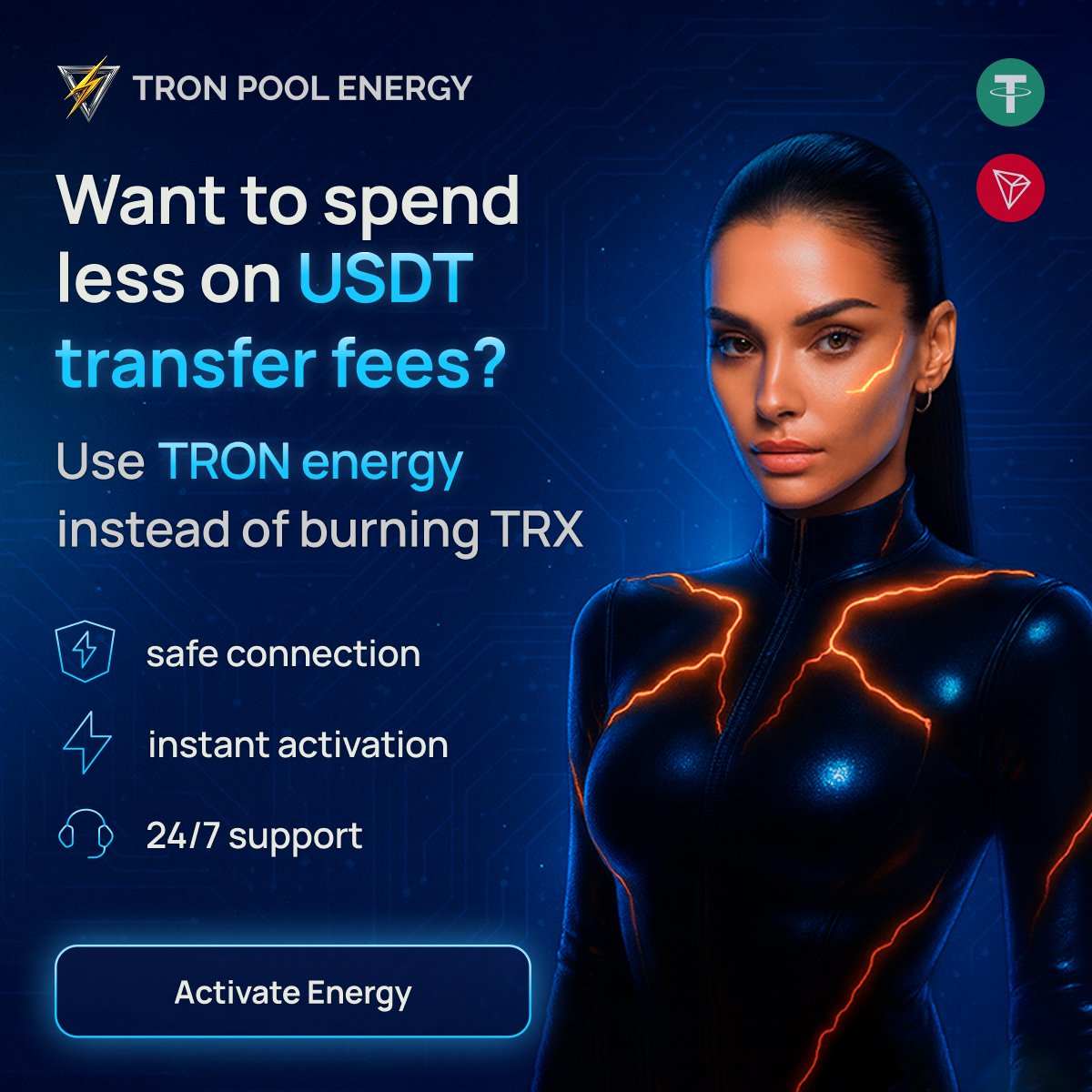
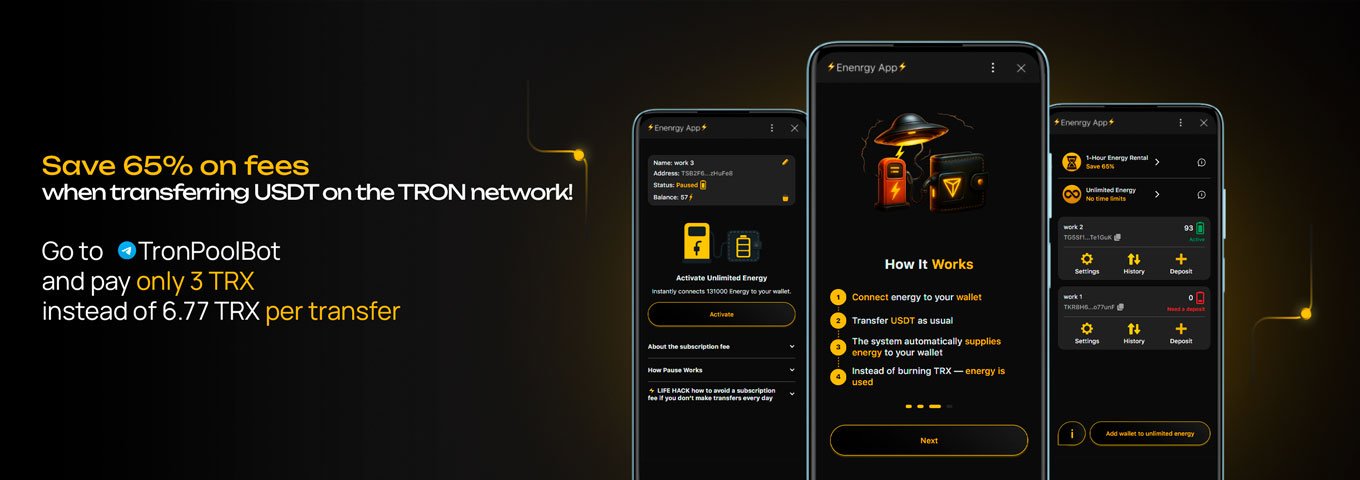
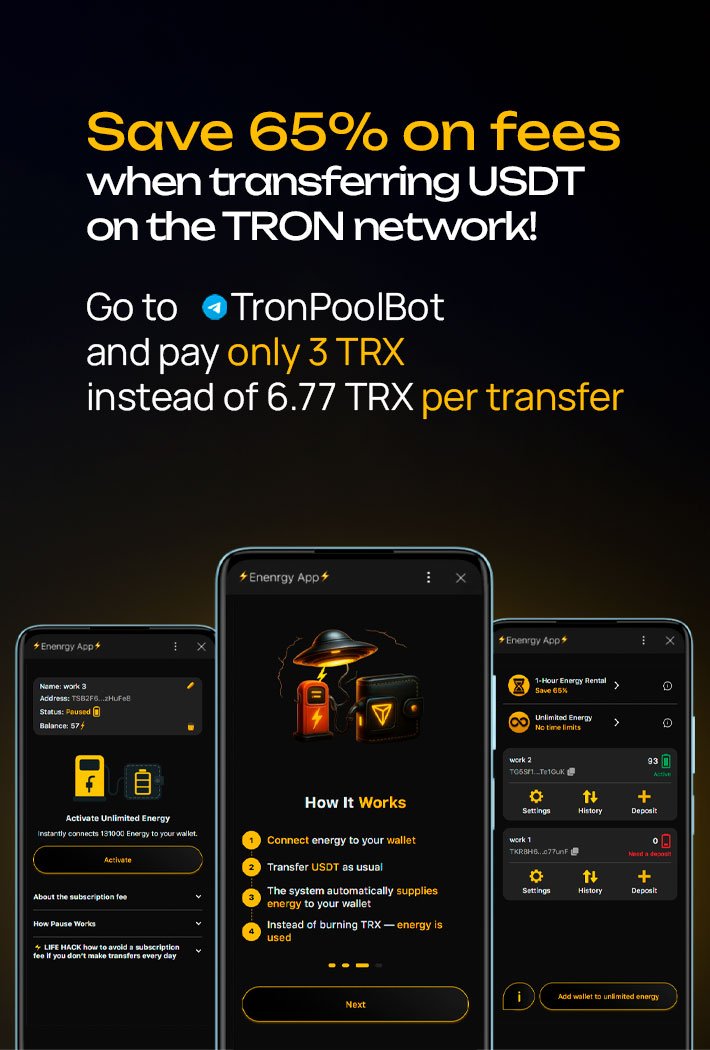
Here, OneKey works well with Tron Pool Energy. The service pre-connects Tron energy to the wallet, so:
Round-the-clock support helps you quickly set up energy and ensure that transfers in OneKey go through without unnecessary delays and overpayments.
We have a separate step-by-step guide for working with USDT TRC-20 in OneKey—from adding the token and configuring security to sending, fees, and transaction checks.
Before moving on to final conclusions, it’s useful to review OneKey’s strengths and weaknesses in a comparative table. This overview helps quickly understand which advantages make the onekey wallet stand out from competitors and what aspects to keep in mind before getting started.
| Pros | Cons | |
|---|---|---|
| Open-source code and transparent security model | No native multisig, which can be inconvenient for corporate use | |
| Extensive multichain support, including Lightning, TRON, SOL, Aptos, Near, and many EVM networks | A 0.3% fee for built-in swaps and limit orders, which is noticeable for active trading | |
| Integration with hardware onekey hardware wallet, including Classic, Touch, and Pro models | Limited off-ramp, since fiat withdrawals depend on several providers and there is no full-fledged P2P | |
| Advanced Web3 security using GoPlus, BlockAid, and ScamSniffer | Some convenient features such as auto-backup, bulk export, and Revoke are available only with a Prime subscription | |
| Ability to trade futures via Hyperliquid and work with limit orders through aggregators | The interface may seem complex to those looking for a simple Bitcoin-only wallet | |
| Correct handling of TRON Energy, including display, analysis, and TRX staking | — | |
| Onramper fiat gateway with a low entry threshold and a wide choice of providers | — |
The summary table shows that OneKey combines broad capabilities with a well-designed security architecture. At the same time, some features are oriented toward advanced users, so beginners may need time to get used to it. Despite this, OneKey confidently stands out as a powerful and flexible platform for everyday Web3 work.
OneKey feels like a universal tool for Web3. It combines the functions of a wallet, a DeFi terminal, a DApp browser, a staking platform, and a convenient interface for working with hardware devices. Thanks to its open-source code, broad multichain support, and deep Web3 integrations, it is indeed viewed as a serious onekey alternative to ledger.
Who it is suitable for:
Who it is not suitable for:
OneKey remains a powerful and universal solution. It is not just a wallet, but a convenient workspace suitable both for basic storage and for advanced operations such as staking and futures trading.
OneKey copes well with a wide range of Web3 tasks, but for users from the CIS, working with TRON is especially important. If you actively use USDT TRC-20, it is worth looking at how the wallet interacts with this network and works with TRON energy.
OneKey is a whole ecosystem, not a single device. The company has hardware onekey hardware wallet devices such as Classic, Touch, and Pro, which are suitable for long-term and maximally secure storage. At the same time, there is a free mobile and desktop app, i.e. a “hot” onekey crypto wallet. It works both standalone and paired with hardware models, which allows you to combine convenience with a high level of security.
The project is considered one of the most transparent on the market. The source code is open, hardware devices undergo independent audits, and the wallet itself operates in a non-custodial model. The seed phrase is stored only by the owner, and ONEKEY LIMITED is registered in Hong Kong and supported by major funds such as Coinbase Ventures and Binance Labs.
Yes, it fully supports them. The app allows you to send and store USDT TRC-20, displays Energy and Bandwidth resources, and gives you the ability to stake TRX inside the wallet. This approach makes working with TRON convenient and cost-effective, since it allows you to easily optimize fees using the Tron Pool Energy service.
The app does not charge for asset storage. The user only covers network fees such as gas or energy on TRON. Swap and limit orders incur a 0.3 percent fee, and advanced features are available with the Prime subscription.
To restore access, you need a seed phrase of 12 or 24 words. It can be imported into a new app or another compatible wallet. In practice, onekey seed recovery comes down to installing the app, choosing the import mode, and entering all the words in the correct order.
Reviews are easy to find in app stores and thematic communities. Users note a convenient interface, good multichain support, and reliable integration with hardware devices. The most frequently mentioned downsides are the 0.3 percent fee and that the feature set can be too extensive for a beginner. Before choosing a vankey wallet, it’s worth studying reviews specifically for the networks you plan to work with.
Onekey installation and setup take just a few minutes. You need to download the app, create or import a wallet, and enable protection. The hardware onekey wallet connects via Bluetooth or USB-C depending on the model. After connection, the app will suggest linking the devices so that important transactions are signed via the “cold” device while you can still work from your phone.
Best Trust Wallet Alternatives: Top 8 Wallets for USDT TRC-20
8 reliable alternatives to Trust Wallet for USDT TRC-20: full TRON support, seed phrase import, energy management and minimal fees for USDT transfers.
2025-12-02
129
TRON Energy — Practical Use for Saving on Fees (TRON ENERGY)
What is TRON Energy and how does it help save on USDT TRC-20 transfer fees?
We explain how to use TRON ENERGY instead of burning TRX: rental, staking, and transaction packages.
2025-07-30
120

Staking, farming and lending: ways to earn passive income in crypto
Staking, farming and lending explained simply: how they differ, how they generate income and who each strategy is best suited for.
2025-12-01
148