



 English (EN)
 Русский (RU)
 Українська (UK)
 español (ES)
 Türkçe (TR)


Cocoon and TON: How Telegram Is Building a New Generation of Private AI
TON, Telegram, and Cocoon combine into a private AI model: encryption, trusted execution, GPU mining, and Mini Apps that run directly inside the messenger.
2025-12-05
114
Authorization is required only to use the service «Team energy»
Enter the e-mail you provided during registration and we will send you instructions on how to reset your password.
An error occurred while processing your request. Please try again later. If the problem persists, please contact our support team.
Hands-On SafePal Guide: How the Multichain Portfolio, DeFi & Earn, NFT tools, Fiat24 crypto card, Gas Station and TRON integration actually work
The crypto world has become fragmented: one wallet for storage, another for DeFi, a third for NFT, while fiat goes off to separate services. SafePal, which appeared in 2018, immediately offered a solution to this fragmentation. Backed by Binance Labs and created by the BitTech Group Limited team, it has grown into a powerful non-custodial multichain hub. Today, more than 25 million people use it, and the ecosystem covers over 200 blockchains and provides a full set of tools for Web3.
In this article, we will cover:
This is a practical safe pal review that covers installation, first steps, fees, and the key features of the ecosystem.
Sometimes a user needs to quickly understand how convenient, secure, and functional a particular wallet is without diving straight into long descriptions. This format helps instantly see the service’s strengths and understand why the safepal wallet is increasingly chosen as a universal Web3 toolkit.
| Parameter | Score (1–10) | Comment |
|---|---|---|
| Supported networks | 10/10 | More than 200 blockchains (BTC, Solana, TRON, TON, SUI, etc.), support for 200,000+ tokens and over 400 EVM networks via custom RPC. This is the main advantage when evaluating safepal supported networks. |
| Security | 9/10 | Non-custodial model, hardware devices, spam transaction filter, approvals management, phishing protection. Minus 1 point because the software is not fully open-source, although the hardware solutions are completely open. |
| Interface | 9/10 | Five main tabs and four sub-modes within the “Wallet” section, support for 16 languages, light and dark modes, a convenient experience on smartphones and in the safepal browser extension. |
| DeFi and Web3 | 10/10 | A full-fledged DApp browser, convenient approvals management, access to Earn and hundreds of apps across 24 networks. For many users, this is the key argument when they need a safepal alternative to Trust Wallet. |
| Additional finance | 10/10 | Mastercard crypto card (Fiat24), Swiss bank account, P2P gateways, buying and selling crypto for fiat. |
| Fees and Gas Station | 9/10 | The wallet is free, the user pays only network fees. Gas Station helps save up to 50% and pay gas in USDT. Drawbacks: minimum top-up limits and the need to understand the service logic. |
| Installation and onboarding | 9/10 | Convenient setup wizard, flexible seed and derivation settings, support for importing different wallets. Beginners may need some time to get used to the functionality. |
| Working with NFT | 9/10 | NFT support in different networks, collection viewing, the ability to trade NFT directly from the interface. |
| Mobility and cross-platform support | 10/10 | Apps for iOS and Android, a browser version, and a Telegram Mini App. The safepal mobile app remains the main center of the ecosystem. |
| Cost of ownership | 9/10 | The app is free. Hardware devices and provider fees are paid separately, but thanks to Gas Station and the built-in swap aggregator, the final cost remains comfortable. |
This table provides a first impression, and the rest of the article reveals more details: interface structure, safepal hardware wallet features, how the crypto card works, and Gas Station capabilities.
Security in SafePal feels like a thoughtfully designed system where every detail is aimed at keeping keys always in the owner’s hands. The foundation is a non-custodial model, since seed phrases and private keys are generated directly on the device and stored there.
This approach immediately answers the question of whether safepal is secure, because access to assets is not transferred to third parties. The software SafePal crypto wallet remains partially open, since only the core part of the code is published on GitHub, while the main shell is closed. In contrast, the safepal hardware wallet S1, S1 Pro, and X1 follows a fully open model, which allows experts to audit the firmware and confirm the integrity of the implementation.
This combination of convenient software and transparent hardware creates a balance between security and the ability to receive updates quickly, and the manufacturer recommends using them together to get maximum protection.
Even if a smartphone falls into the wrong hands, access to the safepal mobile app will remain blocked because several layers of local protection are provided. The user can configure the SafePal wallet for the following options:
These tools complement seed phrase storage and add protection in situations where the phone is used while traveling or when safepal phone connection is used in crowded places.
An additional security layer is created by advanced features that protect the user when working with DeFi, smart contracts, and browser-based applications. The following elements are especially useful:
These features significantly reduce the risk of interacting with questionable contracts and make SafePal a convenient tool for those who actively work with DApps and NFT.
The access recovery system is designed predictably and follows industry standards, so any user will quickly understand how safepal seed recovery works. When creating a wallet, the following actions are offered:
SafePal emphasizes that it is impossible to restore access without the seed phrase, and customer support does not assist in such cases. This is important for those who are just starting to understand what SafePal is and how it differs from custodial services.
The only point that may limit advanced users is the lack of multisig. In the software version, the safepal wallet does not support multisig, and this should be considered by teams, DAOs, and corporate users. For personal use, and especially when paired with a safepal hardware wallet, this limitation much less frequently affects usage scenarios; however, it is important to remember it when comparing with solutions like Gnosis Safe.
SafePal can be installed as a mobile app from Google Play, where it already has more than 5 million downloads, or from the App Store for iOS. There is also a convenient extension for Chrome and Edge browsers. It is always better to access the app via the official safepal.com website, as this protects against accidentally landing on phishing pages.
The installation process usually looks like this:
This approach will appeal to those who move their assets from different apps and want to combine them into a single multichain hub without extra complications.
The SafePal interface is built around five main tabs. Together, they form a convenient route through the ecosystem, where every action — from storage and staking to swapping and DApps — is at your fingertips. This approach helps you feel the difference between a regular crypto wallet and a full safepal wallet review in ecosystem format.
All core asset operations are collected here, and the tab itself is divided into four convenient sub-modes.
Coin works as a classic control center:
Bank is responsible for the banking part of the ecosystem and provides access to the SafePal crypto card created in partnership with Fiat24 and Mastercard. The user gets a Swiss account under FINMA supervision, and the terms look attractive:
A referral program is also available here, returning up to 40% of the fees paid by invited users. Because of this, the Bank module is often called “safepal card” or “SafePal Fiat24 crypto card”.
Earn turns SafePal into a simple DeFi aggregator. In this section, you can select pools, view APR/APY rates, and stake different assets. In practice, it looks like this:
This format saves time and allows you to work with DeFi directly inside the wallet, without jumping between different websites.
NFT serves as a gallery and workspace for digital collections. The user can:
This is convenient for those who are tired of maintaining a separate app just for NFT.
This tab collects tools that help track market movements:
This format suits traders who need to see the market picture without leaving the safepal crypto wallet, as well as those who connect exchange accounts to the app.
This is where fiat operations, swaps, and cross-chain transfers are concentrated.
Buy/Sell allows you to buy and sell crypto for fiat:
Swap works as a combined CEX and DEX liquidity aggregator. It is connected to Binance, MEXC, BingX, XYSwap, Changelly, and other platforms. Users note that average rates often turn out better than in MetaMask because the app selects the optimal swap route. Swaps can also serve as a bridge, for example when converting BTC to WBTC. The minimum trade size usually falls in the 15–33 USD range.
Bridge helps move assets between networks. An example is moving BTC to BBTC or WBTC. The interface is understandable even for beginners because the app immediately shows the resulting asset and all fee costs.
Many users name this tab as the main advantage that makes SafePal feel like a safepal alternative to Trust Wallet.
The DApp browser is the center of all SafePal Web3 functionality. After the first login, the app suggests reading security recommendations so the user understands DeFi and phishing risks.
In the browser, you can access:
Not all services are in the default catalog. For example, Blur can be opened via a link even though it is not in the main list. This is useful to keep in mind for those working with niche or new protocols.
This section is designed for active traders who want to use SafePal as a trading workstation. Here you can:
The interface resembles a lightweight terminal and helps you trade without switching between services. This addition is not mandatory for all users, but it greatly simplifies life for traders because the safepal wallet and trading functionality are in the same window.
SafePal simplifies working with crypto by unifying different blockchains under a single seed phrase. The user gets a multichain portfolio without needing to maintain many separate apps.
One seed phrase is enough to create addresses in several ecosystems. Within a single wallet, you see different address formats:
This approach is especially convenient for users who hold assets across different ecosystems. The safepal wallet forms a unified portfolio, allows one-click switching between networks, and replaces a stack of separate applications.
Standalone ecosystems are also integrated into the common interface. In TRON, this is especially noticeable because the wallet shows everything you need for fast operations:
Thanks to this, SafePal replaces separate TRON wallets and turns working with the network into part of a unified multichain interface.
The fee model in SafePal remains simple and transparent: the wallet is free, and costs are limited to network fees and protocol charges for DeFi operations.
When working with assets, the user encounters several types of costs:
This scheme is transparent, but on active networks like TRON, costs can accumulate — and that is where an external savings service becomes useful.
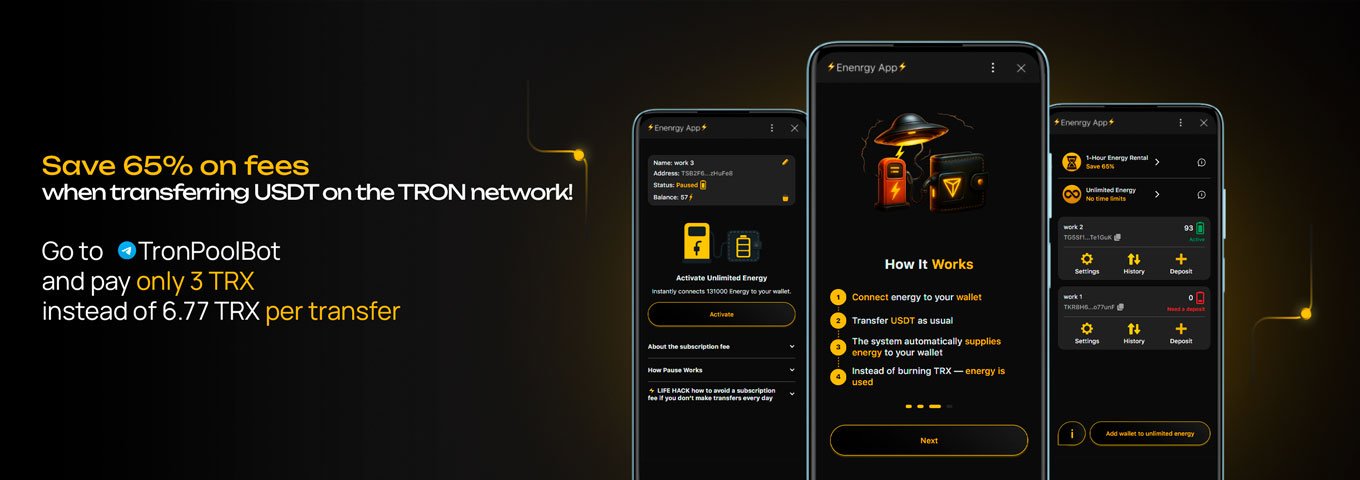
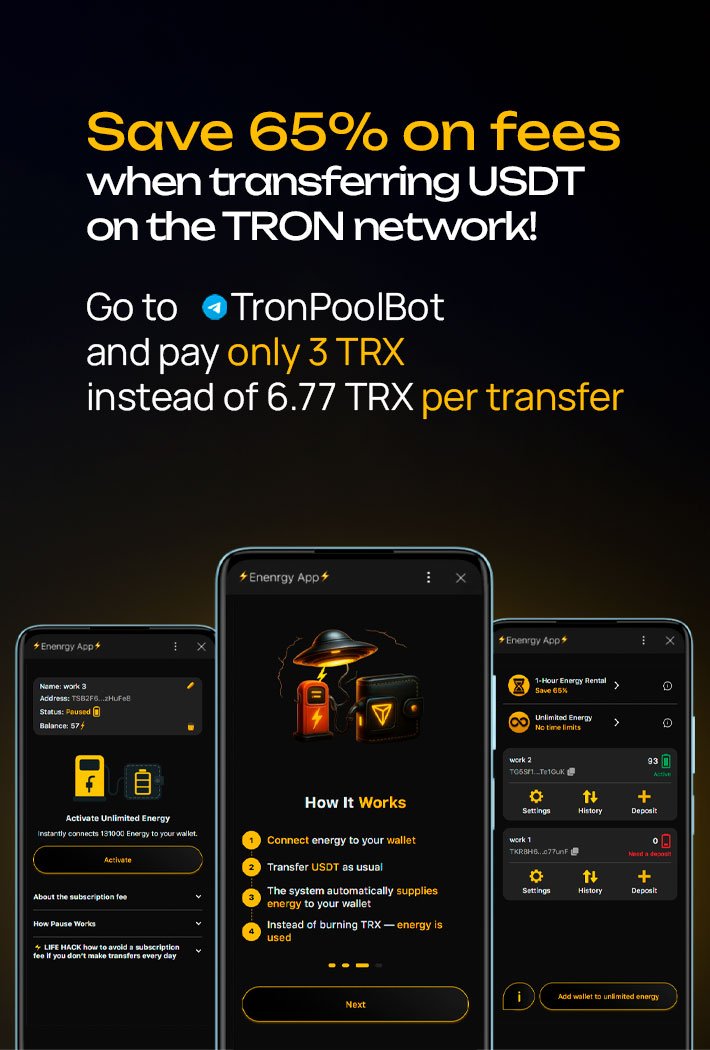
The Tron Pool Energy service allows you to reduce the cost of transfers and avoid constantly buying TRX. It offers several advantages at once:
Because of this, SafePal becomes not only a convenient multichain wallet but also a tool for reducing costs for stable Web3 activity.
The SafePal wallet is often seen as a universal ecosystem, and before choosing it as a primary tool, it is useful to look at its strengths and weaknesses in a short comparison.
| Pros | Cons |
|---|---|
| A full ecosystem including the app, safepal hardware wallet (S1/S1 Pro/X1), crypto card, DApp browser, DeFi, and Gas Station | Software code is not fully open, only the core part is available on GitHub |
| Support for more than 200 blockchains, 200,000+ tokens, and around 400 EVM networks via custom RPC | No multisig for collective asset management |
| Powerful DApp browser, CEX mini-apps, convenient approvals management, and spam filter | KYC is required for operations with fiat, the card, and some providers |
| Savings on fees with Gas Station and the ability to pay gas in USDT on BSC and TRON | The SafePal wallet interface may seem overloaded to beginners |
| Non-custodial model, hardware devices with open firmware, protection from phishing and “dust”, local lock, and biometrics | — |
| Convenient built-in Swap and Bridge for cross-chain exchange via a CEX/DEX aggregator | — |
| SFP token used in Earn, Gas Station, and various incentive programs | — |
Overall, in terms of functionality, SafePal clearly leans towards the pros. It is a convenient “combine” for those who actively use multichain, DeFi, and the card, although before getting started you should keep in mind the need for KYC in some services and the lack of multisig.
In a short time, SafePal has evolved from a simple mobile app into a full-fledged ecosystem combining a software and hardware crypto wallet, a convenient DApp browser, a DeFi aggregator, a Fiat24 crypto card, and tools for saving on fees.
It suits beginners as a comfortable entry point that gradually unlocks more features. For those who actively work with Web3, SafePal provides a single center for DeFi, NFT, and DApps, while long-term investors value the integration with hardware devices and strong multichain support.
This wallet confidently handles dozens of networks. And if you need USDT TRC-20, you can look into a separate article on how exactly SafePal interacts with the TRON network and its energy system.
SafePal works with more than 200 blockchains, including Bitcoin, Ethereum, BNB Smart Chain, Solana, TRON, TON, SUI, Aptos, Near, and others. Via custom RPC connections, over 400 EVM networks are available, which makes the safepal wallet a universal multichain solution for DeFi, NFT, and long-term asset storage.
The wallet itself is free, and the user pays only the network fees of the chain where the transfer is executed, for example TRON. The Tron Pool Energy service helps significantly reduce costs: instead of the standard 6,77–13,37 TRX per transfer, the fee comes down to 3–6 TRX. Energy is connected directly to your address and makes sending USDT TRC-20 up to 65% cheaper compared to the standard mode.
SFP is the native token of the SafePal ecosystem. It helps boost returns in specific Earn pools and is used to participate in loyalty programs, airdrops, and bonus NFT campaigns. Users who actively interact with DeFi often hold SFP precisely because of these extended capabilities
SafePal operates as a non-custodial wallet, and seed phrases and private keys are stored exclusively with the device owner. Additional protection is provided by the spam transaction filter, approvals management, phishing protection in the browser extension, and local PIN/biometric lock. Maximum security is achieved when using a combination of the software wallet and a safepal hardware wallet, such as S1 or X1.
Yes, many users consider safepal an alternative to Trust Wallet, especially after the restrictions introduced and the reduced support for some networks in Trust Wallet. SafePal offers a broader multichain approach, a convenient swap aggregator, the Gas Station fee-saving service, as well as hardware devices and a crypto card. This combination makes it an attractive choice for those who want more features while maintaining a non-custodial storage model.
Cocoon and TON: How Telegram Is Building a New Generation of Private AI
TON, Telegram, and Cocoon combine into a private AI model: encryption, trusted execution, GPU mining, and Mini Apps that run directly inside the messenger.
2025-12-05
114

Best Trust Wallet Alternatives: Top 8 Wallets for USDT TRC-20
8 reliable alternatives to Trust Wallet for USDT TRC-20: full TRON support, seed phrase import, energy management and minimal fees for USDT transfers.
2025-12-02
129
TRON Energy — Practical Use for Saving on Fees (TRON ENERGY)
What is TRON Energy and how does it help save on USDT TRC-20 transfer fees?
We explain how to use TRON ENERGY instead of burning TRX: rental, staking, and transaction packages.
2025-07-30
120