


 English (EN)
 Русский (RU)
 Українська (UK)
 español (ES)
 Türkçe (TR)


How to Send USDT TRC-20 Without TRX: 3 Proven Methods
Got USDT on the TRON network but no TRX to send it? Discover three proven ways to avoid buying TRX — from Tron Gas Free to TRON Energy rental.
2025-07-30
132
Authorization is required only to use the service «Team energy»
Enter the e-mail you provided during registration and we will send you instructions on how to reset your password.
An error occurred while processing your request. Please try again later. If the problem persists, please contact our support team.
Breaking Down TokenPocket: A Web3 Wallet with DApp Browser, TP Card, Multisig and Advanced Tools for TRON, EVM Networks and the Bitcoin Ecosystem
TokenPocket appeared in 2018 and within a few years turned into a tool that many describe as a real “Swiss army knife” for Web3. For those who are just starting to figure out what tokenpocket is and how it compares favorably to other apps, it’s important to keep in mind that this is not just a mobile-format wallet. The user gets access to a full ecosystem with cross-platform access via Mobile, Desktop, and Browser Extension.
According to Google Play, the number of installs exceeds 5 million, and the company claims more than 30 million users. The project is associated with TP GLOBAL LTD and TOKENPOCKET FOUNDATION LTD, which are registered in Singapore and the Cayman Islands. This creates a more formal and understandable legal framework compared to anonymous crypto wallets.
In this article we will cover:
Next, we will take a closer look at how the tokenpocket wallet works, which tasks it helps to solve in everyday workflows, how it benefits experienced DeFi users, and what points should be considered by those who are choosing their first wallet for long-term crypto storage.
To make the token pocket review look objective and not limited to marketing promises, it’s convenient to start with the main characteristics of the wallet. The table below helps to see the big picture and understand what the product can do in practice.
| Criterion | Score | Comment |
|---|---|---|
| Supported networks and tokens | 10/10 | Maximum coverage. The app works with EVM networks, the Bitcoin ecosystem including Ordinals, BRC-20 and RUNES, and also supports Solana and TRON. This set makes token pocket supported networks a convenient choice for most users. |
| Security and key control | 7/10 | Private keys remain with the user, but the clients are not fully open source. This is the main drawback. Some risks are mitigated by multisig, the TockenCheck system, and support for hardware devices like KeyPal. |
| Interface usability | 7/10 | The interface is packed with features and submenus. Users need time to get used to it, especially if they are using the token poket wallet for the first time. Tooltips simplify the process, but it can still feel complicated for beginners. |
| Backup and recovery | 10/10 | A standard seed phrase and HD structure are used. Import and export are available, additional accounts and “sub-spaces” can be created. This set of options makes work both flexible and secure. |
| Fees and transaction optimization | 9/10 | The user controls gas in EVM networks, gets advanced tools for Energy and Bandwidth in TRON, and can pay fees with a stablecoin in supported networks. This helps to keep expenses under control. |
| Integration with DeFi and Web3 | 10/10 | A built-in DApp browser, Transit Swap aggregator, WalletConnect, and Telegram Mini App turn TokenPocket into a full Web3 hub. The user gets access to applications without switching between services. |
| Cross-platform support | 10/10 | There are mobile versions for Android and iOS, a desktop client, and a browser extension. This approach is convenient for those who work from several devices at once. |
| Extras and bonuses | 10/10 | TP Card, Batch Transfer, Dust Cleaner, Sub-spaces, and advanced tools for TRON and Bitcoin Runes are available. These elements make the token poket crypto wallet particularly functional. |
The table shows that TokenPocket is oriented towards those who actively work in Web3 and use several networks at the same time. The app is suitable for complex scenarios and provides a wide range of features that are usually spread across different wallets and services. This approach helps to form a holistic view of the product’s capabilities and understand how comfortably it will fit into the user’s day-to-day workflow.
The security question in TokenPocket defines how comfortable and reliable it is for users to work with cryptocurrencies inside the tokenpocket mobile app. The wallet belongs to non-custodial solutions where private keys and the seed phrase are stored on the owner’s device. Losing the phrase means completely losing access, so it’s important to understand in advance how to restore access in tokenpocket and where to store the seed so that no one can get to it.
Special attention should be paid to the fact that the wallet is not fully open source. Although part of the repositories is available, mobile clients remain closed, so it’s impossible to perform a full code audit. This nuance raises questions for those trying to assess whether tokenpocket is safe in the long term. No negative incidents have been discovered, but the formal limitation remains, and many users take it into account.
To compensate for the incomplete openness of the codebase, the developers added several active protection mechanisms. These features work automatically and reduce risks when interacting with Web3 applications. The three most important tools in TokenPocket are:
These features are especially useful for those who actively work with DeFi and interact with smart contracts on a regular basis.
In addition to software protection, TokenPocket supports hardware solutions. These include Ledger and Trezor devices, as well as its own hardware wallet KeyPal 2. This approach allows private keys to be moved to a physical device and reduces risks when working through the tokenpocket mobile app, which in this scheme is used only as an interface.
Another feature is the Sub-spaces system. It allows you to create several passwords, with each password opening its own set of accounts. This approach is convenient if you need to separate work and personal addresses or hide part of the information when using the device in a public environment.
For team scenarios, multisig is available, whereby a transaction is executed only after it has been approved by several participants. This solution is used by DAOs, treasuries, and users who need to distribute control over funds.
In the end, the TokenPocket security system combines a non-custodial architecture, protective tools, hardware solutions, and extended privacy options. Despite the partially closed source code, this feature set forms a high level of protection and makes working with Web3 within this wallet more secure.
Before moving on to how to use tokenpocket in everyday work, it’s important to go through the basic installation and ensure everything is configured correctly. This approach helps avoid mistakes in the future and makes it easier to get used to the interface.
In terms of structure, token poket how to install and configure is fairly straightforward, but the large number of networks and features can sometimes create a sense of overload for those who are just starting to get familiar with crypto wallets.
TokenPocket gradually reveals itself as a tool that goes far beyond being a simple coin storage. It works as a full Web3 portal, so it’s important to highlight the key token pocket features and capabilities that active users rely on most frequently.
The Discover section feels like the center of Web3 interaction because it combines a browser and an app directory. The user can work with services directly, without switching between tabs and third-party sites.
Inside this section, you can:
This is enough to open the required protocol, select a network, and confirm the transaction, which is why the tokenpocket wallet often becomes the starting point for all Web3 actions where speed and simplicity are required.
The Trading section is integrated with the Transit Swap aggregator, which analyzes swap routes and selects the best rate. The user chooses a token pair and a network, after which the app shows the final swap cost including all fees.
In Transit Swap you can find:
This option helps both beginners and advanced users perform operations quickly and without extra steps.
A user who is just starting out in crypto can immediately use partner fiat gateways. Through the app, the following are available:
It should be kept in mind that the token poket crypto wallet does not provide a direct option to withdraw crypto to a card. To get fiat, there are two options: using TP Card or selling via an exchange.
One of the most unusual features of TokenPocket is TP Card. This is a debit card issued in cooperation with a Swiss bank. It runs on the Arbitrum network, and the top-up system is built on smart contracts and looks as decentralized as possible for a banking product.
The user tops up the balance with crypto, converts assets, and spends them in stores. This scheme is convenient for those who use the token poket wallet daily and want to use crypto in familiar day-to-day scenarios.
The Tools section was created for those who actively work in DeFi and manage multiple addresses. It helps to perform routine tasks faster and save resources. Inside this section, you’ll find key features:
The Tools section clearly shows that TokenPocket is aimed not only at regular users but also at those who perform many transactions, actively participate in Web3 projects, and value time savings.
The main strength of TokenPocket is how easily it adapts to completely different blockchain architectures. The app performs confidently in every major segment, so it’s convenient to look at three examples that best reveal the token pocket supported networks capabilities.
TokenPocket in EVM networks works in such a way that users familiar with MetaMask don’t have to adapt from scratch. Inside, the following are available:
This structure helps the app cover not only popular networks but also additional L2 and sidechain solutions. It’s convenient for those who work in several ecosystems at once and are actively involved in DeFi or arbitrage. In this context, TokenPocket provides more flexibility than most universal tools.
The developers’ special attention to TRON is evident immediately. That’s why tokenpocket supports tron at a level rarely seen in multi-chain wallets. When sending tokenpocket usdt trc-20, the user encounters the network resource model. Energy and Bandwidth determine how much TRX will be spent on the transaction. If resources are low, the system starts consuming TRX automatically, which leads to the popular question in token poket reviews about why the fee is paid in the native coin.
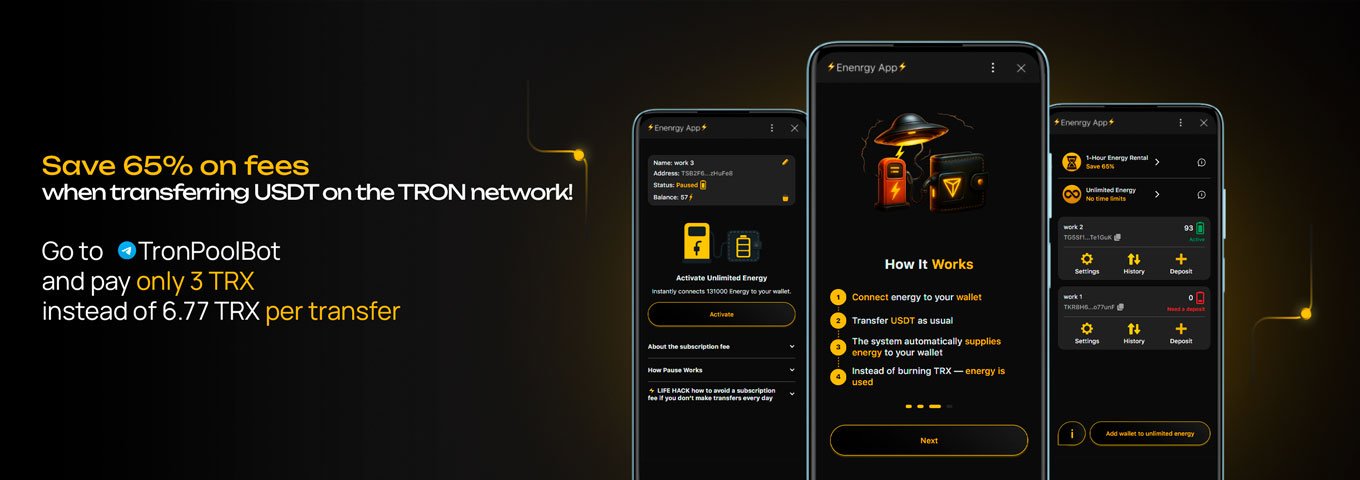
TokenPocket has a convenient option – connecting Tron energy. The Tron Pool Energy service is fully compatible with the TokenPocket wallet and allows you to safely save up to 65% on fees, offers flexible connection plans (for a single transfer or Unlimited energy), and provides 24/7 user support.
Thanks to this, TokenPocket becomes a convenient platform for active work with TRON. The user doesn’t need to manually interact with contracts because resource management tools are integrated directly into the interface.
And if you use USDT TRC-20 — check the detailed review of how this wallet works with the TRON network and energy.
Many multi-chain wallets focus exclusively on EVM, but TokenPocket goes beyond this and works confidently with the Bitcoin ecosystem. The user gets the ability to:
This coverage makes TokenPocket a single interface for both basic Bitcoin operations and experimental protocols. This option is particularly attractive for those who want to participate in new token formats without installing separate apps for each task.
As a result, TokenPocket demonstrates a level of versatility that’s rarely seen in multi-chain wallets. It behaves equally confidently in EVM, TRON, and Bitcoin ecosystems, helping the user manage their portfolio in a single app without switching between different tools.
To make the token pocket review as fair as possible, it’s important to see the project’s strengths and weaknesses side by side. This helps to understand the real balance of capabilities and limitations.
| Pros of TokenPocket | Cons of TokenPocket |
|---|---|
| Real multi-chain. Support for EVM, BTC, SOL, TRON, Ordinals, BRC-20, and Runes. The user can manage almost their entire portfolio in a single interface. | Not fully open source. The community cannot perform a full code audit, which raises long-term transparency questions. |
| Full cross-platform support. The app is available on Mobile, Desktop, and as a Browser Extension, which is convenient when working from different devices. | Complex interface. Many features and nested sections. The tokenpocket wallet is suitable for beginners, but the learning curve strongly depends on prior experience. |
| Unique TP Card. The user gets a connection between crypto and the real world without having to withdraw assets through exchanges. | No direct fiat off-ramp. Without TP Card, users have to rely on third-party platforms or exchange services. |
| Powerful pro tools. Batch Transfer, Sub-spaces, Dust Cleaner, and multisig help those who work actively. | KYC for fiat operations. When buying crypto through Simplex, Banxa, MoonPay, and other payment gateways, verification is required. |
| Advanced TRON management. Freeze, Rent Energy, and paying fees in TRX and USDT give flexibility when working with the network. | |
| Built-in security utilities. TockenCheck, Approval Detector, integration with hardware wallets, and KeyPal support help reduce risks. |
Looking at the table as a whole, it becomes clear that TokenPocket’s strengths noticeably outweigh its weak points. The user gets a universal tool for working with most networks, a wide range of features, and a high degree of flexibility. The drawbacks are mainly related to convenience and the security model, but they do not overshadow the functionality offered by the app.
TokenPocket is perceived as one of the most functional multi-chain wallets. It combines work with EVM networks, TRON, Solana, and the Bitcoin ecosystem, offers a convenient DApp browser, flexible swapping via an aggregator, and provides access to advanced security tools and TP Card. This set turns the app into a full-fledged Web3 station. Formally, it is a wallet for beginners, but the number of features can be overwhelming for those who are encountering crypto for the first time.
Who it is suitable for
Who should choose something simpler
Overall, TokenPocket can be considered one of the most universal and feature-rich tools on the market. It impresses with its capabilities but requires a careful approach and understanding of its security model, since part of the code remains closed.
TokenPocket is a multi-chain Web3 wallet with support for 100+ networks, a DApp browser, and tools for DeFi. It is suitable for storing and transferring cryptocurrencies, staking, and working with Web3 services from a single app.
Yes, it is a non-custodial wallet: the seed phrase is stored only by the user. However, the app is not fully open source, so it’s important to download it only from official sources.
Install the app, select “Create Wallet”, write down the seed phrase, and configure your security settings. After that, the wallet automatically creates addresses in popular networks such as TRON, Ethereum, and BNB Chain.
Yes, TRON support is one of the strongest features of the wallet. The interface shows Energy/Bandwidth resources, which makes working with USDT TRC-20 convenient and predictable. For example, the Tron Pool Energy service is compatible with the wallet and can reduce the fee for USDT TRC-20 transfers by up to 65%.
More than 100 networks: Bitcoin (Ordinals, Runes), Ethereum, BNB Chain, Solana, TRON, TON, Polygon, Avalanche, the Cosmos ecosystem, and many more. The wallet is suitable for complex multi-chain scenarios.
Yes, there is a built-in DApp browser and the Transit Swap aggregator for this. The user can connect directly to DeFi protocols, yield farming, NFT marketplaces, and staking services.
How to Send USDT TRC-20 Without TRX: 3 Proven Methods
Got USDT on the TRON network but no TRX to send it? Discover three proven ways to avoid buying TRX — from Tron Gas Free to TRON Energy rental.
2025-07-30
132

An Exchange Is Not a Wallet: Why Your USDT Is at Risk
Many users keep USDT on exchanges, unaware of the risks: account freezes, asset locks, and loss of access. Here's why you should store crypto in a decentralized wallet and how to protect your funds.
2025-07-29
137

AML and USDT TRC-20: how crypto compliance checks detect tainted funds
Deposit freezes often happen when funds come from tainted or flagged addresses. This article explains how AML filters work for USDT TRC-20 and how to identify high-risk wallets.
2025-10-16
148