


 English (EN)
 Русский (RU)
 Українська (UK)
 español (ES)
 Türkçe (TR)


Best Trust Wallet Alternatives: Top 8 Wallets for USDT TRC-20
8 reliable alternatives to Trust Wallet for USDT TRC-20: full TRON support, seed phrase import, energy management and minimal fees for USDT transfers.
2025-12-02
129
Authorization is required only to use the service «Team energy»
Enter the e-mail you provided during registration and we will send you instructions on how to reset your password.
An error occurred while processing your request. Please try again later. If the problem persists, please contact our support team.
A detailed look at using USDT TRC-20 in TokenPocket: addresses, transfers, and key features of the TRON network.
TokenPocket Wallet is considered one of the most powerful multichain wallets, especially when it comes to working with the TRON network. The wallet not only supports storing USDT TRC-20, but also helps manage fees through TRON network resources and built-in Energy rental. This makes everyday transfers noticeably cheaper when the workflow is configured correctly.
In this guide, we focus exclusively on how to work with USDT TRC-20 and what affects transfer fees. You will learn:
If you need general information about TokenPocket features, security level, Open-Source status, installation, beginner usage, or wallet recovery, it is more convenient to refer to the review “TokenPocket Review: Universal Web3 Gateway for 100+ Networks and DeFi”.
After creating a TRON wallet, you will immediately see two core assets on the Assets tab: TRX and USDT TRC-20. This is a convenient starting point, as nothing needs to be added manually.
To make sure you are using the correct token, check the label under the USDT ticker. It should say Tron or TRC20. This confirms that the token is on the TRON network and not on another chain.
If USDT TRC-20 does not appear in TokenPocket for any reason, you can tap the plus icon on the main screen, open the list of available tokens, and enable the required asset. After that, the token will appear in the general list and be ready for use.
To receive USDT TRC-20 to your TokenPocket address, you only need to follow a few simple steps.
The usual flow looks like this:
You can send this address to the person making the transfer or show the QR code if the transfer is made from another phone. It is crucial to confirm in advance that the sender selects the TRC-20 or TRON network. Otherwise, funds may be sent to a different network and will not appear in your wallet.
You can check incoming transfers not only in the transaction list, but also directly on the blockchain. TokenPocket integrates with TRONSCAN. By clicking on a transaction or using the More Tools option, you can open it in the explorer and see the status, fees, and other details.
Sending a stablecoin in TokenPocket looks familiar, but the key part related to network resources appears at the final step.
The typical process is:
On the confirmation screen, TokenPocket displays detailed fee information. The user can see how much Bandwidth and Energy will be used and whether the available resources are sufficient. If Energy is insufficient, the app shows how much TRX will be burned from the balance to cover the transfer.
After reviewing the amount, address, and final fees, you only need to confirm. Within seconds, the transfer appears in the history and can be verified via TRONSCAN if needed.
Working with USDT TRC-20 on TRON is based not on standard gas fees like in EVM networks, but on a resource-based model.
When transferring USDT TRC-20, the Tether smart contract is invoked. This requires:
If no Energy is available, the wallet starts burning TRX. This is the most expensive option, as the cost can reach up to 13,37 TRX per transfer. The transfer amount does not affect the fee. Users pay for the contract interaction itself, not for the transfer size, which is why sending $10 or $10,000 costs the same in terms of resources.
The main factor affecting expenses is the recipient address status:
TokenPocket visualizes network resources so users clearly understand what is happening with their fees. On the main screen next to TRON assets, there is a Resource section showing available Energy and Bandwidth. It works like a fuel tank that should be topped up in advance to avoid burning TRX at maximum cost during transfers.
Sometimes users receive USDT TRC-20 for the first time and realize they have no TRX in their wallet, even though network fees are required. In this case, TokenPocket offers a built-in option to buy TRX with fiat.
On the Assets tab, you can tap Buy. The app will display partners such as Simplex, Banxa, MoonPay, and Tranzak. Through them, you can purchase TRX with a bank card or other payment methods directly in TokenPocket.
This method has drawbacks. It almost always requires KYC and identity verification. On top of that, fees are higher and exchange rates are less favorable compared to centralized exchanges. It works in terms of convenience, but from a cost-efficiency standpoint, it is far from ideal.
The key to cheap USDT TRC-20 transfers in TokenPocket always comes down to Energy. When configured in advance, you can avoid burning TRX even during active usage. Below are three main options available to most users.
In the Resource section, the Freeze function allows users to lock TRX in exchange for Energy. On paper, this looks like “free transfers,” but in practice it is rarely a cost-efficient choice.
To obtain enough Energy for just 1–2 USDT TRC-20 transfers, a significant amount of TRX must be frozen. For occasional transfers, this means a noticeable sum remains idle just to save a small amount on fees.
Another drawback is low liquidity. Unfreezing TRX is not instant—the release period can take up to 14 days. During this time, funds cannot be transferred, sold, or used elsewhere.
In the Resource tab, TokenPocket offers a Rent Energy feature that allows users to rent Energy directly within the wallet interface. The user selects the required amount, pays in TRX, and receives access to Energy for a defined period.
This approach is cheaper than constantly burning TRX. However, TokenPocket acts as an aggregator, and the final price may already include a service fee. In practice, this means the built-in rental is convenient, but not always the cheapest option.
For most users, the most cost-efficient option is working with specialized Energy rental services. Tron Pool Energy belongs to this category. The service provides Energy under wholesale conditions, which is why the final cost is almost always lower than burning TRX or renting directly inside the wallet.
The difference is easiest to see in practice:
The workflow with TokenPocket and Tron Pool Energy looks like this:
This setup provides maximum flexibility. You can rent Energy for a single action or multiple transfers without locking large sums or overpaying per transaction.
TokenPocket proves to be a convenient wallet for working with USDT TRC-20 because it goes beyond simple storage and transfers. Users gain direct control over how fees are paid.
The idea is simple. You can burn TRX and pay the highest possible cost per transfer. You can use built-in rental options to reduce fees. Or you can combine TokenPocket with Tron Pool Energy and access Energy at wholesale rates—resulting in one of the most cost-efficient setups on the market for USDT TRC-20 transfers.
If minimizing transaction costs is your goal, this workflow makes the most sense. TokenPocket acts as a user-friendly interface, while Tron Pool Energy helps cheaply refill your Energy “fuel tank” so transfers go through without unnecessary fees.
After creating a TRON wallet, USDT TRC-20 is usually displayed automatically in the Assets tab. Make sure the USDT ticker shows Tron or TRC20.
USDT TRC-20 uses the same TRON address as TRX — it always starts with the letter T. No separate address is required.
Most often, the token is simply disabled in the asset list. Tap the “+” button on the main screen, find USDT TRC-20, and enable it manually.
Select USDT TRC-20 in the Assets section, tap Transfer, enter the recipient’s TRON address and amount. Before confirming, check that you have enough Tron Energy to avoid burning TRX.
Use the Tron Pool Energy service. After Energy delegation, USDT TRC-20 transfers are processed without burning TRX, with savings of up to 65%.
Best Trust Wallet Alternatives: Top 8 Wallets for USDT TRC-20
8 reliable alternatives to Trust Wallet for USDT TRC-20: full TRON support, seed phrase import, energy management and minimal fees for USDT transfers.
2025-12-02
129
Staking, farming and lending: ways to earn passive income in crypto
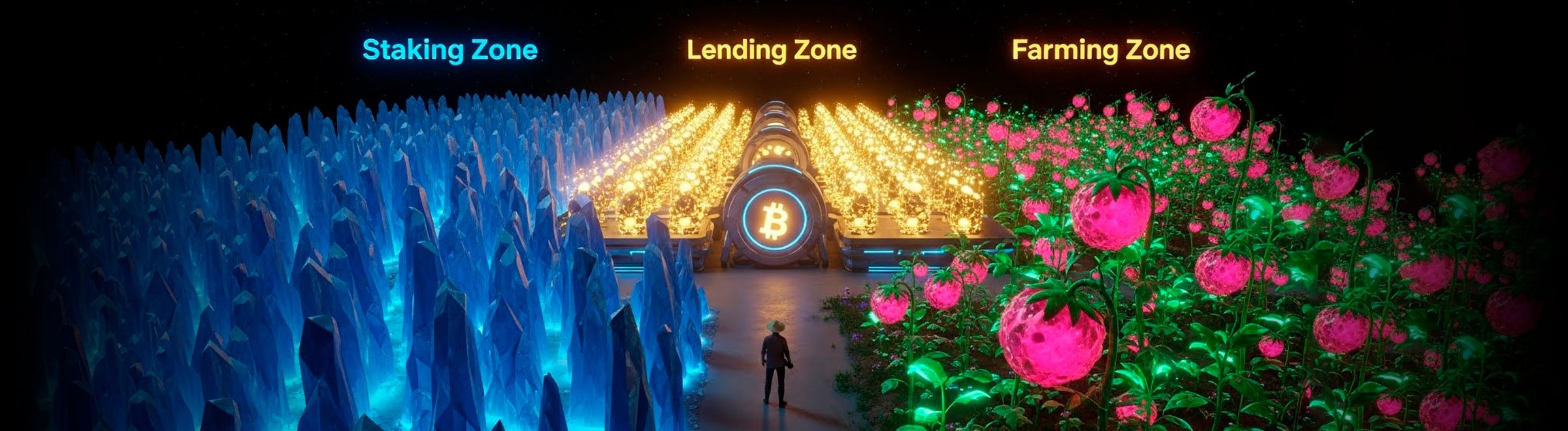
Staking, farming and lending explained simply: how they differ, how they generate income and who each strategy is best suited for.
2025-12-01
148

Top-10 and Top-50 Altcoins: Which Cryptocurrencies to Choose for Investment
Top-10 and Top-50 altcoins — from Ethereum and Solana to Chainlink and NEAR. We break down which cryptocurrencies lead the market and how to choose promising tokens.
2025-10-09
182