Complete breakdown of TRON Bandwidth: calculation formula, usage order, delegation and fees when the resource is insufficient.
Content
The TRON blockchain operates on two key resources: Bandwidth and Energy. While Energy powers smart contract execution, Bandwidth serves as the foundation. It is required for every single transaction on the network — TRX transfers, USDT TRC-20 sends, resource delegation, and Super Representative voting.
If your Bandwidth balance is insufficient, the transaction will still go through — but the network will automatically burn TRX from your balance to cover the cost. Understanding how Bandwidth works directly impacts your operating costs on the TRON network.
What Is Bandwidth
Bandwidth is a TRON blockchain network resource that measures transaction size in bytes. Every transaction on the network is transmitted and stored as a byte array, and its size is what determines Bandwidth consumption.
1 byte of transaction data = 1 Bandwidth unit. The transfer amount (10 USDT or 10,000 USDT) has no impact on consumption — only the transaction data size matters.
Key Rule
Every TRON transaction consists of three parts, all of which count toward the Bandwidth calculation:
raw_data — the main transaction body: sender and recipient addresses, amount, contract call parameters, reference block, and other data. This is the largest part, and its size depends on the operation type.
signature — the digital signature confirming transaction authorship. Each signature occupies 67 bytes. With multi-signature setups, 67 bytes are added per signer, increasing Bandwidth consumption.
result — the transaction execution result. Fixed size — 64 bytes.
Unlike Energy, Bandwidth consumption does not depend on smart contract complexity. A simple TRX transfer and a complex DeFi protocol interaction may require a comparable amount of Bandwidth if the transaction size in bytes is roughly the same.
How Much Bandwidth Do Common Operations Consume
Exact consumption depends on the size of each transaction. Here are the approximate values for the most common TRON network operations:
Operation
Bandwidth Usage (units)
TRX Transfer
~268
USDT TRC-20 Transfer
~345
Energy Delegation
~283
Bandwidth Delegation
~281
Energy Delegation Recall
~281
Bandwidth Delegation Recall
~279
Note: even a basic TRX transfer consumes over 250 units. A USDT TRC-20 transfer requires ~345 units because the transaction includes additional smart contract call data (USDT contract address, transfer function parameters, and recipient address).
How to Obtain Bandwidth
Free Daily Bandwidth
Every activated account on the TRON network automatically receives 600 free Bandwidth units per day. No action is required — the resource is credited automatically.
Bandwidth via TRX Staking
To obtain a larger Bandwidth allocation, you can freeze (stake) TRX. This is the primary method for active users and businesses.
The amount of Bandwidth allocated depends on two factors: the amount of TRX you have staked and the total amount of TRX staked across the entire network. TRON distributes a fixed resource pool daily among all participants in proportion to their stake.
Calculation Formula Your Bandwidth = (your staked TRX / total staked TRX on the network) × 43,200,000,000
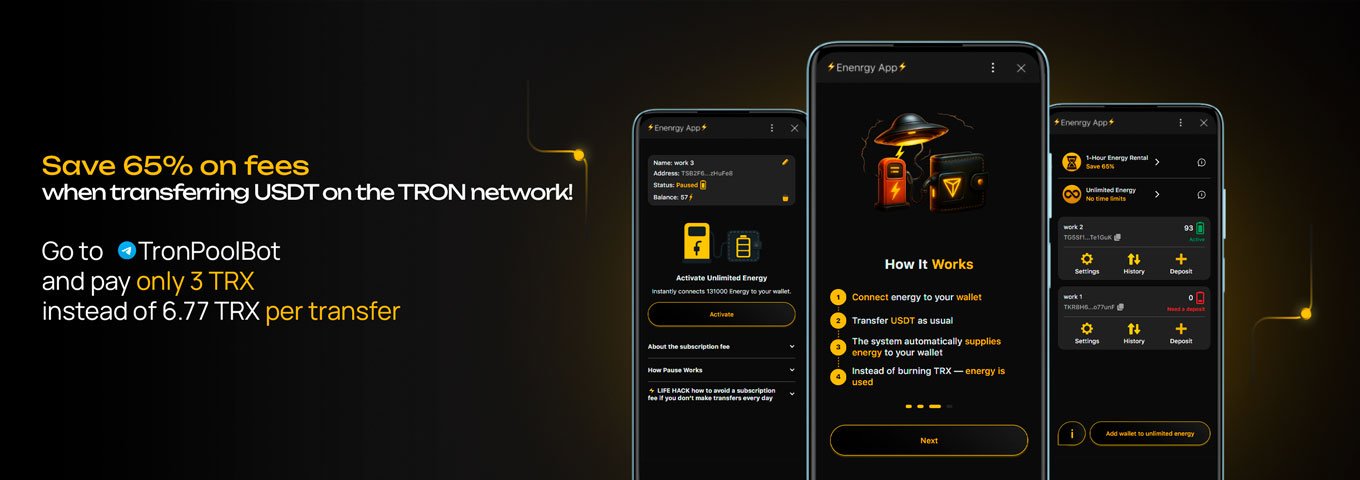
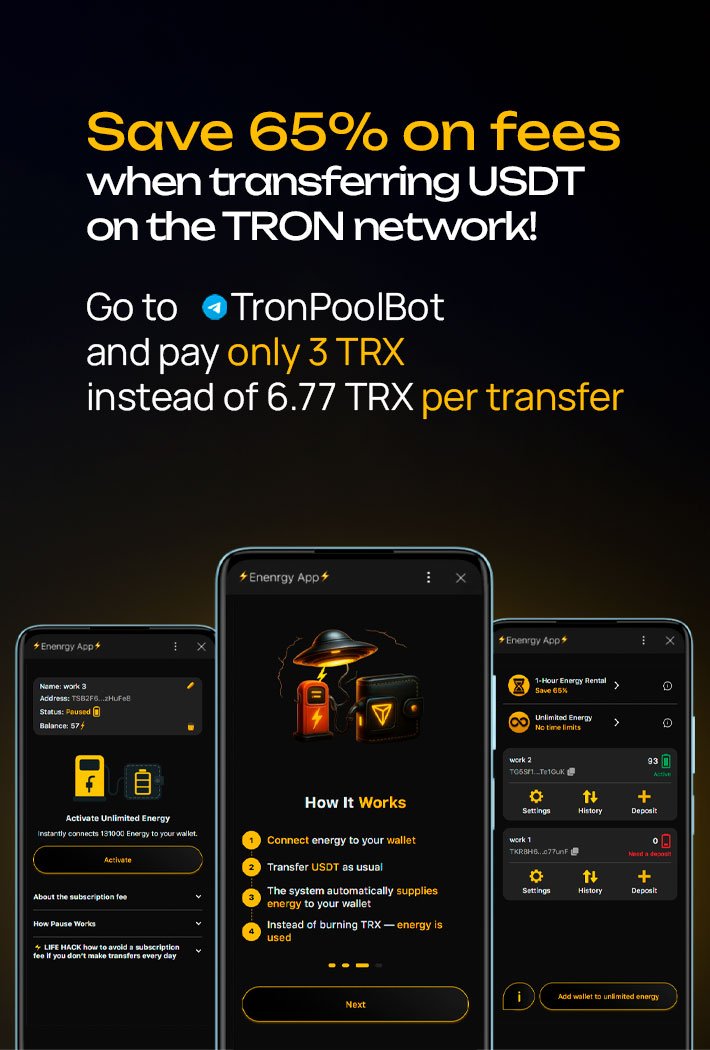
If you frequently send USDT TRC-20 and don’t want to freeze TRX to get Bandwidth, you can connect the resources through Tron Pool Energy. Setup takes seconds, you can manage multiple wallets from one account, and reduce transaction costs.
Tron Pool Energy
The total daily pool of 43.2 billion Bandwidth units is distributed among all stakers. The larger your share, the more Bandwidth you receive.
For example, obtaining 1,000 Bandwidth requires freezing approximately 1,608 TRX.
At the rate of 0.2766 USDT per TRX on 10.02.2026, this means locking up funds worth: 1,608 TRX × 0.2766 ≈ 444.77 USDT
Bandwidth Delegation
If you have no staked TRX but need Bandwidth, you can obtain it through delegation. This mechanism allows another account to transfer Bandwidth to you without transferring any TRX tokens.
How it works:
— the owner freezes TRX and receives Bandwidth;
— the resulting Bandwidth is delegated to your address;
— you use this resource for your transactions;
— ownership of the TRX remains with the delegator.
Bandwidth Consumption Priority
When processing any transaction, the TRON network deducts Bandwidth in a strict priority order. Understanding this hierarchy is essential for cost control:
Priority
Bandwidth Source
Details
1 (highest)
Delegated Bandwidth
Consumed first
2
Bandwidth from TRX Staking
Your own staked resource
3
Free daily allowance (600 units)
Last free source
4 (last resort)
TRX Burn
Automatic if no resources available
The system works through this list top to bottom. If any single source fully covers the required amount, the transaction is processed using that source. If not, the network moves to the next one.
Bandwidth Is Not Aggregated Across Sources
Free daily Bandwidth and Bandwidth from TRX staking are NOT combined to cover a single transaction. The entire required amount must be covered by a single source in full.
Important!
This is one of the most counterintuitive aspects of TRON's resource model and regularly leads to unexpected TRX burns.
Example
A transaction requires 350 Bandwidth units. Your wallet has:
— 100 units of free daily Bandwidth;
— 300 units of Bandwidth from TRX staking.
Combined, 400 units are available — seemingly more than enough. However, the network cannot merge these two sources for a single transaction. Neither the free allocation (100) nor the staked amount (300) is individually sufficient to cover the 350-unit requirement.
Result: the network automatically compensates by burning TRX from your balance.
How to Avoid This
Ensure that at least one of your Bandwidth sources fully covers the transaction size:
— increase your TRX stake so that your staked Bandwidth is sufficient;
— or obtain Bandwidth through delegation from another account;
— or manage your workload so that the free 600-unit allowance covers your operations.
This is especially critical for businesses operating multiple wallets and processing mass transfers.
What Happens When Bandwidth Runs Out: Bandwidth Fee Fallback
Bandwidth Fee Fallback is a built-in TRON network mechanism that guarantees transaction execution even when Bandwidth is completely depleted — at a cost.
If none of the available Bandwidth sources cover the transaction size, the network automatically calculates the fee and deducts TRX:
Burned TRX = Bandwidth consumed × Bandwidth price. Current price: 1,000 sun = 0.001 TRX per 1 Bandwidth unit.
Fee Calculation Formula
TRX Burned for Common Operations
Operation
Bandwidth
Cost in TRX
TRX Transfer
~268
~0,268 TRX
USDT TRC-20 Transfer
~345
~0,345 TRX
Energy Delegation
~283
~0,283 TRX
Bandwidth Delegation
~281
~0,281 TRX
At first glance, these amounts seem small. If there is no Bandwidth on your wallet:
345 Bandwidth × 0.001 TRX = 0.345 TRX — that is the exact fee you will see when sending USDT without Bandwidth. But with high activity, costs add up fast: 100 USDT transactions per day means 34.5 TRX on Bandwidth alone. Per month, that exceeds 1,000 TRX — and this does not even include Energy costs.
Bandwidth Fee Fallback triggers automatically. You will not receive an error or a warning — TRX will simply be deducted from your balance. This is why proactive resource planning is essential.
Bandwidth Recovery
Consumed Bandwidth — both free and staking-derived — regenerates continuously with every new block produced on the TRON network. The full recovery period is 24 hours, but the process occurs smoothly and linearly at the block level, rather than in discrete hourly increments.
This means Bandwidth is restored in small increments nearly continuously, as new blocks are produced.
How It Works Under the Hood
On the TRON network, block time is approximately 3 seconds
In 24 hours, approximately 28,800 blocks are produced
Each new block restores roughly 1 / 28 800 of spent Bandwidth
Recovery rate:
identical for all accounts
independent of stake size
independent of operation types or transaction history
Pro Tip
If you need to execute a batch of transactions, spread them out over time. Even a few-minute pause will allow Bandwidth to partially recover as new blocks are produced, which can help you avoid TRX burns.
Example
If you fully depleted your Bandwidth in the morning:
after ~6 hours, approximately 25% of the resource will be recovered
recovery happens not in a single jump, but gradually — every ~3 seconds
full recovery takes approximately 24 hours
Bandwidth vs. Energy: Key Differences
These two resources are often confused, but they serve entirely different purposes. Here are the key differences:
Parameter
Bandwidth
Energy
Purpose
Transaction data transmission and storage
Smart contract code execution
Consumption depends on
Transaction size (in bytes)
Contract computational complexity
Free quota
600 units per day
None
Required for TRX transfers
Yes
None
Required for USDT TRC-20
Yes (~345 units)
Yes (~65000–131000 units)
Obtained via staking
Yes
Yes
TRX burn price
1,000 sun (0.001 TRX/unit)
100 sun (0.0001 TRX/unit)
Key takeaway: sending USDT TRC-20 requires both resources simultaneously. Bandwidth covers transaction data transmission, while Energy covers USDT contract code execution. Energy is by far the larger cost (tens of thousands of units), while Bandwidth is a relatively small but mandatory component.
Factors Affecting Bandwidth Consumption
Several factors influence the amount of Bandwidth consumed:
Operation type. A simple TRX transfer weighs less than a smart contract call. Delegation, voting, and resource management operations each have their own characteristic size.
Additional data. Memo fields (text notes on transactions), contract call parameters, and extra arguments all increase transaction size in bytes and, consequently, Bandwidth consumption.
Multi-signatures. Each additional signature adds 67 bytes to the transaction. If your account uses a multi-signature setup with 3 signers, that is an extra +201 bytes = +201 Bandwidth units compared to a standard transaction.
Transaction structure. Complex transactions with multiple parameters (e.g., DeFi protocol interactions) can generate a larger raw_data payload.
Practical Recommendations
For Everyday Users
If you make 1–2 transfers per day, the free 600 Bandwidth units will likely be enough. Keep an eye on your resource balance in your wallet. Trust Wallet displays available Bandwidth right on the home screen. You can also check your resources on Tronscan under the "Resources" section on your wallet page.
For Active Users and Traders
With multiple daily USDT transactions, the free Bandwidth quota will not suffice. The best approach is to stake a modest amount of TRX for additional resources. Keep in mind that staking also grants you TRON Power for voting.
For Businesses and High-Volume Operations
When processing dozens or hundreds of transactions daily, Bandwidth management becomes critical. Recommendations:
— calculate your daily requirement: number of transactions × average Bandwidth per operation;
— ensure your staking level provides a single Bandwidth source that fully covers each transaction;
— use delegation for operational wallets — no need to hold TRX on every wallet;
— spread transactions over time to allow Bandwidth to recover between batches.
Bandwidth and New Account Activation
If you are sending TRX or TRC-10 tokens to an address that has not yet been activated (has never received a transaction), factor in additional costs:
— account activation fee — 1 TRX;
— if the sender has no Bandwidth from staking, an additional 0.1 TRX is burned to cover Bandwidth.
For mass distributions to new addresses, this can significantly increase costs.
Summary
Bandwidth is a fundamental TRON network resource — no transaction can be processed without it. Here are the key takeaways:
1 byte = 1 Bandwidth. Consumption depends on transaction size, not transfer amount.
600 free units per day — enough for 1–2 TRX transfers.
What is TRON Energy and how does it help save on USDT TRC-20 transfer fees? We explain how to use TRON ENERGY instead of burning TRX: rental, staking, and transaction packages.
TRON Energy rental for 1 hour is a way to reduce USDT TRC-20 transfer fees by up to 65%. Learn how to save money without buying TRX or dealing with staking. Step-by-step guide and key benefits via Telegram.





 English (EN)
 Русский (RU)
 Українська (UK)
 español (ES)
 Türkçe (TR)