 English (EN)
 Русский (RU)
 Українська (UK)
 español (ES)
 Türkçe (TR)



Centralized Crypto Exchanges (CEX): Structure, Features, and Security
Convenience and risk in one place. What is a CEX, how does it work, and why it’s crucial to know who holds your coins.
2025-10-23
200





Support
Authorization is required only to use the service «Team energy»
Ваш аккаунт заблокирован. За детальной информацией обращайтесь в службу поддержки.
Enter the e-mail you provided during registration and we will send you instructions on how to reset your password.
An error occurred while processing your request. Please try again later. If the problem persists, please contact our support team.
On DEX platforms, users manage their own funds and trade directly from their wallets. The article explains how DEX works, its main types, and key risks.
The crypto market is evolving rapidly, and more users are choosing platforms where they can fully control their funds. Decentralized exchanges (DEX) allow you to swap cryptocurrency directly between wallets without intermediaries. Unlike centralized venues where operations go through the exchange itself, on a DEX asset management and trade confirmation remain with the user.
In this article you will learn:
According to DefiLlama (June 2025), combined trading volume on DEXes exceeds $110B per month, whereas in 2020 it did not reach $5B — growth of more than 20x. A Messari report shows that about 32% of active traders have used decentralized protocols at least once.
A decentralized exchange (DEX) is a venue where users execute peer-to-peer crypto swaps directly, without intermediaries and without registration. There are no accounts or custodial vaults: funds remain in users’ wallets, and trades are executed by contract code.
All DEX logic is built on smart contracts. A user connects a wallet (for example, TronLink, MetaMask, or Klever), selects tokens, enters the amount, and confirms the operation. The contract performs the swap and records the transaction on the blockchain.
A DEX does not require KYC and does not control data — everything happens on-chain. The core principle is “Your keys — your crypto.” The wallet owner always retains full control over their funds.
A decentralized exchange operates through direct interaction between users. Trades occur in a peer-to-peer format, and execution is controlled by a smart contract that automatically performs the swap and records it on the blockchain.
AMM (Automated Market Maker)
Instead of a classic order book, a DEX uses an automated market maker model. This algorithm calculates token prices depending on their ratio in a liquidity pool. The more of one token the pool holds, the lower its price relative to the second asset. This keeps the system balanced and enables swaps without brokers and operators.
Liquidity pools
Liquidity pools are formed by users who deposit two cryptocurrencies of equal value, for example TRX and USDT. These assets become available for trading and create a shared liquidity fund from which all swaps are executed. In return, participants receive a share of the fees traders pay on swaps.
LP tokens
After adding funds to a pool, a liquidity provider receives LP tokens. They confirm the participant’s share in the pool and grant the right to withdraw the deposited assets together with accrued fees. LP tokens can be redeemed at any time via the same contract in which they were minted.
Swap transactions
Each swap is a contract call. The user sends one token to the pool and receives another at the current rate. The AMM algorithm maintains balance with the formula x × y = k, where the product of token reserves remains constant. The average fee for such trades usually ranges from 0.1% to 0.3% and is distributed among all liquidity providers.
That is how a modern DEX works: it ensures sustainable liquidity without intermediaries, and the swap rules are set by smart contract code. The system does not depend on a single company, and every user can verify the transparency of all processes.
There are several types of DEXes that differ by trading mechanism and level of automation:
According to Kaiko (April 2025), 85% of DEX volume comes from the AMM model. It is simpler, faster, and more reliable for most users.
The main advantage of decentralized platforms is full control over funds. There are no custodians, operators, or intermediaries: just the user and the code.
Additional benefits:
Thanks to privacy and the absence of restrictions, DEXes have become popular in countries with limited access to CEX and among users who value independence.
Decentralization gives freedom but requires responsibility. The main DEX risks are tied to user mistakes and contract vulnerabilities.
According to Chainalysis (December 2024), 37% of all incidents in DeFi are related specifically to DEX platforms.
To reduce risks, practice safe methods:
These simple steps protect assets from most loss scenarios and make DeFi trading as safe as possible.
The token swap process is simple and fully automated:
Each transaction requires a network fee, for example:
A DEX does not charge a service fee, but every trade includes a trading fee that is distributed among liquidity providers. The network fee is paid separately and goes to the blockchain that executes the transaction.6
Because the TRON network is not compatible with EVM platforms (such as Ethereum or BNB Chain), the USDT TRC-20 token is traded only on DEX platforms that operate directly within the TRON ecosystem. Classic DeFi exchanges like Uniswap or PancakeSwap do not support this standard — they handle USDT versions in ERC-20 and BEP-20 formats.
Core TRON DEX platforms
| Platform | Network | Core pairs | Features |
|---|---|---|---|
| SunSwap | TRON | USDT/TRX, USDT/JST, USDT/WIN | The main AMM DEX of the TRON network; supports liquidity pools and LP tokens. |
| JustMoney | TRON / multichain | USDT/TRX, USDT/USDD | Cross-chain DEX; enables swaps across networks and different token standards. |
| Klever Swap | TRON | USDT/TRX | Built into the Klever wallet; simple integration for beginners. |
All these platforms use the same model: swaps occur via a TRC-20 smart contract, and the network fee is paid in TRX.
How to optimize fees when swapping
Every operation on the TRON network — whether a USDT TRC-20 transfer or a swap on a DEX — consumes internal blockchain resources: Energy and Bandwidth.
If a wallet lacks sufficient resources, the fee is deducted in TRX, as most crypto investors are used to. With active trading, this can add up to noticeable amounts.
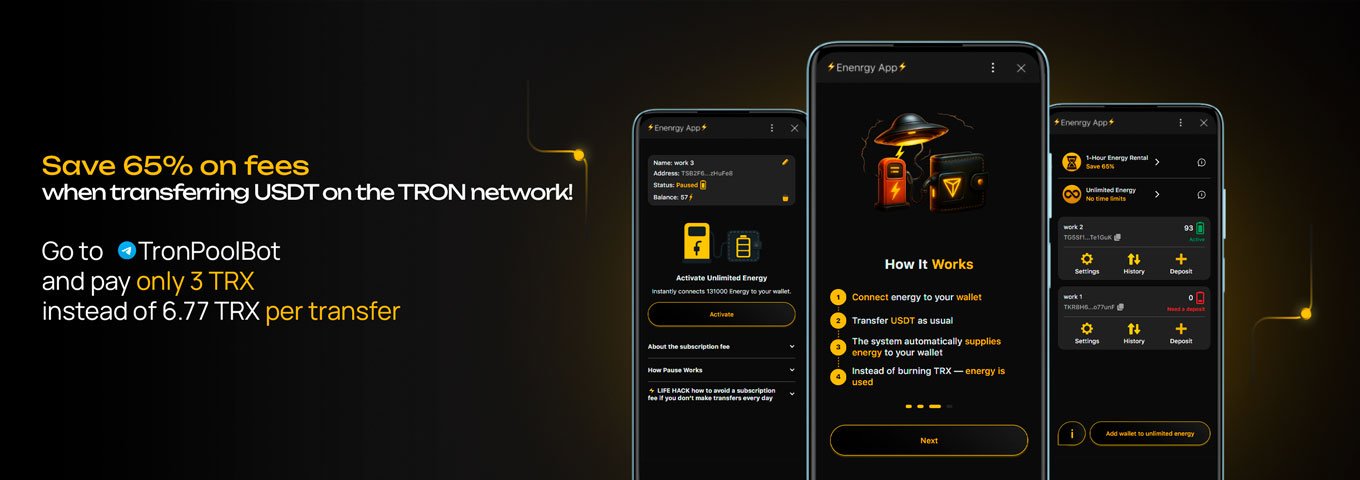
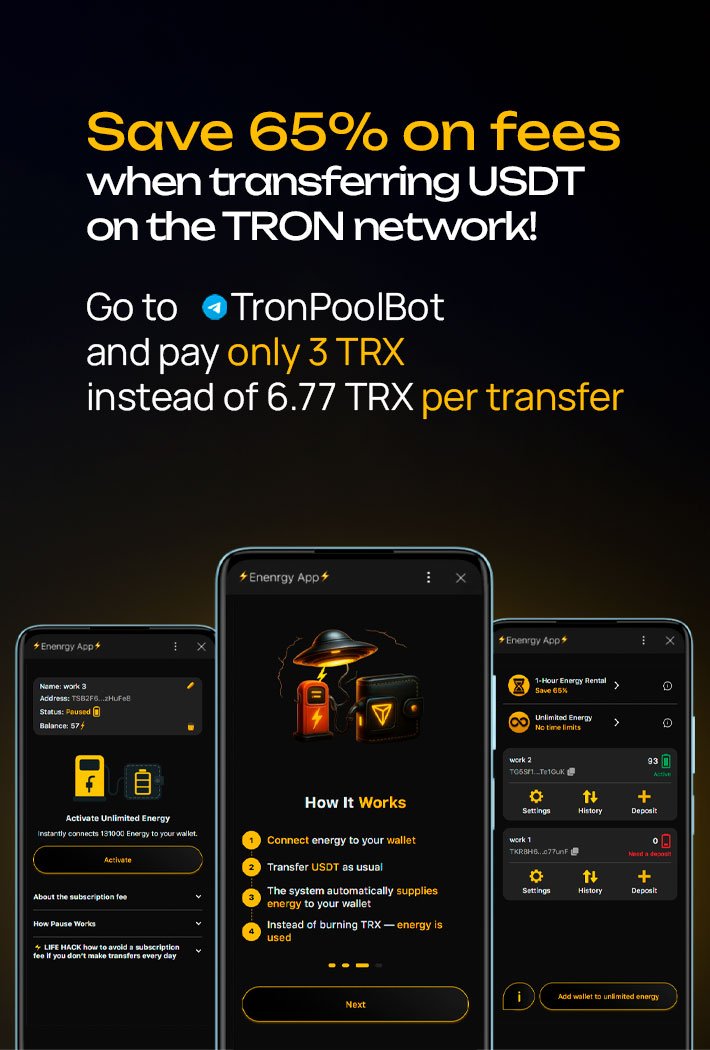
To reduce costs, advanced traders use TRON Energy rental. This does not affect security and does not require locking TRX — part of the network costs is covered by pre-rented internal blockchain resources (Tron Energy).
For example, via the Tron Pool Energy service you can rent energy for the required volume of operations and thus save up to 60–65% on swap and transfer fees. This approach is especially convenient for DEX users who perform dozens of transactions per month.
Before connecting a wallet, make sure the platform is reliable.
Check:
Within the TRON ecosystem, SunSwap and JustMoney are considered safe — both undergo independent audits and publish open-source code.
Any DEX requests permission to use your tokens. You can check them in blockchain explorers:
If you find an unknown contract, click Revoke. Regular revoke approvals are a key part of DeFi security.
Even the most reliable decentralized exchanges cannot protect against inattention. On a DEX, no one can cancel a transaction or return tokens — the entire responsibility lies with the user. Therefore, DeFi security starts with simple rules.
On decentralized platforms, security depends not on the exchange but on the user’s attentiveness. But these basic habits really help preserve assets in any situation.
DEX = control, transparency, and privacy in crypto. It’s a trading format without intermediaries where everyone manages their funds independently.
Decentralized exchanges are suitable for experienced users and DeFi investors who are ready for self-custody. Beginners should start with small amounts and proven protocols.
In the next article, we will compare DEX and CEX and break down which model fits you best — centralized with support and liquidity or decentralized with full control and independence.
A decentralized exchange (DEX) is a trading platform where cryptocurrency swaps occur directly between users via smart contracts in DeFi. It does not store client funds and does not require creating an account. All transactions are recorded on the blockchain, and asset management remains with the wallet owner. Thus, a DEX performs the functions of a classic exchange, but the swap is without intermediaries and centralized control.
The main difference is custody of funds. On centralized exchanges (CEX), assets are held in accounts managed by the operating company, and the user entrusts it with their private keys. On a DEX, it’s different: the wallet and keys belong only to you, and trades are executed by contract code.
In addition, a DEX does not require KYC and does not restrict access by region. If a CEX is like a bank where the operator does everything, then a DEX is an automated network where everyone manages their funds themselves.
Each trade on a DEX is executed in three steps. The user connects a wallet, selects tokens and the swap amount, then signs the transaction. The smart contract receives one token, recalculates the price using the AMM algorithm, and sends the other token in return.
All data are recorded on the blockchain, and the network fee is automatically distributed among liquidity pool participants. This kind of swap eliminates the human factor — the trade occurs strictly according to the conditions encoded in the contract.
On most AMM platforms, the trading fee ranges from 0.05% to 0.3% of the swap amount. This fee is not exchange profit — it is automatically distributed among liquidity providers (LP) who enable the pool to function. Unlike centralized exchanges, DEX platforms do not charge a separate service fee: all charges go either to liquidity pools or to blockchain network fees as payment for the transaction.
Connecting itself is safe if you use the official website and a reputable wallet (TronLink, MetaMask, Klever, etc.). A DEX only requests permission to interact with your tokens and never has access to the seed phrase.
The danger arises only when signing suspicious transactions. To avoid compromises, verify the site address, enable an anti-phishing code, and do not confirm operations whose purpose you do not understand.
Yes. Any permission to use tokens can be revoked at any time. Built-in tools include:
The revoke approvals procedure takes a few seconds and fully restores control over assets. Regularly checking permissions is one of the basic DeFi security rules.
Centralized Crypto Exchanges (CEX): Structure, Features, and Security
Convenience and risk in one place. What is a CEX, how does it work, and why it’s crucial to know who holds your coins.
2025-10-23
200

An Exchange Is Not a Wallet: Why Your USDT Is at Risk
Many users keep USDT on exchanges, unaware of the risks: account freezes, asset locks, and loss of access. Here's why you should store crypto in a decentralized wallet and how to protect your funds.
2025-07-29
138

CBDC Explained Simply: Digital Money of the State and How It Works
What is CBDC, how does it work, how is it different from cryptocurrencies and stablecoins, where is it already launched, and what are the risks and benefits for users and businesses.
2025-10-22
199

Reduce USDT TRC-20 transaction fees for frequent transfers from a single wallet with no time limits

Quick activation for one-time and occasional USDT TRC-20 transfers

Fund a shared balance and distribute TRON Energy and Bandwidth across multiple wallets

Automatic TRON Energy delegation for exchanges, swap services, and payment platforms

Quick access to Tron Pool Energy services directly in Telegram

Fast USDT TRC-20 to TRX swap, no exchange or registration required

Get all the benefits of Telegram at up to 15% less than through the App Store and Google Play

Gifts, reactions, and digital content with USDT TRC-20 — no registration required

Get a custom TRON address with your name, brand, or nickname