Are you building something customers actively seek out, or just something that would be nice to have? We break down how to evaluate a startup idea before writing a single line of code.
Content
In the world of startups, where hundreds of new ideas are born every day, only a few survive to the stage of scaling and raising investment. Why does this happen? Often the cause lies in a fundamental misunderstanding of what problem the product solves and whether it has product-market fit. Is it a “vitamin” or a “painkiller”? This distinction, which at first glance seems simple, determines the survivability and growth potential of any business — and it is precisely with assessing the startup idea through this lens that you should begin, even before developing the MVP.
The metaphor of “painkiller vs vitamin” itself is attributed to venture investor Kevin Fong from Silicon Valley, who divided business plans into “candy, vitamins, and painkillers” — and discarded the “candy” right away. In this article you will get a working methodology for assessing the severity of a problem, a set of CustDev questions, and comparison tables that will help you understand what you are actually building.
The essence of the concept: “painkiller” versus “vitamin”
Imagine you have a severe headache. You are ready to pay almost any amount of money for a pill that will instantly relieve that pain. This is precisely a “painkiller” – a product or service that solves an acute, pressing problem that causes discomfort, losses, or missed opportunities. Customers actively seek out such solutions and are willing to pay for them.
Now imagine that you want to improve your general well-being. You can start taking vitamins. It is useful, but not critical. If you run out of money, you will most likely give up vitamins first. This is a “vitamin” – a product or service that improves the existing state of affairs, makes something better, faster, or more pleasant, but does not eliminate acute pain. Such products belong to the “nice-to-have” category, not the “must-have” one.
Key differences
Characteristic
Painkiller
Vitamin
Problem
Acute, pressing, causing discomfort/losses
Existing, but not critical, improving comfort
Purchase motivation
Avoid pain, solve the problem, prevent losses
Improve something, gain an additional advantage
Urgency
High, often immediate
Low, can be postponed
Willingness to pay
High, often price-insensitive
Medium, price-sensitive, looking for alternatives
Example
Fixing a leaking roof, treating a tooth, antivirus
A new website design, time-management courses, a fitness tracker
Why do “vitamins” die first?
The history of startups is full of examples of brilliant “vitamin” products that never managed to find their audience or collapsed at the first economic difficulties. The reasons for this are obvious:
Absence of an acute need: If the product does not solve a burning problem, it is hard for customers to understand why they need it. They may be interested, but not motivated to buy.
Low priority: Under conditions of limited resources (time, money, attention), people and companies invest first of all in what helps them survive or avoid big problems. “Vitamins” will always stand in line after “painkillers”.
Ease of giving up: It is easy to give up a “vitamin”. If you do not have money for a new subscription, you will cancel it without much regret, as long as it is not critically important for your work or life.
Difficulty of monetization: Selling “vitamins” is much harder. Significant marketing efforts are required to convince the customer of the value of an improvement that they may not even have realized was necessary. This directly hits unit economics: customer acquisition cost (CAC) rises, while willingness to pay remains low.
How to turn a “vitamin” into a “painkiller”? (Or find the real pain)
The most valuable lesson for an entrepreneur is not just to create a product, but to find the real “pain” and offer an effective “painkiller”. If your initial idea seems like a “vitamin”, do not despair. Often the matter is not in the product itself, but in its positioning and the depth of understanding of the customer’s problem — that is, in working out the value proposition for a specific ideal customer profile (ICP).
1. Rethinking the problem: focus on the pain, not on the improvement
Instead of saying: “Our 3D configurator makes your website prettier”, we say: “Our 3D configurator reduces the return rate through accurate product visualization, eliminating cash flow gaps caused by logistics and increasing customer satisfaction”. Here the “pain” is the high returns, the logistics problems, and the dissatisfied customers, and the 3D configurator is the solution to these problems.
2. CustDev (Customer Development): listen to your customers
Conduct in-depth interviews with potential customers. In essence, this is work in the logic of Jobs To Be Done (JTBD) — you are looking not for a feature, but for the “job” the customer wants to get done. Ask questions that help reveal their true “pains”:
“What difficulties do you encounter when...?”
“What annoys you most about...?”
“What problems prevent you from achieving...?”
“What would you be willing to pay for to make this go away?”
Often customers themselves are not aware of their “pains” until you ask the right questions. Your task is not to sell them a solution, but to understand their problem. If during an interview you catch yourself convincing the customer that they have a problem, that is an alarming sign of a “vitamin”.
3. Quantifying the pain
How strong is the “pain”? Try to express it in numbers:
Time: How many hours per week does the customer spend solving this problem?
Money: How much money do they lose because of this problem?
Reputation: What reputational damage does this problem cause?
If you can show the customer that your product will save them X hours, Y money, or prevent Z reputational losses, you are offering a “painkiller”.
Practical examples from our team
Our IT team always strives to create “painkillers”, because we understand that it is precisely such products that bring real value and success.
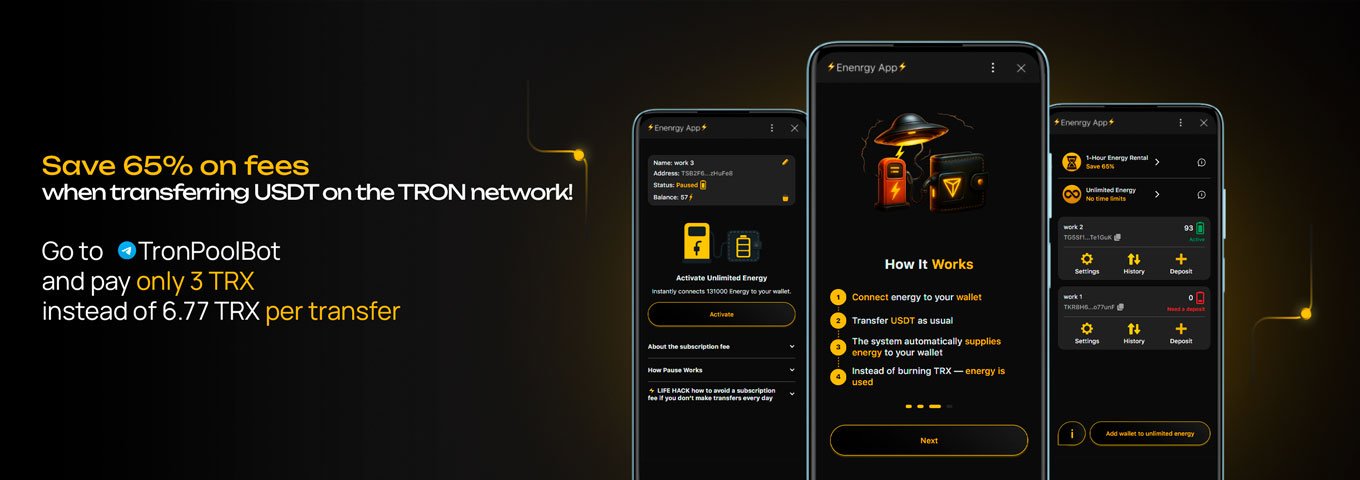
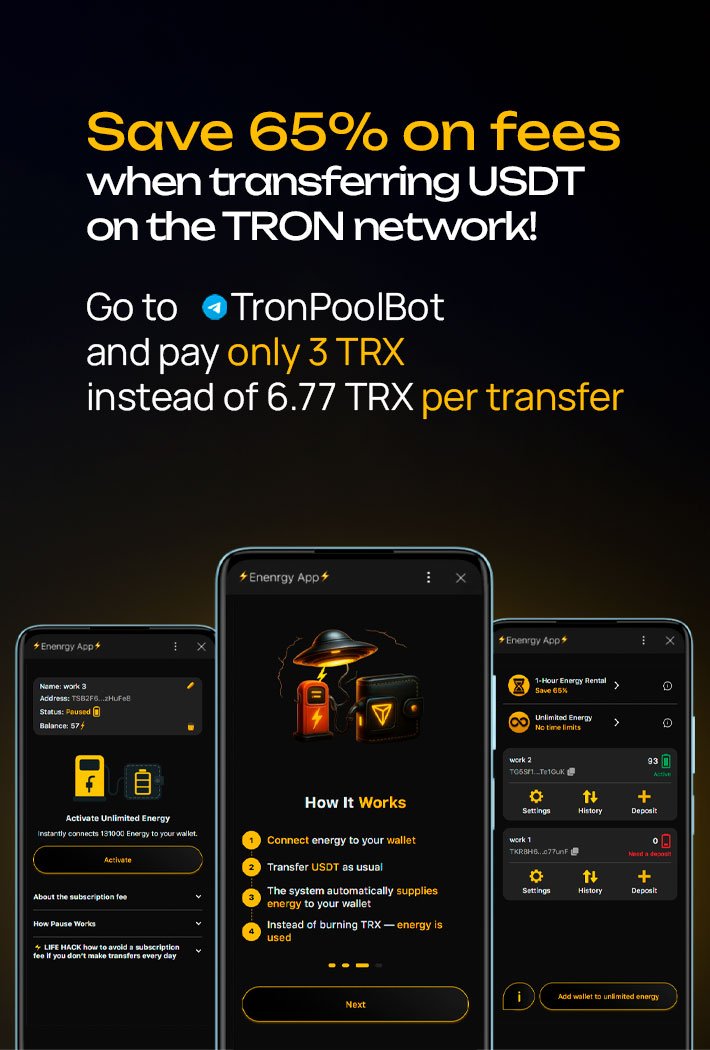
USDT energy service:
Pain: High fees when transferring USDT, delays, payment difficulties. For many businesses and freelancers, this means direct financial losses and operational inconveniences.
Painkiller: Our service offers significantly lower fees and a high speed of resolving all difficulties, eliminating this acute financial pain and optimizing international settlements.
CRM for recruiting:
Pain: HR departments spend a huge amount of time on routine operations (sorting resumes, scheduling interviews, providing feedback), lose valuable candidates due to inefficient communication, and face high recruitment costs.
Painkiller: Our CRM automates the routine, centralizes candidate data, and improves communication and analytics, which leads to reduced time-to-hire, lower costs, and the attraction of the best specialists. This is a direct solution to the problem of lost profit and inefficiency.
2D/3D configurators for clothing and footwear:
Pain: A high return rate in e-commerce due to the mismatch between expectations and reality, low conversion due to insufficient product visualization, the need to maintain large warehouses with a wide assortment that does not always sell.
Painkiller: Configurators allow customers to create unique products and see them in 2D/3D before purchase, which significantly reduces the number of returns. For the business, this means cutting logistics costs, reducing inventory, and increasing customer loyalty. This is a direct solution to financial and operational problems.
Comparison of our products by the criteria of pain “severity”
To clearly show how the assessment methodology is applied in practice, we ran three of our products through the four criteria of problem “severity”:
Assessment criterion
USDT energy service
CRM for recruiting
2D/3D configurators
Frequency of the problem
Daily, with every transaction
Constantly, with every vacancy
Constantly, with every purchase
Intensity of the pain
Direct losses on fees and delays
Lost profit and loss of candidates
Returns, low conversion, warehouse costs
Willingness to pay
High — losses are easily measured in money
High — the cost of hiring is transparent
High — returns directly hit the margin
Alternatives on the market
Expensive and slow solutions
Bulky CRMs, not tailored to recruiting
Expensive to develop, few ready-made solutions
Verdict
💊 Painkiller
💊 Painkiller
💊 Painkiller
In all three cases the pain is high-frequency, measurable in money, and poorly covered by alternatives — these are precisely the signs of a “painkiller” that the customer pays for without hesitation.
Conclusion
Understanding the difference between a “vitamin” and a “painkiller” is not just theory, but a practical tool that should be in the arsenal of every entrepreneur. Focus on finding and solving the real “pains” of your customers, validate the idea through CustDev and the severity assessment methodology even before launching the MVP — and your startup will have a much greater chance of success and of achieving product-market fit. Remember: people pay not for a product, but for the solution to their problems. Be a “painkiller”, and not just a “vitamin”.
Share
Did you like the article?
FAQ
How does a “painkiller” product differ from a “vitamin”?
A “painkiller” solves an acute, urgent problem that the customer already recognizes and is willing to pay for its solution without hesitation (must-have). A “vitamin” improves the situation, but is not critical — it is easy to give up when the budget is tight (nice-to-have). The main marker: does the customer look for the solution themselves, or do they have to be convinced that they have a problem?
How to understand whether a problem is “acute” enough?
Run it through the four criteria: frequency of occurrence, intensity (impact on money/time/reputation), willingness to pay, and availability of alternatives. If the customer faces the problem often, loses measurable money because of it, already uses “crutches”, and there are no good solutions on the market — the pain is acute, and you are closer to a “painkiller”.
Can a “vitamin” be turned into a “painkiller”?
Yes. Most often the matter is not in the product itself, but in the positioning and the depth of understanding of the pain. Reformulate the value proposition from the language of improvements to the language of the losses the product prevents, conduct CustDev interviews, and tie the benefit to concrete numbers (saved time, money, reduced risks).
Is a “painkiller” always better than a “vitamin” for a business?
Not always. A “pure painkiller” may turn out to be a one-dimensional product in a highly competitive market with no barriers to entry, whereas a “vitamin” with a strong value proposition is able to form a habit and loyalty. Many successful products start as a “painkiller” and then add “vitamin” properties for retention — the main thing is that at the foundation lies a real, high-priority customer pain.
What questions should you ask in CustDev to find the real pain?
Ask about the difficulties and irritants in current processes, about what prevents reaching goals, and about what the customer is willing to pay to eliminate. Avoid questions in which you yourself suggest the problem. If you have to convince your interlocutor that they have a pain, then most likely there is a “vitamin” in front of you.
TRX calculator
Find out how much you spend on commissions!
Enter your crypto wallet address and we'll calculate how much TRX you've spent on fees over the last 30 days.
AI selects 3 qualified candidates instead of 80, an agent manages the deal autonomously, and TRON processes payments with near-zero fees. Discover how the DealMind AI-powered marketplace works.
Our IT company, Tron Pool Energy, offers Logistics HRM, a ready-made HR platform for transportation and logistics companies that can be flexibly adapted and customized to fit your organization's processes.





 English (EN)
 Русский (RU)
 Українська (UK)
 español (ES)
 Türkçe (TR)