If your conversion rate is above 7.5%, build the product. Below 2.5%? Change your hypothesis. Here's how to validate a startup idea in just one day without writing code or spending a budget.
Content
Most startups don't die because of a bad product. They die because the founder spends months writing code for an idea nobody needs. The good news: you can find out whether people are willing to pay for your product in a single day — without a single line of code and without a development budget.
In this article — a step-by-step plan for validating demand in 24 hours, plus an overview of the AI tools that in 2026 shrink this process down to just a few hours
Why Validate Demand Before You Write Code
The Main Mistake Beginners Make: Product First, Customers Later
The classic scenario: a team spends six months building an app, launches it — and is met with silence. The reason is almost always the same: nobody verified that a real problem exists that people are willing to pay to solve. Interface, speed, design — all of that is secondary. What's primary is confirmed demand.
What MVT Is and How It Differs From MVP
MVT (Minimum Viable Test) is not a product — it's an experiment. Its job is to gather reliable data about target-audience behavior without building any software. MVP still requires development, even if minimal. MVT answers the earlier question: should you even build an MVP in the first place?
MVT (Minimum Viable Test) — a minimum viable test. Checks whether demand exists before the product is built.
MVP (Minimum Viable Product) — a minimum viable product. Built after demand has already been confirmed.
The approach was popularized by Udemy and Maven co-founder Gagan Biyani, who showed that an idea can be tested in 3–7 days using only existing tools — forms, landing pages, social media, and manual feedback collection.
What Conversion Rate Counts as Confirmed Demand
Once the test is live, it's important to read the numbers correctly:
Conversion below 2.5% — the idea most likely doesn't solve an urgent problem. People are getting by with their current solutions.
Conversion of 2.5–7.5% — the idea is viable, but niche. You can launch it without expecting explosive growth.
Conversion above 7.5% — demand is confirmed, and it's worth investing seriously.
These benchmarks apply to landing pages and fake door tests. For B2B with a long sales cycle, the metric shifts from a click to the number of scheduled calls or meetings.
Five Working Methods to Test Demand Without Code
Fake Door — the Fake Button
You add a "Buy" or "Try it" button where the feature doesn't actually exist yet. The user clicks — and lands on a page that says "Launching soon, leave your email." The method is fast and honest: you're measuring real intent, not an opinion stated in conversation.
A classic example is the "Edit Tweet" button test on X (formerly Twitter): the product team measured interest in the feature before building it.
The Dummy Landing Page (Smoke Test)
In a couple of hours, using a builder like Tilda or Webflow, you put together a page with an offer, a price, and a call-to-action button. You send a bit of traffic to it — and watch the conversion into clicks or leads. The landing page should answer four questions: what you're selling, why it's better than the alternatives, how it works, and how much it costs.
A Direct Survey in Communities and Telegram Channels
The key mistake here is asking "would you be interested?" That kind of question almost always produces a skewed, overly positive answer. Only specifics work: "would you pay $10 to solve X?" A direct statement with a price attached filters out the polite but meaningless "yeah, probably."
Pre-Orders as the Most Honest Proof
You openly tell your audience: the product will be ready in a month, and anyone who wants it can pay in advance right now. Money in the till is the most reliable confirmation of demand you can get before launch. The downside — you'll have to drive traffic yourself, through influencer ads, articles, or social media posts.
A Video Demo of a Product That Doesn't Exist Yet
You show your audience a video simulating how the product works — the interface, use cases, key features. This method works especially well for complex products, where a text description alone isn't enough for someone to grasp the value.
AI Tools That Compress the Test Into a Single Day
In 2026, the main shift in hypothesis testing isn't new methods — it's the speed at which they can be executed, thanks to AI.
Generating a Landing Page From a Prompt in 10 Minutes
Instead of manually assembling blocks in a builder, you describe the product idea in text — and an AI tool generates a ready-made page with a headline, an offer, and a lead-capture form. What used to take half a day now takes 10–15 minutes.
An AI Agent for Collecting and Processing Leads on Telegram
A Telegram bot with a built-in AI agent accepts leads, asks the audience clarifying questions, and immediately structures the answers — without any manual work from a manager. This is especially useful for B2B tests, where a click alone isn't enough: you need to understand the context of the potential customer's problem.
Automatic Response Analysis and "Hot Lead" Tagging
An AI model processes all incoming leads, ranks them by their readiness to pay, and identifies patterns in objections. What used to take a full day of manually sorting through a spreadsheet now takes just a few minutes.
Comparing Methods and Tools
Pros and Cons of Testing Demand Without Code
Criterion
Pros
Cons
Speed
Results within 24 hours
A small sample size can distort the picture
Cost
From $0 to $20 per test
Ad spend for traffic is a separate cost line
Data accuracy
Shows real behavior, not opinion
Doesn't guarantee people will buy the finished product
Risks
Minimal financial losses
Possible false-positive result from a "curious" click with no real intent
Comparing Approaches to Building the Test
Approach
Setup time
Cost
Skills required
Data quality
Classic builder (Tilda)
2–4 hours
$0–15/mo
Basic, no coding
Medium — depends on the copywriting
Telegram bot with a form
1–2 hours
$0–10/mo
Minimal
High for B2C and short cycles
AI-generated landing page
10–20 minutes
$0–20/mo
None required
High, but the copy is worth refining manually
Step-by-Step Plan: A 24-Hour Test
Hours 1–4: Formulate the hypothesis and the offer. State your hypothesis in a single sentence: "People in audience X are willing to pay $Y to solve problem Z." Spell out a specific offer and price — without a price, the test loses its meaning.
Hours 5–12: Build the landing page or button. Pick one of the five methods described above. Don't try to combine all of them at once — a scattered test produces blurry data.
Hours 13–20: Drive traffic to the test. A small ad budget ($10–30), seeding in relevant Telegram channels, or a direct survey in communities where your target audience hangs out.
Hours 21–24: Analyze the results and decide. Compare your conversion rate against the benchmarks (2.5% and 7.5%). If the numbers fall short, don't rush to redo the landing page — first figure out why: no real pain point, wrong audience, or a weak offer.
Real Case: How We Validated Demand for Cheap USDT Transfers
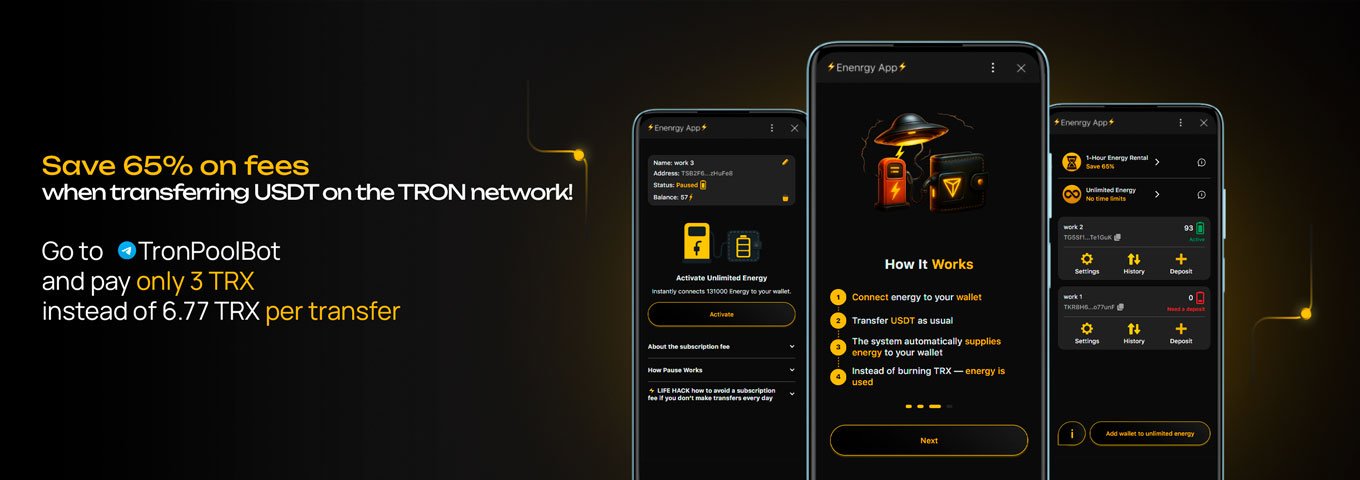
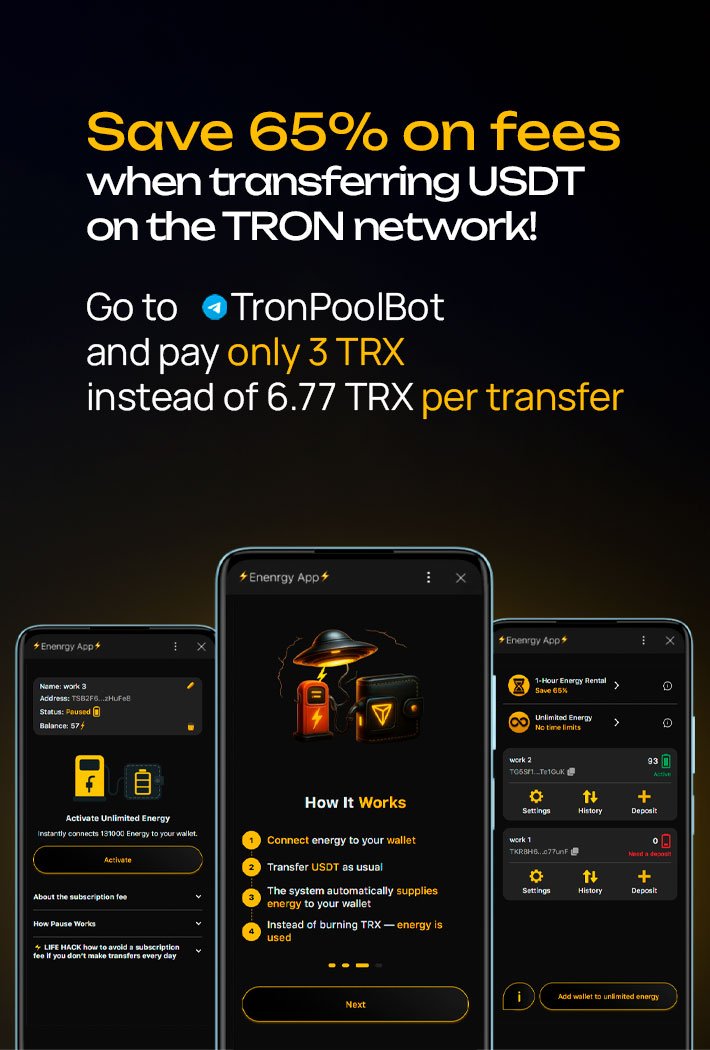
We applied this exact framework in practice when testing the hypothesis behind Tron Pool Energy — a service that makes USDT transfers on the TRON network cheaper by renting Energy instead of burning TRX on fees.
Where We Started: Pain Instead of a "Wouldn't This Be Nice" Hypothesis
The idea wasn't born in a vacuum — it came from conversations with people who move USDT TRC-20 every single day: exchangers, payment services, arbitrage teams. Everyone shared the same pain: transaction fees were eating into their margins. Instead of guessing, we decided to ask directly.
Chat Surveys and Pre-Orders Instead of a Polished Presentation
There was no animated landing page at the start. The test consisted of three simple steps:
A survey in industry-specific chats — a direct question: "How much are you losing on fees each month, and would you pay for a tool that cuts that amount down?"
Conversations with exchangers — short calls where we described how the Energy top-up account works and listened to their reaction live, with no sales script.
A soft-form pre-order — those who showed interest were offered not immediate payment, but trial access.
A Trial Month Instead of Promises on Paper
Here we departed from the classic fake door and used an approach more honest for B2B: we let the first users use Energy for free for a month. At the end of the period, we issued an invoice with a calculation — how much they would have spent on fees without the service, and how much they actually spent with it. The difference showed the benefit in real numbers, not in words.
Test Result: 10 Users and the Same Answer Every Time
We started the test with 10 users — deliberately a small sample, so we could see the reaction quickly without investing in scale. By the end of the trial month, the response was surprisingly unanimous: every participant confirmed that, if a ready-made solution existed, they would use it on an ongoing basis. That exact phrase — "if there's a solution, that's good" — was the signal for us to move forward and turn the pilot into a product.
Why This Worked Better Than a Classic Landing Page
For a B2B product with a concrete monetary benefit, a click on a button isn't enough — you need to show numbers based on the customer's actual transactions. Trial access followed by a savings calculation turned out to be more convincing than any copy on a website: people didn't have to take our word for it, they saw the difference in their own invoice.
Conclusion
Validating demand isn't a formality, and it's not a sign of insecurity about your idea. It's insurance against months of wasted development. The five methods in this article require no code, and the AI tools of 2026 cut test-preparation time from days down to hours.
If you have an idea you've been mulling over for a while — don't put off testing it. Pick one method, formulate a hypothesis with a specific price, and launch the test within the coming week. You'll get your answer faster than you expect.
Share
Did you like the article?
FAQ
How many people do you need for the test to be trustworthy?
There's no universal number, but a good benchmark is 10–30 people from your target audience for B2B, and at least 100 landing-page visits for B2C. As our Tron Pool Energy case showed, even 10 users can produce a clear, unambiguous signal — as long as they're truly your target audience, not random people.
Can you test demand with absolutely no money, at $0?
Yes. Surveys in relevant chats, conversations with potential customers, and a fake door test require no budget — only time. A budget starting at $10 is needed only if you want to speed up the process with advertising and bring in extra traffic.
What should you do if conversion comes in below 2.5%?
Don't rush to redesign the product — first figure out why. Check three things: whether the problem is actually painful, whether you showed the offer to the right audience, and whether the value proposition was communicated clearly. Low conversion is often a messaging mistake rather than an absence of demand.
How is a demand test different from a regular "would you be interested" survey?
A direct question about interest almost always produces an inflated, polite "yes." A real test requires action — a click, a payment, trial access followed by an invoice, as in the Energy case. Action can't be faked out of politeness. An opinion can.
Is a free trial period a suitable method for testing demand in B2B?
Yes, and it's often the most honest method for B2B, where the decision is based on money rather than emotion. By giving a customer free access for a limited period and then showing the real benefit in numbers, you get not an opinion but confirmed behavior — a willingness to keep paying.
TRX calculator
Find out how much you spend on commissions!
Enter your crypto wallet address and we'll calculate how much TRX you've spent on fees over the last 30 days.
Competitors aren't a threat, they're proof that a market exists. Learn how to discover your Unfair Advantage through competitor analysis using proven frameworks, reliable data sources, and a real-world case study.
ChatGPT can make things up because it doesn’t know your business. A RAG-powered AI agent knows your pricing, case studies, and internal procedures, delivering accurate answers in seconds.
How can you tell if your niche is big enough before writing the first line of code? A simple guide to TAM, SAM, and SOM with real examples and practical calculation methods.





 English (EN)
 Русский (RU)
 Українська (UK)
 español (ES)
 Türkçe (TR)