

 English (EN)
 Русский (RU)
 Українська (UK)
 español (ES)
 Türkçe (TR)

What is USDT TRC-20? It is the Tether stablecoin issued on the TRON network. We'll cover how it differs from other networks, the address, the risks and the role of TRX.
What USDT TRC-20 means in simple terms
In short, USDT TRC-20 is digital Tether dollars that are transferred over the TRON network. Think of the same dollar on cards from different payment systems: the money is the same, but the rails it moves on are different.
What the name is made of
USDT is a token from the company Tether, pegged to the US dollar: one USDT aims to be worth one dollar. TRC-20 is the token standard of the TRON network, that is, a set of rules by which a token is stored and transferred. Together they make up the version of USDT issued on the TRON network.
Why people use this token
The token is useful wherever a rate close to the dollar matters: payments between companies, P2P deals, transfers between exchanges. Beginners most often come across it when they receive an address for a payment. The main rule: the sender and the recipient must use the same network.
USDT, Tether, TRON and TRC-20: what is what
These four names in one phrase are what people mix up most often. The TRON network is the road, TRX is the fuel, TRC-20 is the standard for packing cargo, and USDT is the cargo itself.
Tether TRC20 and USDT TRC-20: the same token
Tether TRC20 and USDT TRC-20 are different names for the same token. Tether is the company that issues USDT on several blockchains at once; on the TRON network the token works under the TRC-20 standard.
Where the network ends and the token begins
TRON is the network, and USDT TRC-20 is the token that lives on it. The network's own coin is TRX, which is used to pay for resources, and having USDT does not mean you have TRX. The three concepts are covered in detail in the article on the difference between Tron, TRX and TRC-20.
How USDT TRC-20 differs from USDT on other networks
USDT is issued on several networks, and these are different network versions of the same asset. It is as if the same dollar could be sent through different postal services: the parcel arrives only if the recipient is waiting for it at the same service.
Comparing TRC-20, ERC-20 and BEP-20
The table compares the three most common network versions of USDT.
| Criterion | USDT TRC-20 | USDT ERC-20 | USDT BEP-20 |
|---|---|---|---|
| Blockchain | TRON | Ethereum | BNB Smart Chain |
| Token standard | TRC-20 | ERC-20 | BEP-20 |
| Fee coin | TRX | ETH | BNB |
| How the fee is charged | Energy and Bandwidth resources; TRX is burned if they run short | Computation fee (gas) paid in ETH | Computation fee (gas) paid in BNB |
| Address starts with | The letter T | 0x | 0x |
ERC-20 and BEP-20 addresses look the same, so they are easy to confuse with each other, while a TRON address stands out right away: it starts with the letter T.
Why the sender's and recipient's networks must match
Tokens on different networks live on different blockchains and don't see each other. If you pick the wrong network, the funds may not be credited, and getting such a transfer back can be difficult or impossible. So before sending, check the network in your wallet and in the recipient's app, not just the address.
What a USDT TRC-20 address is
An address is the public number of your wallet on the TRON network, like a bank account number: it is safe to give it to anyone who is going to pay you.
What an address looks like and where to find it
A TRON address starts with the letter T. The same address works for both TRX and TRC-20 tokens, including USDT. To find it, open USDT in your wallet, select the TRON (TRC-20) network and tap Receive: the app will show the address and a QR code. Copy the whole address and check its beginning and end before sending.
If you don't have a wallet yet, it's easy to create one: a step-by-step guide is in the article on how to create your first USDT TRC-20 wallet.
How to check that it's real USDT
Real USDT is only the token from Tether's official contract. Scammers issue tokens with the same name and icon: in a wallet they look like USDT but are worth nothing. So-called flash USDT is also this kind of fraud.
If an amount arrives unexpectedly or from a stranger, check the token contract, for example with a tool that can help you verify the authenticity of USDT on the TRON network.
Why sending USDT TRC-20 requires TRX or Energy
You can't send USDT TRC-20 for free: the network charges in resources. It's like paying for transport: either you have a travel pass (Energy) or you pay cash for every ride (burned TRX).
What happens when you transfer a token
A USDT transfer is a call to the token's smart contract, a program that runs on the blockchain and uses network resources. Energy is spent on executing the smart contract, Bandwidth on the size of the transaction itself, and the network gives every wallet a portion of Bandwidth for free each day.
If there isn't enough Energy or Bandwidth, the network burns TRX to cover the shortfall. If there is no TRX either, the transfer is rejected.
How much Energy you need and how to pay less
The amount used depends on the recipient: sending to a wallet that already holds USDT takes about 65000 Energy, while sending to a wallet that has no USDT yet takes about 131000 Energy.
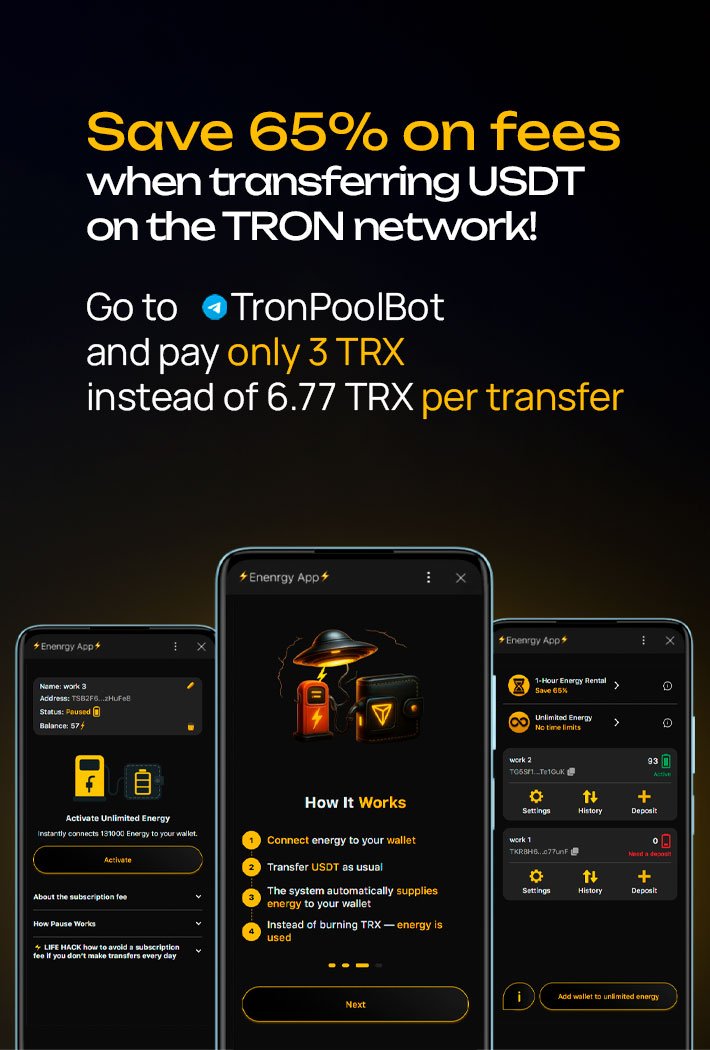
You don't have to buy TRX in advance: you can rent Energy for the time you need it. Then no TRX is burned for Energy, and renting saves up to 80% on the fee. Energy is connected using the wallet's public address, without any access to the seed phrase.
Advantages and risks of USDT TRC-20
It's like a transfer using bank details: convenient as long as the details are entered correctly, and the price of a mistake is a lost payment.
Pros and cons
The table lists the main pros and cons of USDT TRC-20.
| Pros | Cons |
|---|---|
| Transfer confirmation in seconds | You need TRX or Energy to pay for network resources |
| The token is accepted on exchanges and in P2P deals | A mixed-up network can cost you the transfer |
| One address for TRX and TRC-20 tokens | Fake tokens with the same name exist |
| The fee can be reduced by renting Energy | An address can be blocked, and services run AML checks |
Main risks
The risks are real, but most of them can be reduced with simple attention.
- Wrong network. A transfer sent to a different network may not reach the recipient.
- Fake tokens. A token named USDT isn't always genuine, so check the contract.
- Address blocking. Tether can freeze USDT at an address, so it's worth checking the address against the blacklist in advance.
- AML checks. Exchanges and services may ask you to confirm the origin of funds.
Where to store USDT TRC-20
The choice is like the difference between a home safe and a bank deposit box: in the first case you are responsible for the keys yourself, in the second you trust a company to keep your assets.
Non-custodial wallet
In a wallet like this, the private keys and the seed phrase are stored by you. A seed phrase is a set of words that gives full access to your funds, so don't share it with anyone.
Wallets that support the TRON network will work. How to use the token in Trust Wallet is covered in the article on USDT TRC-20 in Trust Wallet, and other options, such as TronLink and SafePal, are collected in the list of the best wallets for USDT TRC-20.
Exchange
On an exchange, a company holds the funds. This is convenient for trading and fast withdrawals, but access to your money depends on the platform's rules. For long-term storage of a large amount, many people prefer their own wallet.
Conclusions
To avoid mistakes with USDT TRC-20, check three things before a payment: the network on the sender's and the recipient's side, the address, and the authenticity of the token. These rules apply to any amount. What remains is the question of costs: as long as USDT on TRON stays a convenient way to settle payments, knowing how to manage Energy directly affects how much you pay for each transfer.
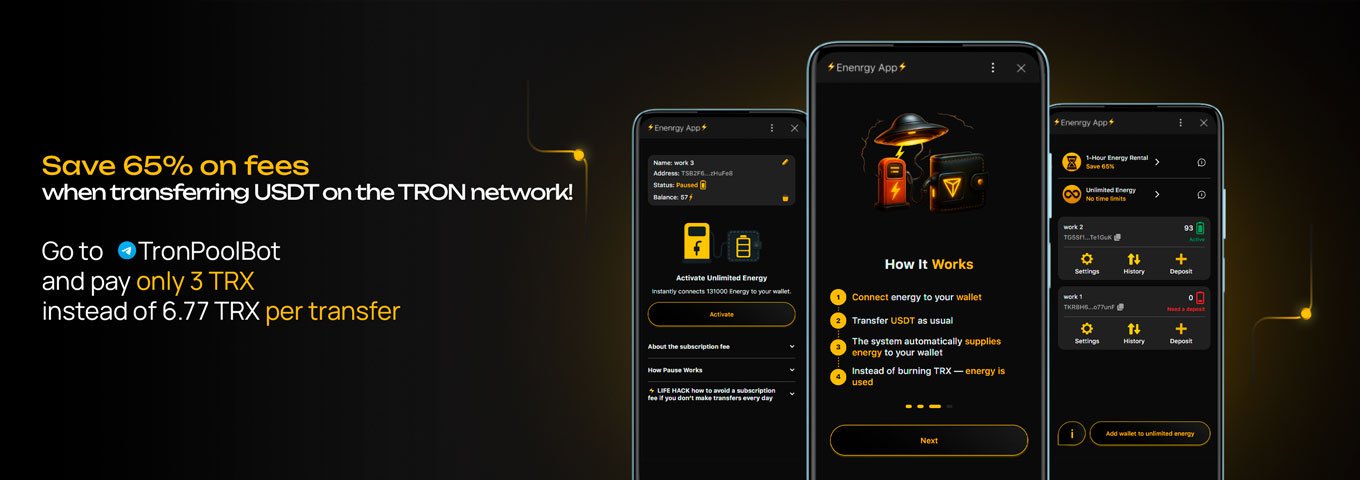
Send USDT TRC-20 with rented Energy instead of burning TRX: first use the energy calculator to work out how much Energy the transfer needs, then rent TRON energy for an hour.
Frequently asked questions
-
How can you tell a TRC-20 address from an ERC-20 address?
By the first character and the length. A TRC-20 address is a TRON network address: it starts with a capital letter “T” and is 34 characters long, for example TQ…. An ERC-20 address is an Ethereum network address: it starts with “0x” and is 42 characters long. A BEP-20 address (BNB Chain network) looks the same as an ERC-20 address, so these two networks can't be told apart by the address alone. Always confirm the network with the recipient and select the same one when sending.
-
What should you do if USDT was sent on the wrong network?
The deposit may not be credited, and there is no guaranteed way to get the transfer back. Save the transaction hash and contact the support team of the recipient or the exchange right away: a lot depends on the platform's rules.
-
How can you tell that a transfer went through without unnecessary TRX burning?
You can see it in resource usage: if Energy was rented, no TRX should be burned for Energy. Open the transaction in the TronScan explorer and check what paid for the resources; Bandwidth may still be deducted.